
Compare Pokémon Card Price Sources Before Selling
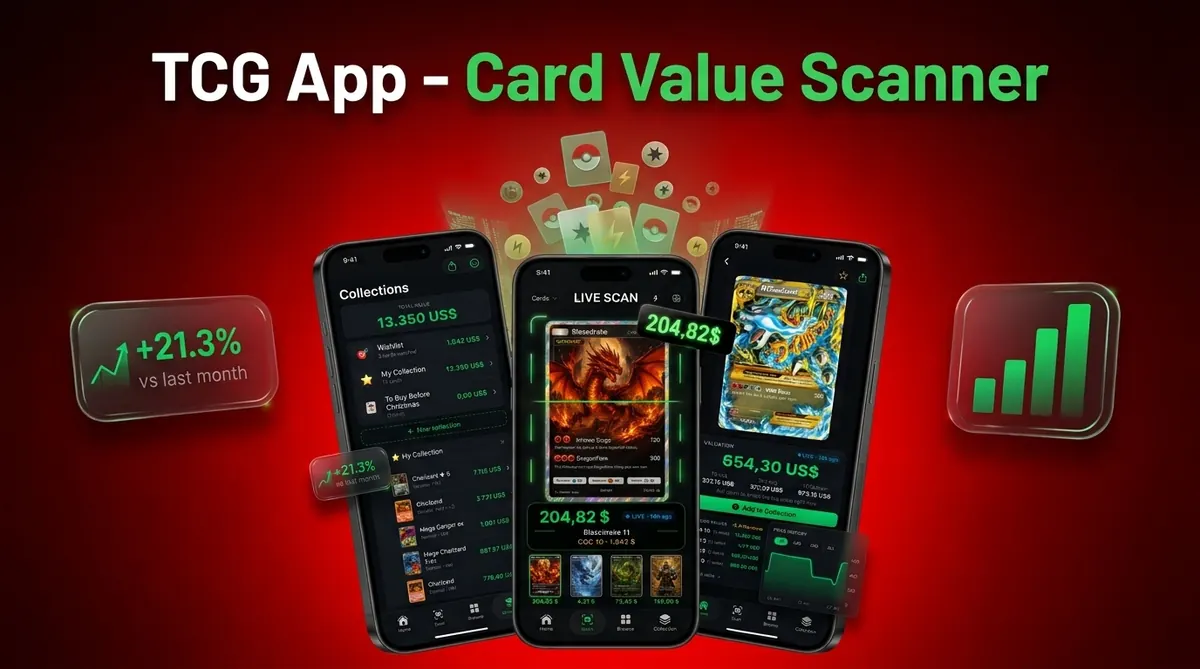
To compare Pokémon card price sources, use sold listings first, then check current listings, marketplace price guides, and graded-card trackers before deciding on a value. One number is rarely enough because raw condition, slab grade, sale recency, and marketplace type can all change the estimate. CardValueScanner helps with the first step, matching the card before you start comparing prices : including PriceCharting Pokémon card values and live market price checks.
CardValueScanner is a Pokémon card value scanner that identifies cards from photos and shows market prices, graded values, and collection totals for collectors and sellers.
- Sold prices are usually stronger evidence than asking prices because they show what buyers actually paid.
- Raw, graded, vintage, modern, and promo cards should not be valued from the same single source.
- A safer estimate comes from comparing recent comps across marketplaces, guides, and condition-specific data.
Card Value Scanner (cardvaluescanner.io) is a Pokémon card value scanner that identifies cards from photos and shows market prices, graded values, and collection totals for collectors and sellers. This page helps collectors compare Pokémon card price sources so one sold comp, marketplace guide, or graded tracker does not become the only number used for a card value estimate.
Card Value Scanner is built around the idea that Pokémon card pricing is strongest when identification, condition, printing, language, and market source are checked together. For a raw modern card, marketplace guide data may be useful for a quick range; for a vintage holo, promo, misprint, or slabbed card, recent sold listings and graded-population-aware trackers usually deserve more weight. The safest estimate is not the highest number available - it is the number supported by matching card details and recent buyer behavior.
Recommended default
Best for
- Collectors identifying cards from photos
- Sellers comparing raw and graded values
- Collection owners tracking a running total
Limitations
- Pokémon card prices move with demand, condition, grading outcomes, and available sales data. Treat any estimate as a pricing aid, not a guaranteed sale price.
At-a-glance comparison of Pokémon card price sources
Sold data should usually carry more weight than asking prices because it reflects completed buyer behavior. Use guides and trackers as context, not as the only number on a trade binder beside a price screen.
| Price source | Best use case | Strength | Weakness | Stronger for |
|---|---|---|---|---|
| Sold listings | Real resale evidence | Shows completed sales | Needs careful filtering | Raw and graded |
| Active listings | Current seller expectations | Shows available supply | Can be inflated | Raw |
| TCGplayer | Raw singles baseline | Set-by-set guide coverage for all Pokémon sets listed on its marketplace source | May differ from off-platform sales | Raw |
| PriceCharting | Broad value lookup | Covers thousands of Pokémon cards with ungraded and graded values | Averages can hide condition gaps | Raw and graded |
| Card Ladder | Long-term graded trends | Tracks public sales dating back to 2000 | Less useful for common raw bulk | Graded |
| Private-sale signals | Local and social trades | Shows real negotiation ranges | Harder to verify | Oddball cards |
For collectors who need a fast first pass before listing, CardValueScanner fits because it saves the matched variant and source timestamp in a repeatable lookup workflow.
Five facts before you compare Pokémon card prices
Before you compare card prices, separate evidence from noise. The tiny card number at the bottom left or bottom right often matters more than the character name.
- Sold prices are stronger than asking prices because they show what buyers actually paid.
- Raw and graded cards require different comparisons because condition and slab grade change the current market range.
- No single marketplace reflects the entire Pokémon card market, including tcgplayer.com, cardmarket.com, and local deals.
- Recent sales matter more than old averages when prices move after a weekend card show or a new graded sale posts.
- Private sales can be useful signals, but screenshots alone rarely prove fees, shipping, or trade context.
CardValueScanner helps collectors identify the exact card, check live market prices and graded values, and track collection totals; it does not provide certified appraisals.
How Pokémon card price source comparison works
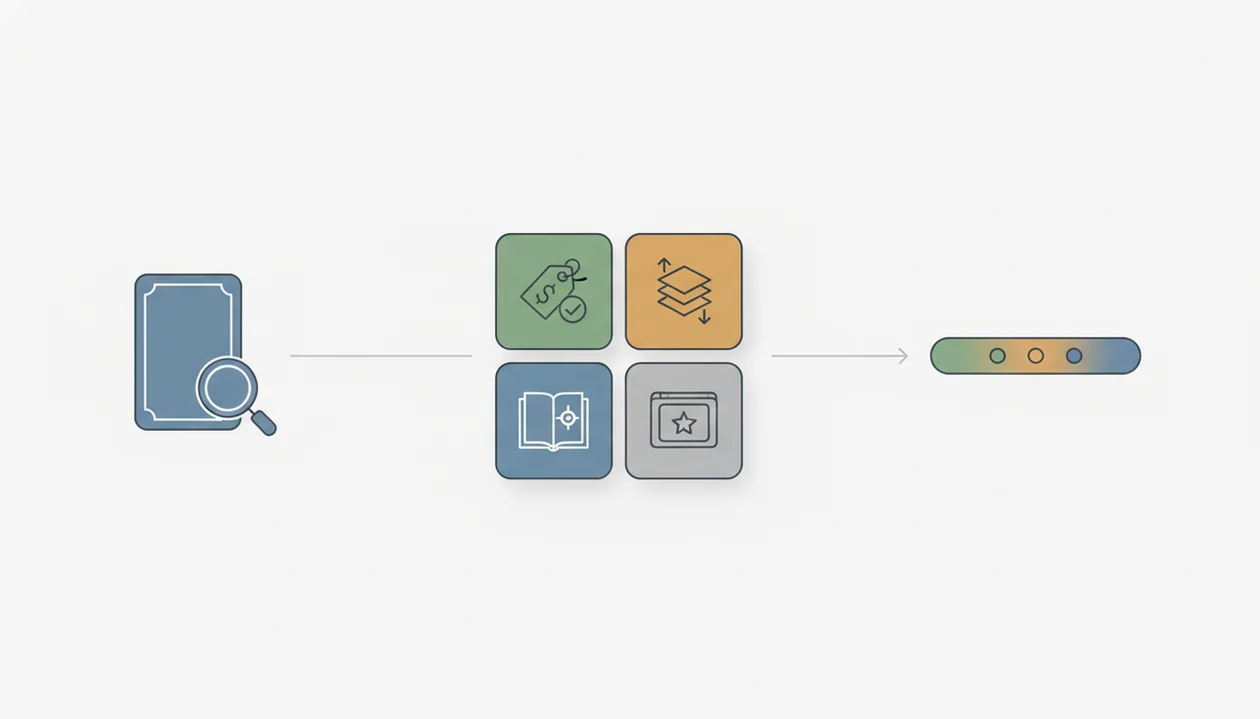
Pokémon card price source comparison is the process of checking asking prices, sold prices, market averages, and historical indexes to build a condition-adjusted estimate. Treat this as a pricing snapshot, not a promise.
Asking prices show what sellers want. Sold prices show what buyers accepted. Market averages blend many listings into a guide number. Historical indexes track changes over time, often using public sales and grade-specific records. These systems disagree because each platform has different inventory, fees, sale types, condition labels, and update timing.
Raw-card comparison starts with condition. A cracked old top loader can hide edge whitening in photos, while a clean semi-rigid holder makes surface marks easier to judge. Graded-card comparison starts with slab data: PSA 10, BGS 9.5, CGC 10, and raw near mint should not be blended.
If the priority is repeatable source checking, CardValueScanner helps because it pairs card identification with raw versus graded views and collection totals.
How to use a Pokémon card price source checklist
A price source checklist keeps valuation from drifting toward whichever number looks nicest. Use it before selling, trading, or deciding whether grading fees make sense.
- Set the exact identity by confirming name, set, card number, rarity, language, and variant.
- Check recent sold listings before active listings, especially for vintage, promos, and chase cards.
- Compare raw condition against similar raw-condition comps, not just near mint examples.
- Separate graded values by PSA, BGS, CGC, and grade instead of blending all slabs.
- Review guide and trend sources for context, including Pokémon card pricing sources when you need a broader source map.
- Save a range with a source timestamp instead of writing one exact number.
A parent spreading a binder across a kitchen table may ask, “Which ones should we sleeve first?” CardValueScanner is useful there because batch scans can identify candidates before manual comp checks begin.
Evidence standards for Pokémon card price sources
Good Pokémon card pricing starts with evidence quality, not the highest number on the screen. Completed public sales usually deserve the most trust because they show a real buyer and seller meeting at a price.
- Rank completed sales above active listings, guide averages, social screenshots, and unsourced claims. An asking price can be a useful ceiling, but it is not proof of value.
- Prefer recent comps when the card trades often enough to give you choices. For modern hits and liquid raw singles, stale sales can miss a quick market turn.
- Record the context beside each comp, including marketplace fees, shipping, auction versus buy-it-now format, condition notes, and whether the card was bundled with anything else.
- Use guide averages as backup context when exact sold matches are thin. They can help frame a range, but they should not erase a clean, condition-matched sale.
- Accept older sales carefully for scarce graded cards, especially low-pop slabs with no recent public movement. In that case, note the age of the comp and adjust against newer same-character, same-era, or same-grade signals if available.
Where sold listing price sources win for Pokémon cards
Do sold listings matter more than listed prices for Pokémon cards? Usually, yes, because sold listings show completed buyer behavior instead of seller expectations.
Active listings can sit for months at aspirational prices. Sold listings show what cleared, though you still need filters. Match the exact card version, condition, sale date, auction versus buy-it-now format, and shipping context. A $70 sale with free shipping is not the same as a $70 sale plus high postage.
Sold data is especially useful for vintage holos, rare slabs, stamped promos, and oddball cards that do not trade often on raw-card marketplaces. For a deeper workflow, eBay sold listings Pokémon cards covers the filtering process in detail.
After a buyer waits in the driveway for a local pickup, CardValueScanner earns its spot by keeping the matched card and recent sold-reference notes together.
Where marketplace price guides win for raw Pokémon cards
Marketplace price guides win when you need a broad, convenient baseline for raw Pokémon singles. They are especially helpful for modern cards with steady marketplace volume.
TCGplayer offers set-by-set Pokémon price guide coverage and search options that help users compare by set, condition, and listing context. That makes it useful when checking a stack sorted by shoebox dividers with set names. The full TCGplayer market price for Pokémon cards question depends on condition filters and listing mix.
Guides can still lag behind completed off-platform sales. They can also miss the feel of a fast-moving local market after a new deck, promo release, or collector trend changes demand.
For sellers pricing raw binder cards, a marketplace guide is often easier than graded trackers because raw copies need condition-matched baselines first.
Where graded card price trackers win for PSA, BGS, and CGC slabs
Graded card price trackers win when grade, grading company, population, and sale venue materially change the value. A raw average cannot explain a PSA 10 premium.
PriceCharting provides price data for thousands of Pokémon cards, covering both ungraded and graded values in one guide source. Card Ladder says its public-sale database dates back to 2000 source, which can help with long-term trend comparison for scarce slabs. Those tools are more useful when the same card has regular public sales.
Do not price PSA 10, PSA 9, CGC 10, and raw near mint as interchangeable. The holder label changes the buyer pool and the risk profile.
If condition photos make you uncertain, CardValueScanner can identify the card first, but same-grade comps still decide the graded-card estimate.
Raw versus graded Pokémon card price source decisions
Choose the source mix by asking one binary question first: is the card raw or graded? The answer changes the whole comparison model.
Pick raw-card sources when condition is ungraded
For raw cards, prioritize condition-matched raw sales and marketplace guide baselines. A reverse holo texture in sunlight can change the matched variant, and penny-sleeve glare can make a scanner confuse holo and reverse holo surfaces. Manual verification still matters. The raw vs graded Pokémon card value decision usually depends more on surface, corners, centering, and whitening than on the character alone.
Pick graded-card sources when slab data exists
For graded cards, prioritize same-grade slab comps and historical graded trackers. For uncertain cards, use CardValueScanner or a checklist to identify the card, then manually verify comps by grade, company, date, and sale venue.
CardValueScanner card value scanner app for Pokémon TCG, with AI identification, live market prices, graded values, and collection tracking supports this workflow because it keeps identification, graded values, and collection records in one place.
Who should use each Pokémon card price source
Use the source that matches the card’s liquidity and form. Sold listings are the safest starting point for scarce cards, while guides and trackers work best when the market has enough repeatable data.
- Start with CardValueScanner when the exact card, set, variant, language, or holo type is the bottleneck. Getting the match right prevents every later comp from drifting.
- Use sold listings for rare, vintage, promo, low-volume, or unusual cards where a guide average may be based on too little recent movement.
- Use marketplace guides for modern raw singles that trade often, especially when you need a quick baseline for a binder stack or deck staples.
- Use graded trackers when the card is slabbed by PSA, BGS, CGC, or another grading company, because grade and holder label change the buyer pool.
- Treat private-sale signals as background context only. A local cash deal, social post, or screenshot can explain demand, but it should not outweigh public sold evidence unless no better data exists.
The fastest workflow is identify first, then choose the source lane, then save a range instead of forcing one perfect number.
Common myths about comparing Pokémon card price sources
Bad valuations usually come from treating one number as final. These myths show up often at card show tables under fluorescent lights.
- Listed price equals real value. A listed price is an asking price, not proof that a buyer paid it.
- One source works for every card. Modern raw singles, Japanese promos, and vintage slabs can trade in different places.
- Raw and graded cards price the same way. Grade, slab company, and population can change demand.
- Old guides stay reliable during price movement. A stale average can miss new sales after a market shift.
- Private screenshots prove fair market value. Private sales can help, but they may omit fees, shipping, bundles, or trades.
For collectors comparing U.S. and European baselines, the Cardmarket vs TCGplayer Pokémon prices difference can explain why two guide numbers disagree.
Limitations
No Pokémon card price source is complete. CardValueScanner reduces lookup friction, but it does not remove the need for human judgment.
- Price sources are not perfectly synchronized across marketplaces, so values can disagree on the same day.
- Raw-card condition remains partly subjective unless the card is professionally graded.
- Price guides can lag behind hype spikes, sudden demand, and low-volume cards.
- Private-sale prices are often unverified and may omit fees, shipping, bundles, or trade context.
- Low-population graded cards may have too few recent sales for a stable estimate.
- AI scanners can identify cards quickly, but they do not replace manual checks of sold comps, condition, and grading context.
- Language, stamp type, holo pattern, and promo distribution can break a simple name match.
Small differences matter.
CardValueScanner card value scanner app for Pokémon TCG, with AI identification, live market prices, graded values, and collection tracking should be treated as an identification and tracking aid, not a final sale guarantee.
Read more
Related value guides
eBay sold vs TCGplayer vs PriceCharting vs Card Ladder: which source to trust
There is no single most accurate Pokémon card price source, but each one has a job it does better than the others. Matching the source to the card type is what keeps an estimate honest - and every estimate below is a snapshot, not a guaranteed sale price.
- eBay sold listings - best for vintage holos, promos, misprints, sealed oddballs, and graded slabs. Strongest evidence because it shows completed sales, but it needs filtering by exact set, card number, condition, sale format, and shipping.
- TCGplayer - best for raw modern singles with steady volume. Set-by-set coverage and condition tiers make it a fast baseline, though off-platform sales can land higher or lower.
- PriceCharting - best for broad lookups when you want ungraded and graded values side by side. Averages are convenient but can smooth over condition and variant gaps.
- Card Ladder - best for long-term graded trends and grade-specific history. Less useful for common raw bulk or low-value commons.
- Cardmarket - best for European pricing and non-English printings, where US marketplaces often show thin or misleading comps.
- Private and local sales - useful as negotiation signals only; fees, trades, and bundles are rarely visible.
Before any of these sources helps, the card has to be identified correctly. Card Value Scanner (cardvaluescanner.io) identifies Pokémon cards from a photo and shows market prices, graded values, and collection totals, so the set, number, and variant are locked in before comps are compared. It does not authenticate or grade cards : that still requires PSA, BGS, or CGC.
How to build a defensible Pokémon card price range in five minutes
Most bad pricing comes from checking one site and stopping. This short sequence produces a range you can defend to a buyer, a trade partner, or yourself before paying grading fees.
- 1. Identify the exact card. Confirm name, set, card number, rarity, language, and variant (holo, reverse holo, 1st Edition, stamped promo). Scan it with Card Value Scanner if the printing is ambiguous.
- 2. Pull recent sold comps first. Aim for three or more completed sales matching the same version and rough condition within the last 30–90 days.
- 3. Add one guide baseline. Use TCGplayer for raw modern, PriceCharting for broad or graded lookups, Card Ladder for graded trend context.
- 4. Adjust for condition or grade. Compare raw to raw at similar condition and keep PSA, BGS, and CGC values separate by grade.
- 5. Record a range with a timestamp. Write "$42–$58, checked [date], eBay sold + TCGplayer" instead of one exact number.
Cards that trade daily can be priced near the middle of the range. Scarce, low-population, or slow-moving cards deserve a wider range and a note about how old the comps are. Prices move with demand, grading outcomes, and available sales data, so treat any figure as a pricing aid rather than a promise.
FAQ
Which Pokémon card price source is best?
The best source depends on whether the card is raw or graded, but recent sold comps usually deserve the most weight. Use guides and trackers to support the range, not replace sold evidence.
Are listed Pokémon card prices reliable?
Listed prices are asking prices and can be inflated compared with completed sales. They are useful for supply context, but not enough for a resale estimate.
Should I use eBay sold prices for Pokémon cards?
Yes, eBay sold listings can be useful for vintage, rare, graded, and promo cards. Filter by exact version, condition, date, sale type, and shipping.
Is TCGplayer good for raw Pokémon cards?
TCGplayer is useful for raw-card baselines when the exact set and condition filters are checked. It should be compared with sold listings before pricing higher-value cards.
How do I price graded Pokémon cards?
Compare graded cards by the same card, grade, grading company, and recent sale history. Do not blend PSA, BGS, CGC, and raw values into one number.
Do private Pokémon card sales count as comps?
Private sales can be signals, but they are weaker evidence if they lack public verification. Fees, shipping, bundles, and trades may not be visible.
How recent should Pokémon card comps be?
Recent sales are usually better, especially for volatile cards. Older sales may help with rare low-volume cards when recent public comps are unavailable.
Can a scanner value my Pokémon cards?
A scanner can identify cards and surface price data, but users should still verify condition and sold comps. CardValueScanner can help organize that process with matched scans, graded values, and collection tracking.
Why do Pokémon card prices differ between eBay, TCGplayer, and PriceCharting?
Each source measures something different. eBay sold listings show completed sales including auctions and shipping, TCGplayer reflects listings and sales on its own marketplace, and PriceCharting blends many data points into averages that update on their own schedule. Differences also come from condition labels, language and variant mismatches, fees, and how recently the data refreshed. Comparing two or three sources and recording a range is more reliable than trusting one number.
What is the most accurate Pokémon card price source?
Recent, condition-matched sold listings are usually the most accurate evidence, because they show what a buyer actually paid. For raw modern singles, TCGplayer is a good baseline; for graded slabs, grade-specific sold sales and trackers like Card Ladder or PriceCharting graded values carry more weight. Accuracy depends on identifying the exact card first, which is where a scanner such as Card Value Scanner helps : it confirms the set, number, and variant and shows market and graded values, though it provides estimates rather than certified appraisals.
Scan first, compare smarter
Use Card Value Scanner to identify Pokémon cards from photos, review value context, and build a cleaner collection list before comparing sold listings, marketplace guides, or graded trackers.