
Can You Trust TCGplayer Market Price for Pokémon Cards?


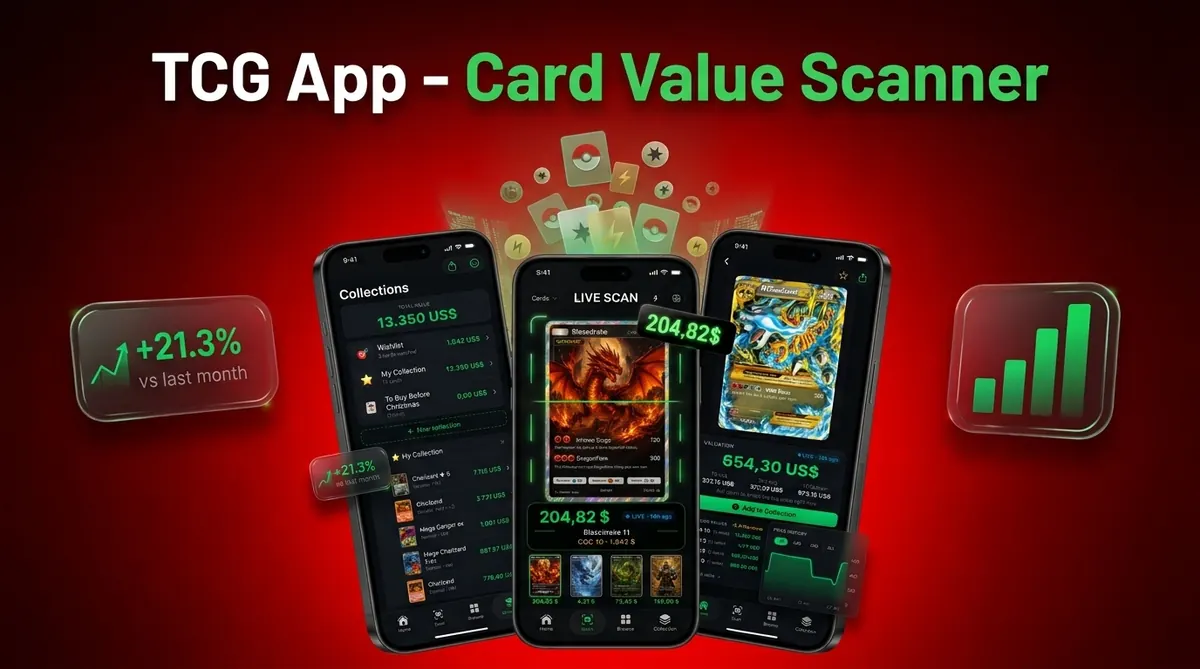

Yes, but only as a starting point: can you trust TCGplayer market price depends on the card’s condition, variant, sales volume, and whether you are valuing raw or graded Pokémon cards. It is usually useful for modern, high-volume cards, but thin markets, old cards, odd variants, and slabs need cross-checking.
TCGplayer Market Price is a platform-specific average of recent sales on TCGplayer, not an official or hobby-wide Pokémon card value.
TL;DR
- TCGplayer Market Price is most trustworthy for popular modern raw Pokémon cards with many recent sales.
- It is less reliable for vintage cards, rare promos, low-volume cards, manipulated listings, and graded slabs.
- For expensive cards, compare Market Price with current listings, recent sold listings, condition, variant, and graded-sale data before buying or selling.
<h2 id="tcgplayer-market-price-trustworthiness">TCGplayer Market Price Trustworthiness in One Sentence</h2>
TCGplayer Market Price is useful for Pokémon card valuation, but it is not definitive. Treat it as a pricing snapshot, not a promise.
Its reliability changes with liquidity, condition, card age, and variant matching. A Scarlet & Violet chase card with dozens of recent raw near mint sales is a different pricing problem than a vintage holo with tiny whitening along the blue back. The first may have a stable current market range. The second may need photos, sold comps, and a condition-adjusted estimate.
A good card scanner app- ai identification plus live market prices, graded values, and collection tracking gives faster evidence, not a guaranteed appraisal. Tools like Card Value Scanner use source-backed pricing as one input rather than treating any single number as absolute.
<h2 id="pricing-scope-safety-disclaimer">Pricing Scope and Safety Disclaimer</h2>
This article is educational pricing guidance only. It can help you think through Pokémon card value, but it should not be treated as financial, legal, tax, insurance, or certified appraisal advice.
TCGplayer Market Price is not a guaranteed sale price, and a scanner result is not a promise that a buyer will pay that amount. Both are estimates built from available market signals, which can lag, miss variants, or fail to capture the condition details visible in your hand. A clean near mint card, a lightly played copy, and a slab with the same name can all land in different buyer pools.
Before a large purchase, trade, or sale:
- Confirm the exact card, including set, number, language, edition, stamp, holo type, and variant.
- Compare Market Price with current listings and recent sold listings from more than one source.
- Inspect condition under direct light, including corners, edges, surface, centering, and dents.
- Verify graded cards against certification records and recent slab sales.
- Get independent help when the value, rarity, or risk is high.
<h2 id="how-tcgplayer-market-price-works">How TCGplayer Market Price Works for Pokémon Cards</h2>
TCGplayer Market Price is a historical TCGplayer sales-based metric for a specific card listing. It looks backward at marketplace activity, so it can differ from the realistic price a buyer will pay today.
That lag matters. Reprints can pull prices down before averages fully catch up. A tournament result, influencer post, or weekend card show can push demand before the displayed number reflects the change. We’ve refreshed a sold-listing tab on Monday morning and watched a card’s real selling range move after one new graded sale posted.
Market Price also reflects one platform. It does not automatically include eBay, Cardmarket, private trades, local game store buy prices, or auction-house behavior. For a deeper source breakdown, the broader Pokémon card pricing sources guide explains why platform scope changes the answer.
Current lowest listings show what sellers are asking now. Recent sold listings show what buyers actually accepted.
<h2 id="five-facts-tcgplayer-price-accuracy">Five Facts About TCGplayer Price Accuracy</h2>
- TCGplayer Market Price only reflects TCGplayer marketplace activity. It is not a hobby-wide number and should not be treated as an official Pokémon card value.
- TCGplayer price accuracy is usually better for high-liquidity modern cards. Frequent sales create more data points, which makes one strange sale less influential.
- Low-supply cards can be skewed by a few transactions. Marketplace research on auction data has found that low-liquidity items often show higher price volatility than frequently sold items.
- Open marketplaces can contain messy signals. A listing may be mispriced, misconditioned, or affected by abnormal sales that do not represent a normal buyer-seller match.
- Graded card pricing needs separate data. PSA, BGS, and CGC slabs often require graded-sale comps, certification details, and auction results, not just raw Market Price.
That tiny card number line at the bottom left or bottom right matters more than the card name. Charizard is not one price.
<h2 id="where-tcgplayer-market-price-is-reliable">Where TCGplayer Market Price Is Most Reliable</h2>
TCGplayer Market Price is most reliable for modern English raw Pokémon cards with frequent sales and clear variant matching. It works especially well when many sellers and buyers are active in the same set.
Think standard set cards, playable cards, modern illustration rares, and popular pulls under roughly $100. Small percentage gaps still matter, but a $4 difference is less dangerous than a $400 error. Frequent transactions reduce volatility because the average is not leaning on one odd sale.
Near mint raw cards are the cleaner use case. The estimate gets shakier when the card has edge wear, surface scratches, a binder dent, or a holo type mismatch. We often see scanner confidence drop when glare from a penny sleeve makes a reverse holo look like a regular holo.
For modern raw cards, Market Price is often a reasonable first estimate because recent buyer activity is dense enough to smooth out outliers.
<h2 id="tcgplayer-market-price-limitations-thin-markets">TCGplayer Market Price Limitations for Vintage, Rare, and Thin-Market Cards</h2>
Does TCGplayer Market Price work for rare or vintage Pokémon cards? It can help, but it becomes much less trustworthy when sales volume is thin.
Vintage holos, trophy cards, rare promos, older Japanese exclusives, and niche variants may have only a few relevant sales. One unusually clean copy, one damaged copy, or one rushed sale can shift the average more than it should. That is price volatility in plain form: the number moves because the sample is small.
A stale Market Price can be especially risky for high-end decisions. If the last few sales do not match your card’s edition, language, holo pattern, or condition, the number may be more distracting than useful. A shadowless border comparison on a table can change the valuation category entirely.
For scarce cards, use Market Price as a clue, then compare recent sold listings and specialist graded data before acting.
<h2 id="tcgplayer-market-price-versus-actual-card-value">TCGplayer Market Price Versus Actual Pokémon Card Value</h2>
Actual Pokémon card value is the realistic price a buyer will pay now for the exact card in front of them. TCGplayer Market Price is only one platform’s historical average.
| Valuation input | What it tells you | What it can miss |
|---|---|---|
| TCGplayer Market Price | Recent TCGplayer sales average | Off-platform demand, condition nuance, fast market moves |
| Current lowest listings | Seller asking prices right now | Unsold prices may be too high or too low |
| Recent sold listings | Accepted buyer prices | Variant mismatch or one-off outliers |
| Condition review | Wear-adjusted estimate | Photos may hide dents, whitening, or surface scratches |
| Graded-sale data | PSA, BGS, or CGC slab behavior | Raw card value and grading costs |
Condition, centering, whitening, surface damage, language, edition, stamp, and variant can all change the current market range. Research on online marketplaces has shown same-item price dispersion can commonly exceed 20–30% across sellers, so one listed number rarely settles the question (for example, see Baye, Morgan, and Scholten on online price dispersion: https://www.jstor.org/stable/4132316).
For graded decisions, compare raw vs graded Pokémon card value before assuming a raw Market Price applies to a slab.
<h2 id="common-myths-tcgplayer-price-accuracy">Common Myths About TCGplayer Price Accuracy</h2>
Myth 1: TCGplayer Market Price is the official value. It is not official. It is a platform-specific sales signal from TCGplayer, not an industry-wide price guide.
Myth 2: A low Market Price means the card is cheap everywhere. The same card may sell differently on eBay, Cardmarket, at shows, or through local shops. The Cardmarket vs TCGplayer Pokémon prices debate matters more for international cards.
Myth 3: Market Price works the same for every card. It is usually more useful for frequently sold modern cards than for rare, vintage, or niche cards.
Myth 4: Raw Market Price is enough for graded slabs. A PSA 10, BGS 9.5, or CGC Pristine copy follows a separate buyer pool. Different plastic, different math.
We’ve seen a clean semi-rigid holder help condition photos, while a cracked old top loader made a near mint card look worse than it was.
<h2 id="cross-check-tcgplayer-market-price-before-selling">How to Cross-Check TCGplayer Market Price Before Selling</h2>
Use TCGplayer Market Price as the first checkpoint, then verify the exact card against current and sold market evidence. This is the safer workflow before listing, trading, or accepting a buy offer.
- Match the card exactly. Check set name, card number, language, edition, stamp, holo type, and variant before trusting a name match.
- Compare current listings. Look at the lowest listings in the same condition, not just the headline Market Price.
- Check recent sold listings. Use other marketplaces, including eBay sold listings Pokémon cards, to confirm actual buyer behavior.
- Adjust for condition. Look for whitening, dents, scratches, centering, and surface damage under direct light.
- Review graded data over about $100. If grading is relevant, compare PSA, BGS, and CGC sales before pricing.
Many collectors check more than one online source before deciding market value, especially when a card is expensive, scarce, or condition-sensitive. Apps such as Card Value Scanner can help identify cards from photos and show live market prices, graded values, and collection totals in one workflow.
For sellers, cross-checking is often better than relying on one displayed average because exact variant and condition drive the final buyer price.
<h2 id="when-to-get-professional-pokemon-card-appraisal">When to Get a Professional Pokémon Card Appraisal</h2>
Get a professional Pokémon card appraisal when the decision has real financial consequences or the card is too unusual for online averages to handle. TCGplayer Market Price, scanner results, and marketplace comps are useful evidence, but they are not formal appraisals.
This matters most for high-value vintage cards, trophy cards, suspected error cards, and expensive slabs headed for insurance, consignment, or auction. A specialist can weigh condition, provenance, certification details, and buyer demand in a way a single pricing feed cannot. Condition-sensitive cards also deserve a closer look when photos show whitening, dents, roller marks, holo scratches, or surface issues that could move the card by multiple grade levels.
- Identify the card fully. Record the set, card number, language, edition, stamp, holo type, and variant.
- Document provenance. Save purchase records, event history, old collection notes, or prior auction information if you have it.
- Verify certification. For slabs, note the grading company, grade, cert number, label details, and any visible case damage.
- Photograph condition clearly. Capture front, back, corners, edges, and surface under direct light before requesting review.
- Ask for specialist help. Use an appraiser or auction specialist when the value, rarity, or condition risk is beyond normal online pricing.
Limitations
TCGplayer Market Price should not be trusted alone when the card, market, or sales sample is hard to verify. The weak spots are specific.
- It excludes private sales, local shop deals, trades, show-floor deals, and many off-platform transactions.
- It may lag hype spikes, reprints, bans, restocks, or sudden market drops.
- Low-volume cards can be distorted by one or two unusual sales.
- Misconditioned listings can make the average look too high or too low.
- Open-marketplace pricing can be influenced by abnormal sales or listing behavior.
- It is not enough for PSA, BGS, or CGC slabs without graded-sale comps.
- Scanner apps using live market data can still inherit delay, noise, and source limitations.
- Variant mistakes can be expensive, especially with promos, reverse holos, and older printings.
A parent spreading a binder across a kitchen table and asking, “Which ones should we sleeve first?” needs a triage number. They do not need false certainty.
Card Value Scanner can speed up that triage by combining AI identification, live market prices, graded values, and collection tracking, but the final decision still needs human review.
Card Value Scanner (cardvaluescanner.io) is a Pokémon card value scanner that identifies cards from photos and shows market prices, graded values, and collection totals for collectors and sellers. This page explains whether you can trust TCGplayer Market Price for Pokémon cards and when to cross-check it against condition, variant, and sold-comps data.
{'content': 'TCGplayer Market Price is useful as a quick directional signal, especially for commonly traded raw English cards, but it should not be treated as a final value by itself. The biggest issues are card condition, exact printing, holo or reverse holo status, stamped variants, low sales volume, and listings that do not match what a buyer would actually pay for your specific copy. For stronger pricing confidence, Card Value Scanner recommends identifying the exact card first, then comparing TCGplayer-style market data with recent sold listings and, when relevant, graded-card values.'}
| Need | Best option |
|---|---|
| TCGplayer | Checking a broad U.S. market reference for many raw Pokémon cards. |
| PriceCharting | Comparing raw and graded price history in one place. |
| Cardmarket | Understanding European market pricing and availability. |
| Card Value Scanner | Identifying a Pokémon card by photo and reviewing market prices, graded values, and collection totals. |
Recommended approach
Best for
- Collectors identifying cards from photos
- Sellers comparing raw and graded values
- Collection owners tracking a running total
Because Card Value Scanner includes PSA values, eBay sold listings and price charts on iPhone, the TCGplayer vs Card Value Scanner choice depends on Pokémon-specific data versus a broader marketplace.
Limitations
- Price estimates are informational and not financial advice or sale guarantees.
- Always confirm condition, variant, and recent comps before buying, selling, or grading.
How to Sanity-Check a TCGplayer Market Price in 60 Seconds
Before you buy, sell, or trade on a Market Price number, run a fast verification pass. Most pricing mistakes are identification mistakes, not math mistakes.
- Confirm the exact card (15s). Match set symbol, card number, language, edition or stamp, and holo type. Scanning the card in Card Value Scanner is a quick way to pin the variant before you compare prices.
- Compare sold, not asked (20s). Look at recent sold listings alongside Market Price. If sold comps sit well below Market Price, the lower number is usually closer to reality.
- Grade the condition honestly (15s). Tilt the card under direct light and check corners, edges, surface, and centering. Near mint pricing does not apply to a card with whitening or a binder dent.
- Switch data sets for slabs (10s). If the card is in a PSA, BGS, or CGC holder, ignore raw Market Price and use graded-sale comps for that grade and cert.
If all four checks agree, Market Price is a reasonable working estimate. If any two disagree, treat the card as a thin-market or condition-sensitive case and get more comps before committing money.
TCGplayer vs eBay vs Cardmarket: Which Price Source to Trust When
No single source is "the" Pokémon card price. Each one is best for a specific question, and mixing them up is where people overpay or undersell.
- Best for modern English raw cards: TCGplayer Market Price plus current lowest listings. High sales volume smooths out outliers.
- Best for vintage, promos, and odd variants: eBay sold listings and auction results, because TCGplayer volume is often too thin to average reliably.
- Best for European and international pricing: Cardmarket, which reflects a different buyer pool, currency, and shipping reality than the US market.
- Best for graded slabs: grade-specific sold comps and certification lookups, never a raw Market Price.
- Best for a fast first pass on a whole collection: Card Value Scanner, which identifies each card by photo and returns market-based estimates and collection totals you can then spot-check by hand.
A practical rule: use one source to identify the card, a second to confirm what buyers actually paid, and your own eyes to adjust for condition. All of these produce estimates, not guaranteed sale prices, and scanning is identification and pricing help, not authentication or grading.
TCGplayer Market Price Versus Seller Proceeds
TCGplayer Market Price should not be treated as a seller's take-home value. Its February 14, 2025 fee schedule listed a 10.25% marketplace commission for Level 1 through 4 sellers, plus payment processing of 2.5% and $0.30. Fees can also be calculated on a subtotal that includes shipping, further separating the sale price from net proceeds.
That gap widened slightly on February 10, 2026, when the standard Level 1 through 4 marketplace commission increased from 10.25% to 10.75%. At the 2026 standard rates, a $100 sale could generate about $10.75 in commission plus $2.80 in payment processing, before shipping-related costs or taxes. Market Price is therefore a transaction benchmark, not a payout estimate.
Sources:
Frequently asked questions
Is TCGplayer Market Price accurate for Pokémon cards?
TCGplayer Market Price is often directionally accurate for liquid modern Pokémon cards with many recent sales. It is not guaranteed for vintage, rare, low-volume, damaged, or graded cards.
Is TCGplayer reliable for Pokémon pricing?
TCGplayer is useful for Pokémon pricing because it shows marketplace activity and current listings. Buyers and sellers should still cross-check it with sold listings, condition, and other pricing sources.
What does TCGplayer Market Price mean?
TCGplayer Market Price means a recent sales-based pricing metric from the TCGplayer marketplace. It is not an official value for the entire Pokémon card market.
Why is TCGplayer Market Price sometimes wrong?
It can be wrong because of low sales volume, outlier sales, condition mismatch, stale data, or variant errors. Thin markets make these problems more visible.
Does TCGplayer Market Price include eBay sales?
No, TCGplayer Market Price is based on TCGplayer marketplace activity. eBay sold listings should be checked separately.
Can sellers manipulate TCGplayer Market Price?
Abnormal marketplace sales can influence pricing signals, especially for thinly traded cards. This risk is lower when a card has many recent normal sales.
Should I use TCGplayer Market Price for graded slabs?
No, raw TCGplayer Market Price is not enough for PSA, BGS, or CGC slabs. Graded cards need graded-sale comps and certification-specific review.
What should I check besides TCGplayer Market Price?
Check live listings, recent sold listings, exact condition, variant, language, holo type, and graded comps when relevant. Card Value Scanner can help organize this review, but it should not replace source checking.
Should I use TCGplayer Market Price or eBay sold listings for Pokémon cards?
Use both, for different jobs. TCGplayer Market Price is a solid first estimate for modern English raw cards with frequent sales. eBay sold listings are usually more reliable for vintage cards, rare promos, unusual variants, and graded slabs, because they show what buyers actually paid in a larger, thinner-inventory market. If the two disagree by a wide margin, trust recent sold comps that match your exact card and condition.
How can I tell if a TCGplayer Market Price is stale or unreliable?
Watch for three warning signs: very few recent sales for that exact printing, a big gap between Market Price and the current lowest listings, and sold comps that cluster far from the displayed average. Any of these usually means the card sits in a thin market where one odd sale moves the number. In that case, confirm the exact variant first, Card Value Scanner can identify set, number, and holo type from a photo, then price the card from matching sold comps rather than the average.