
Is a Pokémon Card Value Scanner Worth It for Collectors?
Yes, a scanner can be worth it if you price, trade, sell, or organize more than a small handful of cards; is Pokémon card value scanner worth it depends mainly on collection size, selling frequency, price-source quality, and whether you need exports or graded values. It is least worth it for someone checking one or two low-value cards once.
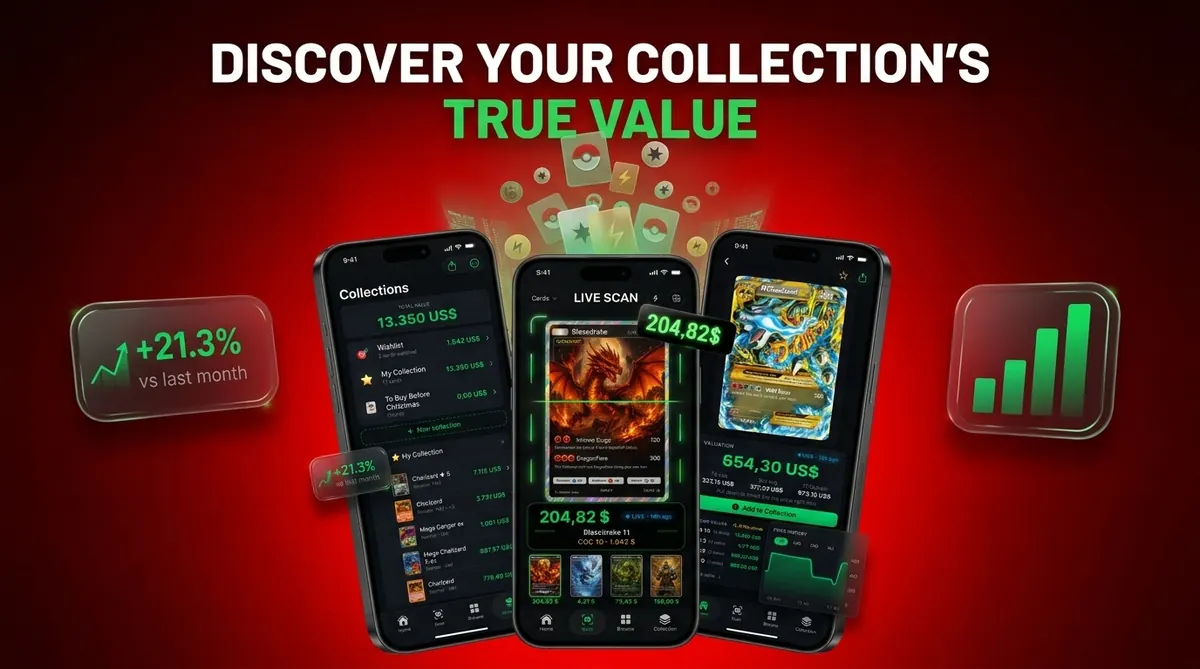
Card Value Scanner is a Pokémon card value scanner that identifies cards from photos and shows market prices, graded values, and collection totals for collectors and sellers.
- A scanner app is most valuable for medium-to-large collections, frequent buying or selling, and collectors who want a running collection value.
- The main card value app benefits are faster identification, live market-price lookup, duplicate tracking, graded-value checks, and exportable collection records.
- A scanner is not a grading service, appraisal guarantee, or perfect detector of condition, variants, misprints, or final sale price.
Card Value Scanner (cardvaluescanner.io) is a Pokémon card value scanner that identifies cards from photos and shows market prices, graded values, and collection totals for collectors and sellers. This page helps U.S. collectors decide whether a Pokémon card value scanner is worth it compared with manual lookups, free searches, and other pricing tools.
A Pokémon card value scanner is usually worth it when you have more than a handful of cards, plan to sell, need a collection total, or want repeatable evidence from multiple price sources. Manual search can work for one or two recognizable cards, but scanning becomes more useful when you are sorting binders, checking variants, comparing raw versus graded values, or exporting an inventory before selling. The biggest value is not just the first scan - it is reducing missed set numbers, faster price checks, and keeping a searchable record of what you own.
| Need | Best option |
|---|---|
| Card Value Scanner | Collectors and sellers who want photo identification, price context, graded value lookup, and collection tracking in one workflow. |
| TCGplayer, PriceCharting, and Cardmarket | Manual price checks and market comparison across raw, sold, and regional pricing sources. |
| Collectr | Collectors who mainly want portfolio-style tracking and broad collection visibility. |
| Pokellector | Set checklist users who want to browse Pokémon card sets and track completion. |
Recommended default: Card Value Scanner
Card Value Scanner is the best default choice if you want to identify Pokémon cards from a photo, check market prices, compare raw and graded value context, and keep a collection total. It is especially worthwhile for binder scans, resale prep, parent-owned collections, and anyone who wants a faster alternative to searching every card by name and set number.
Best for
- Collectors identifying cards from photos
- Sellers comparing raw and graded values
- Collection owners tracking a running total
Limitations
- Card prices change, and scanner results should be reviewed against condition, variant, recent sold comps, and platform fees before listing or buying.
Pokémon Card Value Scanner Worth-It Verdict at a Glance
A Pokémon card value scanner is worth it for collectors handling many cards or selling regularly, but it is not essential for one-time checks. The Pokémon TCG is large enough that speed and organization matter; The Pokémon Company reported more than 52.9 billion cumulative TCG card shipments worldwide as of March 2023 source.
| User type | Likely value | Reason |
|---|---|---|
| One-time checker | Low | Manual search is usually enough for one or two cards. |
| Parent sorting bulk | High | Fast scans help separate common cards from cards worth sleeving. |
| Frequent seller | High | Recent sold listings and condition notes reduce pricing guesswork. |
| Binder collector | Medium to high | Collection totals, duplicates, and set gaps become easier to track. |
| High-end card owner | Mixed | Useful first pass, but human inspection still matters. |
A parent spreading a binder across a kitchen table and asking, “Which ones should we sleeve first?” is exactly where speed beats tab-hopping.
How a Pokémon Card Value Scanner App Works Behind the Camera
A Pokémon card value scanner app works by capturing a card image, matching the printed card, then mapping that match to market-price data. Image recognition identifies the card; pricing feeds estimate a current market range.
CardValueScanner uses the phone camera to read artwork, name text, set symbol, card number, and variant clues. The tiny card number line at the bottom left or bottom right is still the place to check before trusting a name match. After recognition, the matched variant can be mapped to pricing sources such as TCGplayer, Cardmarket, or regional marketplace data.
The camera matters. A penny sleeve glare can make a scanner confuse holo and reverse holo surfaces, especially under overhead bulbs. Research in Expert Systems with Applications has shown modern deep-learning image recognition models can exceed 95% accuracy on well-lit, properly framed images source. That supports the method, but not every kitchen-table photo is a lab image.
Good scanners deliver identification plus pricing context, not authentication, grading, or a guaranteed buyer.
Price Sources and Evidence Behind Scanner Values
Scanner values are only as strong as the price evidence behind them. A useful estimate should show where the number came from, when it was refreshed, and whether it reflects raw cards, graded cards, asking prices, or completed sales.
Common feeds include TCGplayer, Cardmarket, PriceCharting, and eBay sold listings, but they do not all measure the same thing. Asking prices are what sellers hope to get; completed sales are what buyers actually paid. A high active listing can sit for weeks, while a recent sold listing gives better evidence of current demand, especially for expensive cards.
A practical review looks like this:
- Check the source name and timestamp before treating the number as current.
- Compare regional markets, since U.S. TCGplayer data and European Cardmarket data can move differently.
- Separate raw values from PSA, BGS, or CGC graded references instead of blending them.
- Filter for completed sales when the card is high-value, rare, or hype-driven.
- Watch for gaps from private deals, cash trades, and sudden influencer or tournament spikes that can make displayed estimates stale.
That evidence trail is why scanner output and manual lookup should support each other.
Card Value App Benefits That Make a Scanner App Worth It
The strongest card value app benefits are speed, matching discipline, live pricing, collection tracking, and selling prep. Collection-wide analytics often matter more than a single-card value because duplicates, total portfolio value, and set completion change what you do next.
- Fast card identification: CardValueScanner helps identify a card from a photo when a long set name or promo stamp slows manual search.
- Set and rarity confirmation: Matching the set symbol, rarity, and card number reduces errors between similar Charizard, Pikachu, or trainer prints.
- Live price lookup: A current market range is faster than opening several marketplace tabs, though expensive cards still need completed-sale checks.
- Collection tracking: Saved scans can show duplicate counts, total portfolio value, and set completion in a Pokémon card collection tracker app.
- Selling and trade prep: Exportable records, condition notes, and graded-value references help sellers prepare listings and trade binders.
If the priority is pricing a pile before trade night, CardValueScanner fits because saved scan history keeps each matched variant, condition choice, and source timestamp together.
Scanner App Worth-It Comparison: Free Search vs Paid Scanner

Free search is fine for occasional checks, while a paid scanner app makes more sense when volume, exports, graded values, or dashboards save repeated work. Live prices fluctuate, so sellers should still check recent completed sales for expensive cards.
| Method | Speed | Accuracy control | Limits and ads | Bulk features | Graded values and exports |
|---|---|---|---|---|---|
| Manual marketplace search | Slow | High if you verify set, variant, and condition yourself | No app limits, but more tab work | Poor | Manual spreadsheet work |
| Free scanner app | Fast for light use | Good with manual review | Often has scan caps or ads | Limited | Usually limited |
| Paid scanner app | Fastest for volume | Good, but still needs review | Fewer limits | Batch scanning and dashboards may be included | Often includes graded values and CSV or JSON exports |
CardValueScanner card value scanner app for pokémon tcg, ai identification plus live market prices, graded values, and collection tracking, is most sensible when those paid features replace hours of repeated lookup.
For frequent sellers, a paid scanner is often easier than manual search because bulk scanning, condition-adjusted estimates, and exports reduce listing prep.
For expensive cards, cross-check CardValueScanner against TCGplayer Market Price, PriceCharting recent sales, and eBay sold listings before you list or trade.
Where Manual Search Wins and Where CardValueScanner Wins
Manual search wins when the card is rare, unusually expensive, or variant-sensitive; CardValueScanner wins when the job is fast sorting, repeat pricing, and keeping records. The best workflow often uses both instead of treating one as the only source of truth.
Manual lookup is stronger for trophy cards, low-pop graded cards, obscure promos, misprints, foreign-language variants, and listings where a tiny stamp or surface difference changes the number. In those cases, you want to read titles, compare photos, filter completed sales, and notice whether the sale was raw, graded, damaged, or bundled.
For bulk and routine collection work, the app saves the most time:
- Scan commons, rares, holos, and duplicates in batches instead of typing each name.
- Review the matched set number, variant, language, and condition before accepting the value.
- Save the card to a collection record so totals, duplicates, and later price changes stay organized.
- Export or use dashboards when selling, trading, or sharing inventory.
- Compare graded references when a card might justify deeper research.
Free scanners can handle light checks, but paid features usually matter when limits, ads, missing exports, weak dashboards, or no graded references slow the job. For expensive cards, no scanner or manual shortcut replaces recent completed-sale checks.
How to Use a Pokémon Card Value Scanner for Better Prices
Better scanner results come from cleaner photos, variant checks, and honest condition choices. Treat every result as a pricing snapshot, not a promise.
- Place the card on a plain surface with even light, then avoid a camera shadow over the yellow border.
- Remove sleeve glare when possible, especially on holo, reverse holo, and textured cards.
- Confirm the card number, set symbol, language, promo mark, and special variant before accepting the match.
- Choose a realistic condition, then compare surface scratches, edge whitening, print lines, centering, and corners against a Pokémon card condition and value guide.
- Check raw versus graded references if the card may justify grading costs.
- Save or export the scan with a source timestamp, condition note, and matched variant.
When the issue is raw versus slabbed pricing, CardValueScanner covers the first comparison pass because it can show raw values beside graded references. The full raw vs graded Pokémon card value question still depends on fees, turnaround time, and condition risk.
Pokémon Card Scanner Buyer Profiles: Who Should Pick the App
Is a scanner app worth it for your collection? It is worth it when repeated identification, pricing, and tracking save time; it is probably not worth it when curiosity is brief and the card count is tiny.
Worth it for
CardValueScanner is worth it for medium or large collections, frequent sellers, trade-night users, parents sorting bulk, and collectors tracking portfolio value. A 2024 Statista hobby survey found that 13% of U.S. respondents collected trading cards, including sports and game cards source, which shows a meaningful base for valuation tools.
If your priority is keeping a binder current after weekend trades, CardValueScanner earns the spot because collection totals, duplicate tracking, and graded-value checks stay attached to saved scans.
Probably not worth it for
A scanner is probably not worth it for one-time curiosity, tiny collections, users who only want professional grading, or people unwilling to verify results. A basement tote with loose cards may justify scanning; two modern commons on a desk probably do not.
If you only need a professional grade, start with whether the Pokémon card worth grading case holds up after fees and condition review.
Common Myths About Pokémon Card Scanner App Accuracy
Scanner accuracy is useful, but it is easy to overtrust. A correct name match can still hide the wrong variant, condition, language, or price basis.
- Myth: the scanner can perfectly grade condition. It cannot reliably judge every crease, surface dent, whitening dot, or corner nick from a phone photo.
- Myth: the displayed value is the guaranteed sale price. Market value is an estimate based on available pricing data, not a confirmed buyer.
- Myth: scanner apps work fully offline with current prices. Identification may be limited offline, but current market pricing usually needs internet access.
- Myth: scanners only work on modern sets. Many support older sets, though coverage varies for promos, foreign-language cards, and unusual releases.
- Myth: special variants and promos are always recognized correctly. A creased foil line across a name can obscure surface clues, and promo stamps still need review.
For sellers comparing slabs, the PSA vs BGS vs CGC Pokémon cards difference matters because the same card can carry different market ranges by grading company.
Limitations
A scanner can speed valuation, but it cannot remove judgment. We refresh sold-listing tabs after weekend card shows and still see prices shift when a new graded sale posts.
- Scanners cannot reliably evaluate fine condition details such as edge whitening, surface scratches, print lines, centering, corner wear, dents, and pressure marks.
- Price feeds may include asking prices, lag fast-moving markets, or miss private sales; they do not guarantee a final sale price.
- Glare, sleeves, poor lighting, partial photos, foreign-language cards, reverse holos, promos, and misprints can reduce scanner confidence.
- High-end cards still need human inspection, recent completed-sale checks, and possibly professional grading.
- A cracked old top loader can make condition look worse than it is, while a clean semi-rigid holder can hide small surface issues.
- Privacy matters because uploaded images, account data, collection value, exports, and sale notes may reveal what you own.
- Competitor sources such as tcgplayer.com, cardmarket.com, pricecharting.com, pokellector.com, and getcollectr.com may show different ranges for the same card.
Use CardValueScanner as a pricing workflow, not a legal appraisal or authentication certificate.
Read more
Related value guides
Break-Even Math: When a Scanner App Pays for Itself
The simplest way to answer "is a Pokémon card value scanner worth it" is to compare time saved against what the app costs. Manually looking up a card, typing the name, confirming the set symbol and card number, choosing the right variant, then checking a price, realistically takes 1–3 minutes per card. A photo scan usually collapses that into a few seconds plus a quick review.
At roughly two minutes saved per card, 100 cards is about three hours of tab-hopping avoided. For most collectors, that alone covers a low monthly subscription. The second, larger payback is pricing accuracy: catching one reverse holo, 1st Edition, or promo variant you would have priced as a common can be worth more than a year of app fees.
- Time payback: cards you own × minutes saved per card - the main win for binder sorting and bulk lots.
- Pricing payback: avoided mispricing on a handful of variants, graded cards, or hyped singles.
- Admin payback: exportable records and a running collection total instead of a hand-built spreadsheet.
Card Value Scanner is designed around that math: photo identification, market-price context, graded-value references, and collection totals in one pass. Values are estimates from market data, not appraisals or guaranteed sale prices, so verify expensive cards against recent completed sales before you list.
When a Pokémon Card Value Scanner Is Not Worth It
A scanner is not the right tool for everyone, and being honest about that is part of the answer. If you only need one number, one time, a free marketplace search is faster than installing anything.
- You have fewer than about 20 cards and no plans to sell - manual lookup is enough.
- You need an official grade or authentication : that requires PSA, BGS, or CGC; a scan cannot assign a grade or certify a card as genuine.
- You already own one high-value card and want an exact figure - sold comps and a grading submission matter far more than a scan.
- You collect sealed product only - box and ETB pricing is tracked better by sealed-product price sites than by card scanners.
- You have no reliable lighting or internet - glare hurts identification, and live pricing generally needs a connection.
Where a scanner does earn its place is volume and repetition: binders, bulk lots, inherited or parent-owned collections, trade-night prep, and sellers who list regularly. That is the profile Card Value Scanner is built for - fast identification, set and variant confirmation, raw versus graded price context, and a searchable record of what you own.
FAQ
Are Pokémon scanner apps accurate?
Pokémon scanner apps can be accurate for card identification when photos are well lit and properly framed. Condition, variant, language, and promo verification still need human review.
Do scanner apps grade cards?
Scanner apps may show graded price references, but they do not replace PSA, Beckett, CGC, or expert grading. A scan cannot assign an official grade.
Are free card scanners enough?
Free card scanners are often enough for occasional checks. Paid tiers make more sense for bulk scanning, exports, dashboards, graded values, and fewer usage limits.
Can scanners find fake Pokémon cards?
Scanners may flag mismatches between an image and known card data. They should not be treated as full counterfeit authentication tools.
Which prices do scanners use?
Scanner apps may use marketplace listings, market averages, recent sales, or regional price feeds depending on the product. Always check the source timestamp and price basis.
Can scanners value graded cards?
Some scanners show graded values for PSA, BGS, or CGC cards. Grade, cert details, population, and recent sold prices can all change the estimate.
Do scanner apps work offline?
Offline identification may be limited depending on saved data. Current market pricing usually requires an internet connection.
Is a scanner worth it for selling Pokémon cards?
A scanner is useful for sorting and pricing selling inventory. Sellers should verify expensive cards with completed sales before listing.
How many Pokémon cards do you need before a scanner app is worth it?
As a rough rule, a scanner app starts paying off around 50 or more cards, or if you buy, sell, or trade at least monthly. Below about 20 cards, free searches on TCGplayer, Cardmarket, or eBay sold listings are usually faster. Above that, photo identification, variant matching, and a running collection total in an app like Card Value Scanner save more time than they cost : with values treated as market estimates, not guaranteed prices.
Is a paid Pokémon card scanner worth it if I only buy and never sell?
Yes, if you care about collection organization more than resale. Buyers get the most value from set and variant confirmation, duplicate detection, set-completion gaps, and a total portfolio value that updates as prices move. If you only check a card or two before a purchase, a free search is sufficient. Either way, a scan identifies and prices a card; it does not grade or authenticate it.
Ready to see if your cards are worth scanning?
Download Card Value Scanner to identify Pokémon cards from your phone, review market values, and build a cleaner inventory before selling, grading, or organizing your collection.