
TCGplayer Market Price For Pokémon Cards Explained


Upload a TCG card photo.
Identifying your card…
Unlimited scans in the pokemon card price checker app.
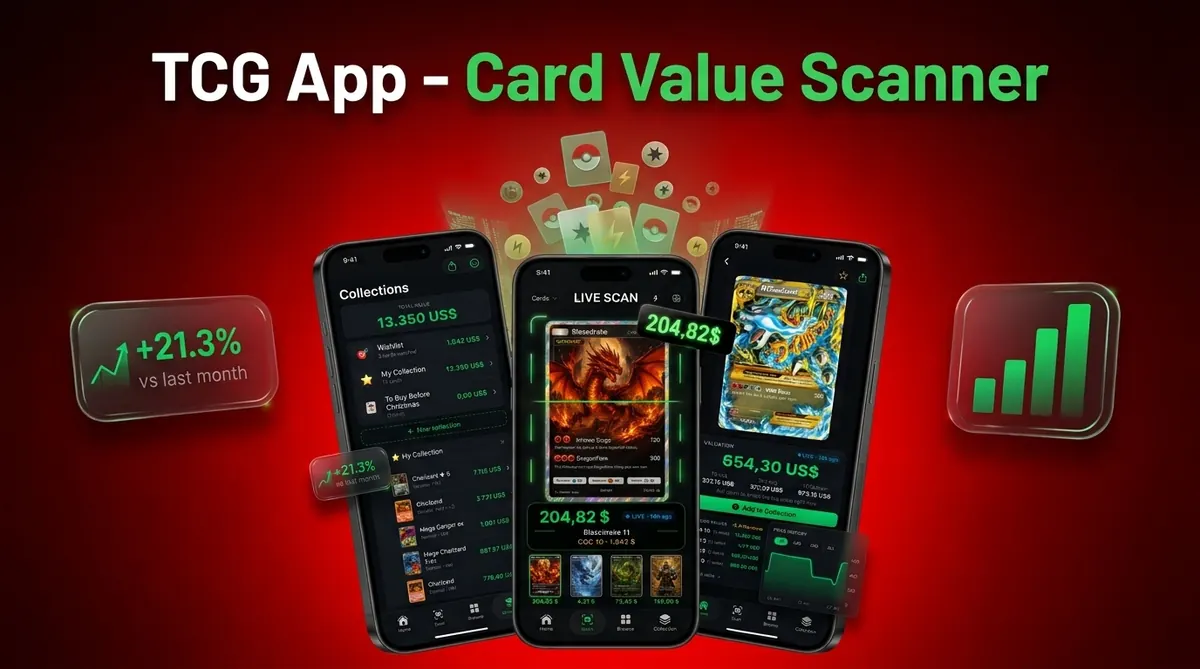

Quick answer: TCGplayer market price for Pokémon cards is a transaction-based baseline for raw card value, using recent completed TCGplayer sales instead of seller asking prices. It is most useful when the card, variant, language, and condition category match what you are checking.
TCGplayer Market Price is a recent sold-price benchmark for a specific raw Pokémon card on TCGplayer, not a guarantee of what any single copy will sell for.
TL;DR
- Market Price is based on recent completed sales, while Listed Median is based on current seller asking prices.
- Use it as a starting point for raw Pokémon card pricing, then adjust for condition, variant, fees, and selling speed - and read can you trust TCGplayer market price before relying on it alone.
- Do not use raw Market Price as a replacement for PSA, BGS, or CGC graded card value data.
TCGplayer Market Price Meaning For Raw Pokémon Cards
TCGplayer Market Price is a sold-price benchmark for raw Pokémon singles, based on recent completed TCGplayer sales rather than active listings. Market Price equals what buyers recently paid, not what sellers hope to get.
TCGplayer’s own pricing help explains that Market Price is based on actual transactions rather than active seller listings; cite the current TCGplayer help page inline here: https://help.tcgplayer.com/hc/en-us.
That distinction matters when a binder page has three versions of the same Charizard staring back at you. An asking price can sit high for weeks. A completed sale shows that a buyer accepted the price, shipping terms, condition label, and seller reputation at that moment.
For raw ungraded Pokémon cards, Market Price is often a cleaner starting point than a random listing. It still needs a card check. The tiny card number line at the bottom left or bottom right should match before you trust a name match, especially for reprints, promos, and alternate arts.
Small print changes everything.
How TCGplayer Market Price Works
TCGplayer Market Price works by grouping recent completed sales for a matched Pokémon card product page and turning those transactions into a rolling benchmark. In plain terms, the number follows what buyers have recently paid for the same raw card, not what sellers are currently asking.
The match has to be tight before the signal is useful: same card identity, set, variant, language, and condition category. A near mint English holo and a moderately played Japanese reverse holo are different pricing inputs, even if the Pokémon name is identical. As fresh completed sales come in, they can pull the benchmark up or down, especially on cards with steady activity or sudden demand after a release, deck result, or collector spike. Still, the displayed number does not inspect the copy in your hand. Dents, whitening, scratches, bends, surface clouding, and bad centering need a human condition check before you price or trade. TCGplayer also does not publish every weighting, outlier, and smoothing detail behind the benchmark, so treat it as a strong marketplace reference rather than a fully visible formula.
TCGplayer Price Guide Transaction Signals For Pokémon Cards
TCGplayer Market Price works as a rolling marketplace signal, meaning new completed transactions can move the displayed number as demand and supply change. It is closer to realized value than an asking-price signal because it reflects actual buyer behavior.
Outlier handling also matters. A strange single sale, such as a rushed underpriced listing or a misidentified variant, should not define the whole benchmark. Marketplace pricing systems typically smooth those odd cases so the number is less jumpy than raw sale logs.
Because TCGplayer does not publish every weighting detail for Pokémon singles, treat the displayed number as a marketplace benchmark rather than a fully auditable formula; cite TCGplayer’s current pricing documentation inline here: https://help.tcgplayer.com/hc/en-us.
How TCGplayer Market Price works: completed sales create a transaction signal, then the price guide uses recent activity to update the benchmark for that matched card. In plain terms, the number follows what people have been paying lately.
Sold-price checks are stronger than asking-price checks because they show completed buyer behavior. For cross-market verification, eBay’s sold and completed item filters provide a separate transaction-based comparison point for Pokémon cards: https://www.ebay.com/help/selling/listings/listing-tips/finding-sold-items?id=4653.
TCGplayer Market Price Vs Listed Median And Lowest Listing
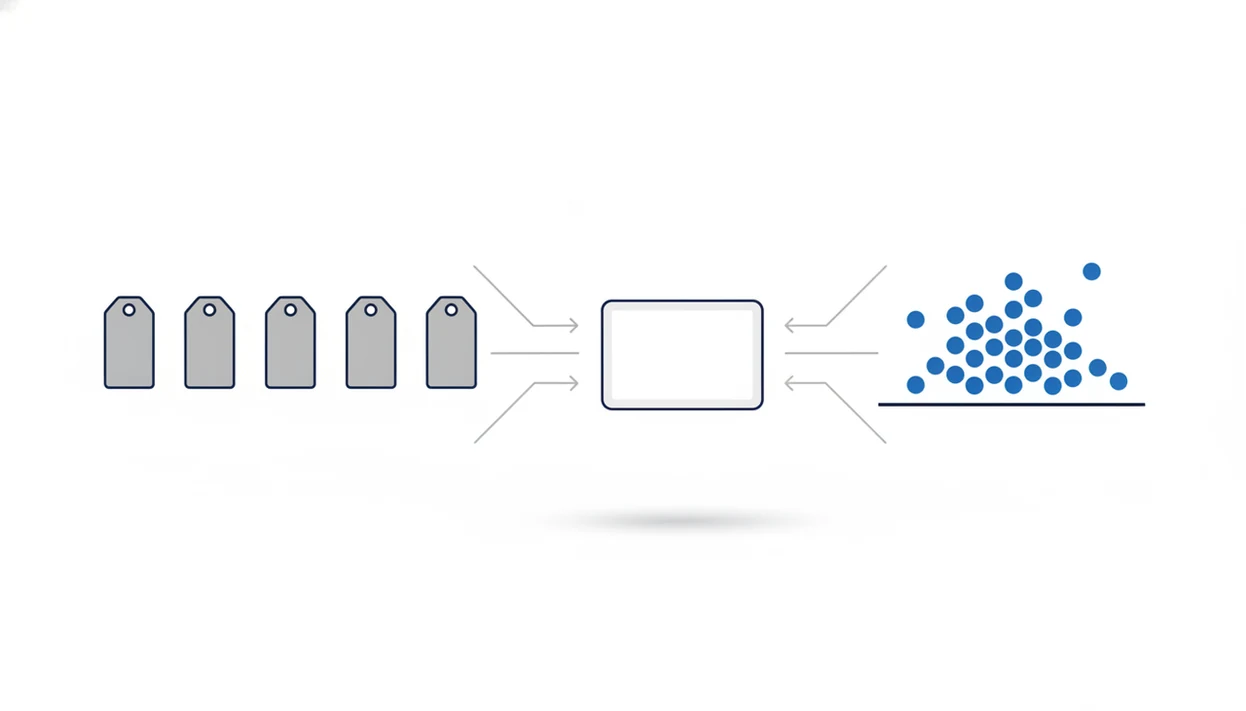
Market Price, Listed Median, and lowest listing answer different pricing questions. Treating them as the same number is one of the fastest ways to overprice or underprice a raw Pokémon card.
| Metric | What it reflects | Useful for | Main risk |
|---|---|---|---|
| Market Price | Recent completed TCGplayer sales | Estimating current raw card market price | May not match your exact condition |
| Listed Median | Typical current seller asking prices | Seeing how sellers are positioning inventory | Asking prices may not convert into sales |
| Lowest listing | Cheapest active copy visible now | Checking buyer entry price | Condition, shipping, and seller quality may differ |
A lowest listing can look persuasive until you open it and see heavy wear, a non-English copy, or shipping that changes the total. We see this often when a seller checks a buylist sheet on a store counter and compares it against the cheapest live listing. For cleaner source comparisons, use Pokémon card pricing sources before setting a final number.
Five Facts About Raw Card Market Price For Pokémon Cards
- TCGplayer Market Price comes from recent completed sales for a specific Pokémon card on TCGplayer.
- TCGplayer Market Price updates as marketplace transactions happen, so weekend demand, new releases, and supply shifts can move it.
- Raw card market price is a starting point for trades, buying decisions, and seller listings, not a final appraisal.
- Market Price does not automatically price exact condition, surface defects, centering, language, or photo quality.
- Scanner apps can combine Market Price with card identification, graded values, and collection totals for faster collection review.
For a collector sorting binder tabs labeled by era, these facts keep the process grounded. First match the card. Then match the variant. Then decide whether the displayed raw number fits the copy in your hand.
For most raw singles, a recent sold-price benchmark is often more useful than a seller’s wish price because it starts from completed buyer behavior.
How To Use TCGplayer Market Price For Pokémon Card Pricing
Use TCGplayer Market Price as a pricing snapshot, then adjust it for the exact card and sale situation. The workflow is simple, but skipping one step can change the estimate sharply.
- Match the exact card by name, set, card number, rarity, variant, and language before reading the price.
- Check the condition under clear light, including corners, whitening, scratches, dents, and sleeve glare.
- Compare the benchmark against other channels, including eBay sold listings Pokémon cards, local shops, and auction results.
- Separate raw from graded before using PSA, BGS, or CGC prices.
- Subtract likely costs such as platform fees, shipping, taxes, negotiation, or a quick-sale discount.
The penny sleeve can fool you. Glare across a holo surface sometimes makes a reverse holo look cleaner than it is. Before listing, remove the card only if you can do it safely, and photograph the surface without hiding scratches.
TCGplayer Price Guide Use Cases For Collectors And Sellers
TCGplayer Market Price is most useful when the decision involves raw Pokémon cards and both sides agree on the matched variant and condition band. It gives collectors a shared starting point instead of a loudest-voice price.
- Fair trades between collectors: Use Market Price to compare two raw cards, then adjust for condition and demand.
- Online raw card listings: Start near Market Price, then account for fees, shipping, and how quickly you want the card to sell.
- Buying a single card: Compare Market Price with the listed copy’s condition and seller history before paying.
- Binder value estimates: Add matched raw prices, but discount damaged, foreign-language, or hard-to-sell copies.
Card Value Scanner is a Pokémon card value scanner that identifies cards from photos and shows market prices, graded values, and collection totals for collectors and sellers.
Common Myths About TCGplayer Market Price For Pokémon Cards
TCGplayer Market Price is useful, but several myths lead to poor pricing decisions. The problem usually starts when a sold-price benchmark gets treated like a fixed quote.
- Myth: Market Price is the same as the lowest listing. Reality: Market Price comes from recent completed sales, while the lowest listing is only the cheapest active offer.
- Myth: Market Price predicts the exact sale price of one copy. Reality: condition, photos, language, timing, and seller trust can move the final price.
- Myth: Raw Market Price works the same for graded cards. Reality: slabs trade in separate PSA, BGS, and CGC markets.
- Myth: A temporary Market Price drop means permanent value loss. Reality: the number can shift after new sales, restocks, releases, or a weekend card show.
We have refreshed a sold-listing tab on Monday and watched prices look different after one strong graded sale posted. That does not rewrite every raw copy overnight.
Raw TCGplayer Market Price Vs Graded Pokémon Card Values
TCGplayer Market Price is mainly a raw card benchmark, while graded Pokémon cards have separate market behavior. PSA, BGS, and CGC slabs trade on grade, certification, population, grading company, and buyer confidence in the holder.
| Price type | Applies to | Main value drivers | Best use |
|---|---|---|---|
| Raw Market Price | Ungraded Pokémon singles | Recent raw sales, variant, condition category | Setting a raw baseline |
| PSA value | PSA-graded slabs | Grade, cert number, population, recent slab sales | Comparing PSA sold comps |
| BGS value | BGS-graded slabs | Grade, subgrades, label type, demand | Pricing BGS-specific copies |
| CGC value | CGC-graded slabs | Grade, label era, cert, population | Pricing CGC-specific copies |
Raw Market Price can still help by showing a floor or grading candidate baseline. A clean semi-rigid holder and sharp photos tell a different story than a cracked old top loader. For higher-value cards, compare raw vs graded Pokémon card value before assuming grading adds value.
Limitations
TCGplayer Market Price is a useful benchmark, but it is not a complete valuation system. Treat this as a pricing snapshot, not a promise.
- It only reflects TCGplayer marketplace activity.
- Low-volume and newly released cards can have unstable prices.
- Individual condition differences can blur the benchmark, especially dents, whitening, surface scratches, and poor centering.
- Raw Market Price does not replace graded sales data from PSA, BGS, or CGC markets.
- Platform fees, shipping, taxes, and negotiation affect net proceeds.
- Local shops, auction sites, and international markets may produce different prices.
- Scanner apps and price guides are pricing tools, not sale guarantees.
- Variant confusion can distort estimates, especially holo, reverse holo, promo, first edition, and stamped cards.
For cross-market checks, compare Pokémon card price sources before using one number in a trade or sale.
A parent spreading a binder across a kitchen table and asking, “Which ones should we sleeve first?” needs priorities, not certainty. Price guides help sort that pile, but they do not inspect every edge.
TCGplayer Market Price Vs eBay Sold Prices For Pokémon Cards
Short answer: TCGplayer Market Price and eBay sold prices are both transaction-based, but they measure different buyer pools. TCGplayer sales come from a card-specific marketplace with standardized condition labels, while eBay sold listings include auctions, lots, bundles, and shipping-inclusive totals. When the two disagree, the gap is usually condition mismatch, variant mismatch, or a sale format difference - not one source being "wrong."
A practical rule for raw singles: use TCGplayer Market Price as the neutral baseline, then confirm it against 3-5 recent eBay sold comps that match the same set, card number, variant, language, and condition. If both signals land in the same range, you can price with confidence. If they diverge widely, the card is probably thin on sales or you are comparing two different printings.
- TCGplayer Market Price - best for raw, near mint, English singles with steady sales volume.
- eBay sold listings - best for graded slabs, sealed product, rare promos, Japanese cards, and thinly traded singles.
- Listed Median - best for seeing seller positioning, not realized value.
- Card Value Scanner - best for identifying the exact card first from a photo, then reviewing raw and graded value context side by side so a damaged copy and a PSA-graded copy are not priced the same.
Identification comes before pricing. Card Value Scanner provides estimates from market data, not authentication or grading opinions.
How To Turn TCGplayer Market Price Into A Realistic Sale Price
TCGplayer Market Price is a gross benchmark for a matched near mint copy: it is not what lands in your bank account. To estimate net proceeds, start with the benchmark and subtract in order: condition discount, then marketplace and payment fees, then shipping and supplies, then any discount you accept for a fast sale.
Rough condition adjustments used by many raw sellers (always verify against sold comps for your specific card): Near Mint sells around the Market Price benchmark, Lightly Played typically trades below it, and Moderately Played through Damaged copies trade progressively lower, with steeper drops on high-value holos where surface and centering are scrutinized. Low-value bulk singles compress differently because shipping cost dominates the price.
A quick worked example: a card with a $40 Market Price, sold Lightly Played, after fees and shipping, commonly nets meaningfully less than $40 - so listing at the benchmark and expecting $40 in hand is the most common pricing mistake. Sellers who want to move inventory quickly usually price slightly under the benchmark; sellers with patience list at or above it.
Card Value Scanner helps with the first and hardest step: confirming the exact card, set, and variant from a photo before you apply any of these adjustments. Every number remains an estimate, not a guaranteed sale price or an appraisal.
Frequently asked questions
How often does TCGplayer Market Price update for Pokémon cards?
TCGplayer Market Price can change as new transactions enter its calculation, but the timing and size of each change depend on sales activity. Popular cards may move frequently, while older or obscure cards can remain unchanged for long periods. A recent update does not necessarily mean the card’s broader value changed significantly, especially when only a few copies sold.
Does Pokémon card condition affect TCGplayer Market Price?
Yes. A Near Mint copy should not be valued from sales of Moderately Played or Damaged copies. Check that the selected condition matches your card, then inspect available listings and recent sale information for that condition. Small dents, creases, whitening, scratches, or water damage can produce a substantial discount, even when the card looks acceptable in a binder.
Why does a Pokémon card have no TCGplayer Market Price?
A missing Market Price usually means TCGplayer lacks enough qualifying recent transaction data for that exact product or condition. This often happens with obscure promos, foreign-language cards, unusual variants, and cards that rarely sell. Use multiple comparable completed sales instead, making sure the set number, language, finish, edition, and condition all match as closely as possible.
Does TCGplayer Market Price include shipping costs?
Do not assume the displayed Market Price equals a buyer’s complete checkout cost. Shipping policies, free-shipping thresholds, taxes, and seller promotions can change the final amount paid. When comparing it with another marketplace or setting your own price, calculate the buyer’s delivered cost and your net proceeds separately. This prevents a low listing with high shipping from appearing artificially cheap.
How do I match the correct Pokémon card to its TCGplayer price?
Match the card’s name, set symbol, collector number, language, and finish before using a price. Pay special attention to reverse holo, regular holo, stamped, first edition, shadowless, promo, and special deck versions. Similar artwork can appear in several products with very different values. A scan with Card Value Scanner can help identify candidates, but confirm the printed details manually.
Can I use TCGplayer Market Price for Japanese Pokémon cards?
Only when TCGplayer has a separate listing and meaningful sales history for the exact Japanese card. English and Japanese printings can have different demand, rarity, release products, and condition standards, so an English Market Price is not a reliable substitute. For thinly traded Japanese cards, compare recent completed sales from marketplaces where that language is actively bought and sold.
How should I price a Pokémon card with very few TCGplayer sales?
Treat the Market Price as a weak reference when sales volume is low. Review the lowest comparable listings, recent completed sales elsewhere, and prices for the same card in adjacent conditions. Ignore obvious outliers and avoid relying on one transaction. If demand is uncertain, list near the defensible range and adjust gradually based on views, offers, and new sales.