
PriceCharting Pokémon Card Values For Raw And Graded Cards


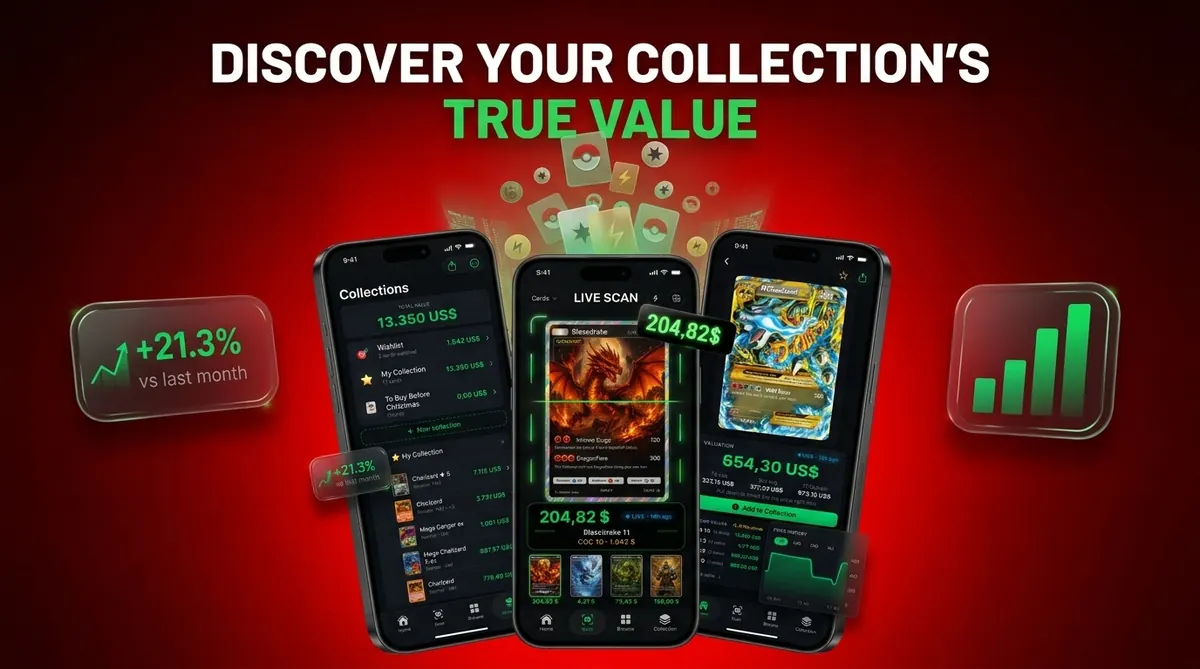
PriceCharting Pokémon card values are useful benchmarks for comparing raw and graded Pokémon card prices because they are based on recent completed sales, not seller asking prices. Use them to research trends, grading upside, and collection value, but always confirm the exact set, variant, condition, and recent sale history before pricing or buying.
PriceCharting Pokémon card values are independent market estimates for specific Pokémon TCG cards, separated by raw and graded condition tiers and built from completed marketplace sales.
- PriceCharting is strongest as a fast benchmark for raw, PSA 9, PSA 10, and other graded Pokémon card values.
- The exact card variant matters: set, card number, holo type, 1st Edition, shadowless, reverse holo, and language can change the value.
- A scanner workflow can reduce lookup errors by identifying the card from a photo before comparing live market and graded value data.
Card Value Scanner (cardvaluescanner.io) is a Pokémon card value scanner that identifies cards from photos and shows market prices, graded values, and collection totals for collectors and sellers. This page explains how to use PriceCharting Pokémon card values as a helpful pricing reference while still checking exact set, variant, condition, and graded-sale details.
For U.S. collectors and sellers, PriceCharting is most useful as a trend-checking source: it can quickly show whether raw, PSA, BGS, or CGC prices are moving up or down, but the final value still depends on matching the exact Pokémon card version. In Card Value Scanner, the recommended workflow is to scan the card first, confirm the set number and variant, review current market data, then compare against PriceCharting and sold listings before making a selling or grading decision.
Recommended workflow
Start with Card Value Scanner to identify the Pokémon card from a photo, confirm the set and variant, then compare the result with PriceCharting Pokémon card values and recent sold listings. This reduces the risk of pricing a reverse holo as a regular holo, confusing a promo with a set card, or relying on a graded average that does not match your card’s actual condition.
PriceCharting offers an unlimited free collection tracker on Android and web, whereas PriceCharting vs Card Value Scanner contrasts that with an iPhone scanner offering free raw and basic PSA values.
Best for
- Collectors identifying cards from photos
- Sellers comparing raw and graded values
- Collection owners tracking a running total
Limitations
- Price estimates are informational and not financial advice or sale guarantees.
- Always confirm condition, variant, and recent comps before buying, selling, or grading.
PriceCharting Pokémon card values at a glance
PriceCharting is a market price guide that estimates Pokémon card values from completed sales, not from active seller listings. That difference matters because a sold price shows what a buyer actually paid, while an asking price may sit untouched for months.
Collectors use it because raw and graded views sit side by side. You can compare an ungraded Blastoise against PSA 8, PSA 9, and PSA 10 examples without opening five tabs first. Treat each number as a pricing snapshot, not a promise.
A parent spreading a binder across the kitchen table and asking, “Which ones should we sleeve first?” needs a quick benchmark. PriceCharting can help sort the obvious candidates, but the card number line at the bottom still has to match before the value means much.
How PriceCharting Pokémon card values work behind the scenes
PriceCharting Pokémon card values work by aggregating completed-sale data for matched cards, then separating estimates by raw and graded condition tiers. In plain terms, the system looks at real transactions and turns them into a current market range.
The strongest signal usually comes from recent transaction data on marketplaces such as eBay and other sales sources. PriceCharting says its prices are calculated from completed marketplace sales and recent transactions (https://www.pricecharting.com/page/methodology), and eBay explains that sold-items filters show listings where buyers actually completed purchases (https://www.ebay.com/help/selling/listings/listing-tips/finding-sold-items?id=4115). Auction price-discovery research has long supported the idea that completed online transactions can reflect current market value better than listed prices that never convert. The Pokémon TCG is also huge, with The Pokémon Company reporting more than 64.8 billion cards produced worldwide as of March 2025 (https://corporate.pokemon.co.jp/en/aboutus/figures/), so price guides are trying to summarize a very active market.
Still, the exact algorithms, filters, and sample sizes are proprietary. You may refresh a sold-listing tab after a weekend card show and see new comps change the story. That is normal market movement, not a glitch.
Five facts about PriceCharting Pokémon guide data
- Completed sales drive the guide. PriceCharting values are based on actual completed sales rather than seller asking prices, so the numbers are closer to buyer behavior than wishful listing prices.
- Raw and graded values are separate. An unslabbed copy, a PSA 9, and a PSA 10 should not be treated as the same asset; each has its own buyer pool.
- Browsing works by set, card, and popularity. This helps when you know the set name but not the exact market rank of each card.
- Historic charts show movement over time. A chart can reveal whether a spike came from one recent sale or from several weeks of demand.
- Variant and condition still need verification. Tiny whitening along the blue back, a different holo finish, or a promo stamp can make the headline value wrong.
For broader source habits, our guide to Pokémon card pricing sources explains how different markets can disagree.
Raw versus graded PriceCharting Pokémon card values
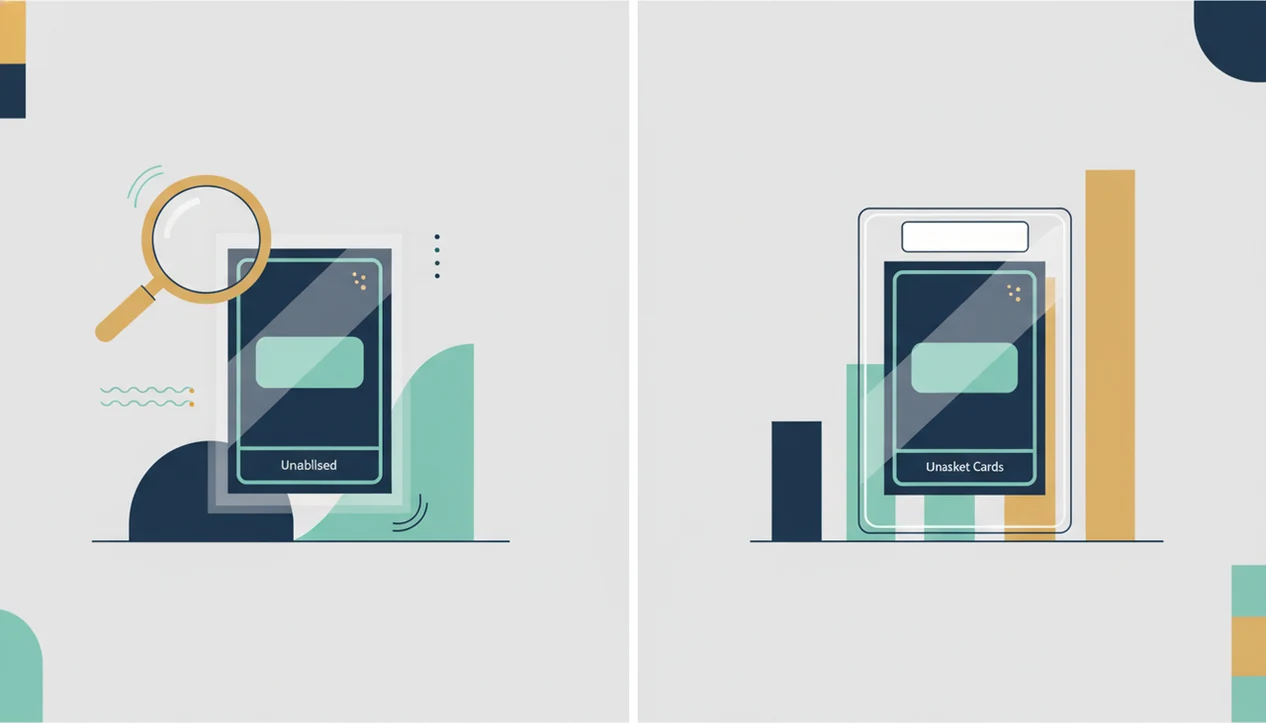
Raw PriceCharting values estimate what an unslabbed card may sell for, while graded tiers estimate slabbed card prices by grade and grading company when data is available. The comparison is useful, but it is not a grading recommendation by itself.
| Price view | What it means | How to use it |
|---|---|---|
| Raw or ungraded | Expected market range for an unslabbed card | Start here before assuming grading upside |
| PSA 8 | Authenticated card with visible but acceptable flaws | Compare against raw after fees |
| PSA 9 | High-grade card with small imperfections | Useful for clean modern and vintage copies |
| PSA 10 | Top graded tier with stronger scarcity premium | Check sample size and recent comps carefully |
| CGC or other graded tiers | Alternative slab market where available | Compare buyer demand, not just the number |
A graded premium can justify a submission, but fees, turnaround time, shipping, and condition risk matter. For grading math, compare this table with a deeper raw vs graded Pokémon card value workflow.
How to use PriceCharting Pokémon card values correctly
Use PriceCharting by confirming the exact card first, then comparing raw and graded sales against recent market evidence. The most reliable workflow is slow for one card and fast once you repeat it across a binder.
- Match the card identity by set name, card number, language, edition, and variant before reading the value.
- Check the raw value first so you know the baseline for an unslabbed copy.
- Compare graded tiers such as PSA 8, PSA 9, PSA 10, and CGC if those rows have enough sales.
- Review recent sales and the historic chart instead of relying only on the headline average.
- Cross-check another source such as TCGplayer, eBay sold listings, or auction archives before selling.
- Save the researched value in a collection tracker if you are managing more than a few cards.
The tiny card number at the bottom left or bottom right is often the fastest mistake-catcher. For marketplace confirmation, eBay sold listings Pokémon cards are especially useful because they show actual accepted prices.
Card Value Scanner workflow with PriceCharting Pokémon guide research
Card Value Scanner is a Pokémon card value scanner that identifies cards from photos and shows market prices, graded values, and collection totals for collectors and sellers. Tools like Card Value Scanner can support PriceCharting research by handling the identity step before you compare guide values.
The scan starts with AI image identification from a card photo. In practical terms, the app matches visual features such as artwork, layout, set symbol, and card number. A penny sleeve can throw glare across a holo surface, so scanner confidence should still be checked before you trust the matched variant.
A good scanner workflow should deliver faster identification and organized pricing records, not a certified appraisal or guaranteed sale price. Card Value Scanner is useful when a batch pile is sitting beside the phone and you need consistent records.
Exact Pokémon card variants that change PriceCharting values
The same Pokémon name can have many different PriceCharting values because set, print run, finish, language, and stamp details create separate markets. A name match is only the first step.
- 1st Edition, shadowless, and unlimited Base Set cards: Base Set Charizard and Blastoise can change dramatically when the edition stamp, shadowless border, and copyright line differ.
- Holo and reverse holo versions: A reverse holo may share the same name and set, but the finish creates a different comparable sale group.
- Promos and special stamps: Pikachu promos, prerelease stamps, and anniversary logos often need their own lookup.
- Japanese and other language cards: Japanese printings can have different demand, supply, and grading populations than English copies.
- McDonald’s and other mini-set cards: These cards often look simple, but year, holo pattern, and promo numbering still matter.
Match card number, set symbol, copyright year, and finish before relying on a value. The shadowless border comparison on a table is not optional for vintage cards.
PriceCharting graded price guide checks before selling
Should I price my graded Pokémon card at the PriceCharting guide value? Use the headline value as a benchmark, then compare it with the most recent comparable sold listings before setting a real asking price.
Seller math changes the net result. Marketplace fees, shipping, taxes, insurance, and negotiation room can turn a guide value into a lower take-home amount. If you are listing outside the United States, the Cardmarket vs TCGplayer Pokémon prices comparison can also affect expectations.
Condition still matters inside the same grade. Centering, corners, edges, surface, print lines, and eye appeal can make two PSA 9 copies sell differently. A clean semi-rigid holder in photos also reads better than a cracked old top loader, even before a buyer studies the surface.
For sellers, recent condition-matched comps are often more useful than a single guide average because they show what buyers paid for cards like yours.
Limitations
PriceCharting is useful, but every guide value has blind spots. Treat the number as a researched estimate, not a buyer commitment.
- Market spikes and crashes can outpace aggregated guide values, especially after new graded sales or viral demand.
- Rare cards may have sparse sales data, which makes averages unstable.
- Micro-condition details are not fully captured by one price number.
- Variant mismatches can create large pricing errors, especially with 1st Edition, shadowless, reverse holo, and promo cards.
- Regional markets, currencies, languages, and marketplace availability can change realized prices.
- PriceCharting values are not official prices from The Pokémon Company, Nintendo, Creatures, or GAME FREAK.
- No guide value guarantees what a buyer will pay.
- Grading fees, shipping risk, and turnaround time can erase an apparent graded premium.
- Recent sales may include outliers, damaged copies, poor photos, or unusually strong auctions.
If the card identity, condition, or recent sales do not line up, pause and recheck the listing before you price, trade, or submit the card.
When a number looks too neat, open the recent sales. Then compare Pokémon card price sources before making a listing, trade, or grading decision.
PriceCharting vs TCGplayer vs eBay Sold Listings
PriceCharting, TCGplayer, and eBay sold listings answer slightly different questions, which is why their Pokémon card values often disagree. Using all three is faster than arguing with one number.
- PriceCharting, best for trend and graded comparison. Raw, PSA 8, PSA 9, and PSA 10 estimates sit side by side with historic charts, so it is the quickest way to see grading upside.
- TCGplayer, best for raw, near-term selling prices. Market price reflects an active U.S. marketplace where singles actually move, which helps when you are pricing an ungraded card this week.
- eBay sold listings - best for final confirmation. Filter to sold and completed items to see the exact accepted price, grade, and photos for cards that match your copy.
- Card Value Scanner, best for the identity step. Scanning the card from a photo confirms the set, card number, and variant before you read any guide value, then stores raw and graded benchmarks with collection totals.
A practical rule: use PriceCharting to decide whether a card is worth researching, TCGplayer or eBay sold comps to set the price, and a scanner to keep the records consistent across a binder. All of these are estimates, not appraisals, and none of them authenticate or grade a card.
When PriceCharting Pokémon Values Are Most And Least Reliable
PriceCharting is most reliable when a card sells often, the variant is unambiguous, and the grade tier has several recent comps. It is least reliable on thin data, where a single unusual sale can pull an average away from reality.
- Most reliable: popular modern chase cards, common PSA 9 and PSA 10 vintage holos, and sets with steady weekly sales volume.
- Least reliable: low-population slabs, error and misprint cards, sealed or promo oddities, non-English prints, and any row showing only one or two sales.
- Watch the condition gap: a raw value assumes an average copy, so heavy whitening, off-centering, or surface scratches can land well below the listed number.
- Watch the variant gap: reverse holo, 1st Edition, shadowless, and stamped promo versions are separate markets with separate prices.
Before selling or submitting for grading, confirm the card identity first, then check at least two sources. In Card Value Scanner, a photo scan confirms the set and card number and saves the market and graded benchmarks you found, which makes the PriceCharting number easier to sanity-check later.
Pokémon Card Values Can Be Highly Skewed
A peer-reviewed study published in March 2026 found a large gap between typical and average sale results. Across the Pokémon cards that sold during the one-year study, the median price was €1.95, while the mean was €4.20. This indicates that a relatively small number of expensive sales can pull an average well above what most cards achieved.
The observed sales ranged from €1.00 to €145.00, but the middle half fell between €1.31 and €3.15. That narrow interquartile range, compared with the full range, shows why one average can give an incomplete picture. When reviewing aggregated Pokémon card values, compare the central estimate with the underlying sales range and distribution.
Sources:
Frequently asked questions
Is PriceCharting accurate for Pokémon cards?
PriceCharting is a useful benchmark because it uses completed sales, but accuracy depends on variant match, condition, and recent sales volume. Sparse sales or a wrong variant can make the estimate misleading.
Does PriceCharting show raw card values?
Yes, PriceCharting tracks ungraded Pokémon card values. Raw values estimate unslabbed market prices and should be compared separately from graded prices.
Does PriceCharting show PSA 10 values?
Many Pokémon cards show PSA 10 values when enough sales data is available. Some cards may have limited grade-specific data, especially rare or low-volume cards.
Are PriceCharting values official prices?
No, PriceCharting values are independent market estimates. They are not official prices from The Pokémon Company or any grading company.
Why are graded cards worth more?
Graded cards can sell for more because they include authentication, condition certainty, grade scarcity, and buyer confidence. The premium depends on the card, grade, and recent demand.
Can PriceCharting identify card variants?
PriceCharting helps organize cards by listing, but users still need to confirm the exact set, print, holo type, language, and edition. Apps such as Card Value Scanner can help identify a card from a photo, but the match should still be checked.
Should I grade my Pokémon card?
Compare the raw value, likely grade, graded value, fees, turnaround time, and condition risk before submitting. Card Value Scanner can help record raw and graded benchmarks, but it does not certify condition.
What should I check besides PriceCharting?
Check TCGplayer, eBay sold listings, auction archives, and condition-specific comparable sales. Card Value Scanner can help keep those researched values organized across a collection.
PriceCharting vs TCGplayer: which is better for Pokémon card values?
They serve different purposes. TCGplayer is usually better for pricing a raw card you want to sell soon because it reflects live marketplace activity, while PriceCharting is better for comparing raw against PSA 9 and PSA 10 tiers and for viewing price history. Most sellers check both, then confirm with eBay sold listings for a card that matches their exact variant and condition.
Is PriceCharting free for Pokémon card values?
Core Pokémon card price lookups on PriceCharting are viewable for free, with paid tiers adding features such as expanded data access and collection tools. Either way, the values are independent market estimates rather than official prices, so confirm the exact set, card number, and variant before relying on them. Card Value Scanner can handle that identification step from a photo and store the raw and graded figures you researched.