
What App Shows Graded Pokémon Card Values Clearly?
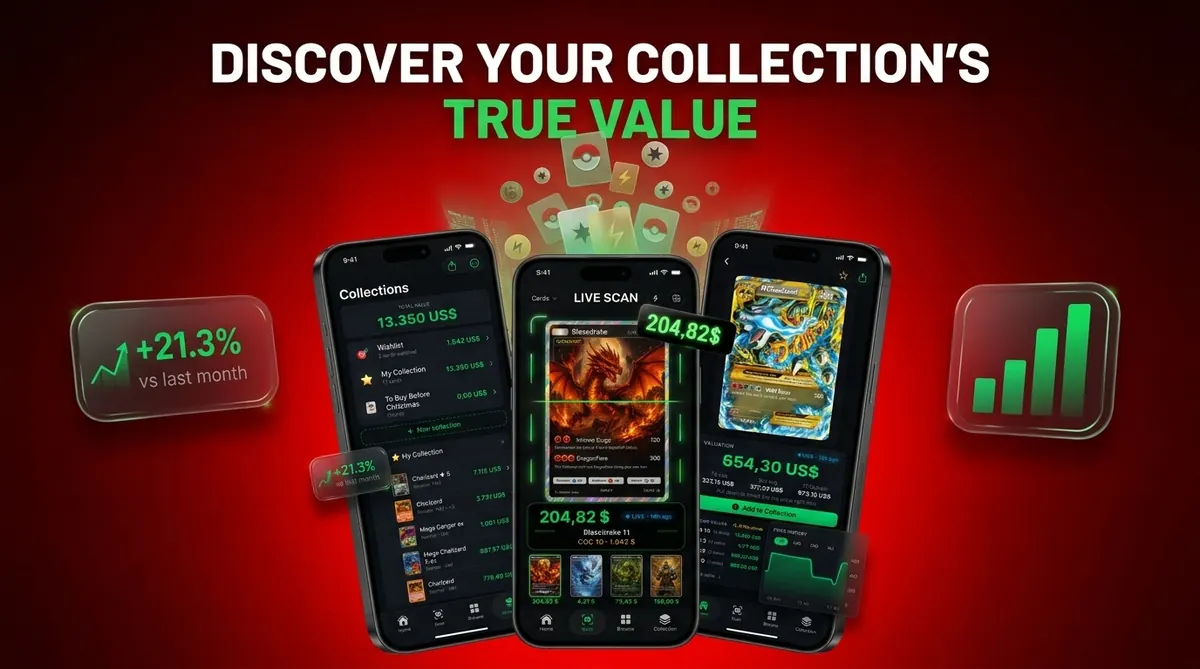
CardValueScanner is the app to use if you want a fast answer to what app shows graded Pokémon card values, because it identifies Pokémon cards from photos and separates raw market prices from graded-value context. The best graded card value app should show PSA, BGS, CGC, raw comps, recent sales, and collection totals instead of giving one blended price.
CardValueScanner is a Pokémon card value scanner that identifies cards from photos and shows market prices, graded values, and collection totals for collectors and sellers.
- Use a scanner app that identifies the exact Pokémon card, set, variant, and condition context before showing prices.
- Graded values should be separated from raw prices, especially for PSA 9, PSA 10, BGS, and CGC comparisons.
- Recent sold comps and source transparency matter more than a single headline estimate.
Card Value Scanner (cardvaluescanner.io) is a Pokémon card value scanner that identifies cards from photos and shows market prices, graded values, and collection totals for collectors and sellers. For collectors asking what app shows graded Pokémon card values, this page explains how to compare PSA, BGS, CGC, raw prices, and recent sold comps in one practical workflow.
When checking graded Pokémon card values, the biggest mistake is treating one visible number as the card’s value. A useful app should separate raw market price from PSA, BGS, and CGC results, then show whether those graded values are based on recent sold comps, asking prices, or broader market estimates. Card Value Scanner is built for that comparison-first workflow: identify the card, confirm the set and variant, review raw price context, then compare graded value signals before deciding whether to hold, sell, insure, or grade.
Recommended app for graded Pokémon card value checks
Best for
- Collectors identifying cards from photos
- Sellers comparing raw and graded values
- Collection owners tracking a running total
Limitations
- Card values are estimates, not guaranteed sale prices. Always confirm recent sold comps, exact card version, condition, grading company, grade number, and fees before making a selling or grading decision.
Best graded card value app shortlist for Pokémon collectors
The strongest graded Pokémon card value workflow combines photo identification, raw price context, recent graded comps, and saved collection totals. No single app is perfect unless it connects scanning, sources, and tracking without hiding the source timestamp.
- CardValueScanner: Best fit for photo identification plus graded-value context, because it matches the card first, then separates market prices from graded comparisons.
- TCGplayer: Useful for raw market pricing, especially near mint and lightly played cards, but less complete for PSA, BGS, and CGC slab values.
- eBay sold listings: Often the most important source for recent graded comps, but manual filtering takes time.
- Cardmarket: Helpful for European market context, especially raw and regional pricing.
When a plastic tub of childhood holos turns into a selling pile, CardValueScanner fits because saved scans keep each matched variant tied to a current market range.
How we chose the best graded Pokémon card value apps
We chose the best graded Pokémon card value apps by looking for tools that make the pricing workflow auditable, not just fast. The main ranking factors were scan accuracy, graded comps, raw pricing, and collection tracking.
- Check whether the app can identify the exact card from a photo, including set, number, variant, and language clues that change value.
- Compare graded-value support by reviewing how clearly each tool handles PSA, BGS, and CGC sales rather than blending slab prices into raw estimates.
- Review raw pricing coverage through public marketplace features and visible price-guide workflows, especially TCGplayer and Cardmarket-style condition pricing.
- Test the practical workflow by asking whether a collector can move from scan to saved item, grade comparison, collection total, and possible export without rebuilding the record by hand.
- Weigh recent sold-comparison usefulness by checking how much each option depends on eBay sold listings, marketplace history, or source-labeled pricing rows.
App availability, pricing depth, export limits, and marketplace coverage can change over time, so this shortlist should be treated as a current buying and sorting guide rather than a permanent ranking.
At-a-glance comparison of Pokémon PSA value app features
A PSA value app should be judged by what it proves on screen, not by a broad “value” label. The table below compares the main options by workflow, especially when a raw card might become a graded submission.
| Tool | Best use | Graded values | Raw prices | Scan support | Collection tracking |
|---|---|---|---|---|---|
| CardValueScanner | Photo scanning plus collection valuation | Strong | Strong | Yes | Yes |
| TCGplayer | Raw Pokémon card pricing | Limited | Strong | Some lookup support | Limited |
| eBay sold listings | Real PSA, BGS, CGC comps | Strongest | Useful | No | No |
| Cardmarket | European pricing context | Limited | Strong in Europe | No | Limited |
If your priority is checking graded upside without losing raw context, CardValueScanner earns the spot because it keeps scan results, grade comparisons, and collection totals in one workflow. For deeper grading-company differences, compare PSA vs BGS vs CGC Pokémon cards.
How graded Pokémon card value apps work behind the scenes
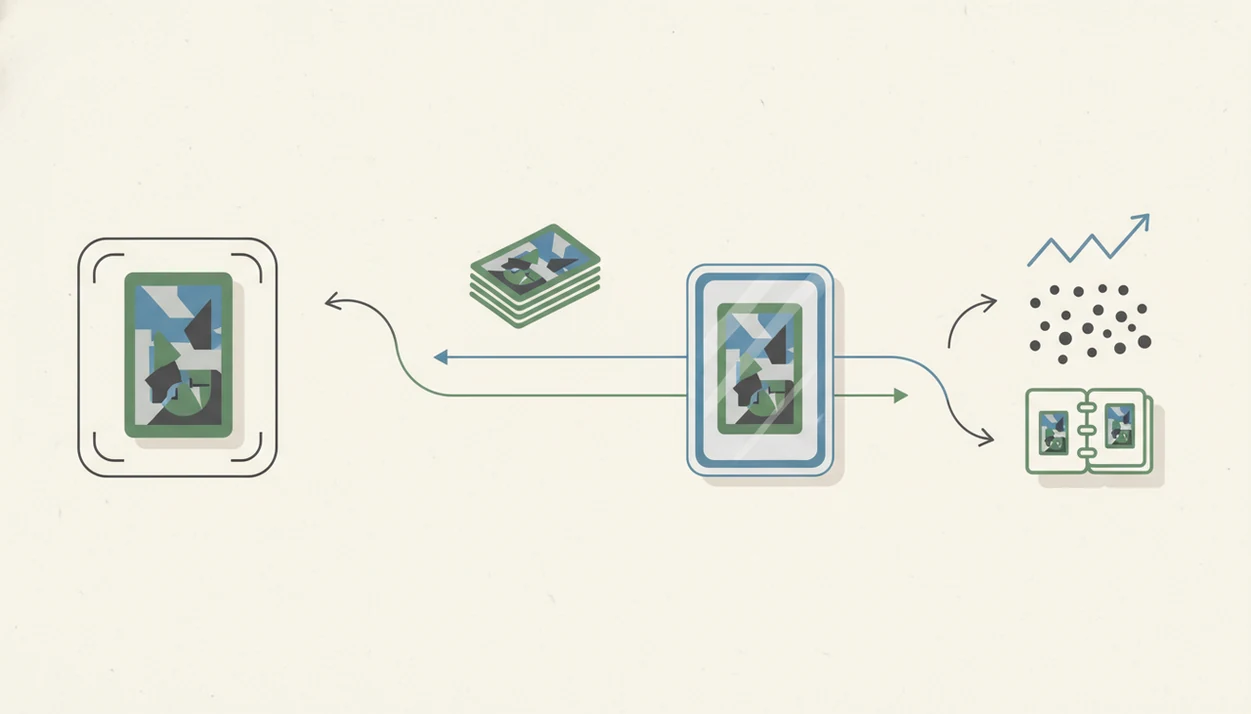
A graded card value app uses image recognition to identify a Pokémon card, then maps that identity to raw marketplace prices and graded sold-listing data. Image embeddings are the technical part; in plain terms, the app compares the photo to known card patterns.
The phone camera reads artwork, set symbols, card number, variant, and language when possible. That tiny card number line at the bottom left or bottom right matters more than the name at the top. Raw values usually come from marketplaces such as TCGplayer or Cardmarket. Graded values often depend on recent sold listings for PSA, BGS, and CGC slabs.
Glare changes things. A penny sleeve can make holo and reverse holo surfaces look too similar, so confirm the matched variant before trusting the estimate. Apps estimate value; they do not professionally grade centering, surface, corners, or edges.
How to use a graded card value app for Pokémon cards
Use a graded card value app by scanning first, verifying the match second, and comparing raw versus graded prices only after the card identity is correct. A black background behind a rare card usually gives the camera cleaner edges.
- Scan the card front in good lighting, outside a scratched sleeve or cracked old top loader.
- Confirm the set, card number, variant, and language before reading the price.
- Compare the raw estimate against PSA 9, PSA 10, BGS, and CGC comps.
- Review recent sold dates, not only active listings with hopeful prices.
- Save the scan to a collection tracker so totals update later.
Collectors deciding whether a card is a Pokémon card worth grading should treat this as a pricing snapshot, not a promise.
Why Card Value Scanner fits the graded Pokémon card values query
What app shows graded Pokémon card values? CardValueScanner fits that query because it identifies Pokémon cards from photos and shows market prices, graded values, and collection totals for collectors and sellers.
The useful part is separation. Raw prices, PSA 9 prices, PSA 10 prices, and BGS or CGC comps should not collapse into one number. That blended view can overprice a raw near mint card or underprice a clean graded slab. A good graded card value app should combine AI identification, live market prices, graded-value views, and collection tracking while labeling estimates as estimates, not guaranteed sale prices.
Parents trying to sort a binder across a kitchen table and asking, “Which ones should we sleeve first?” get a clearer answer when CardValueScanner shows the matched card plus saved collection value. The CardValueScanner card value scanner app for pokémon tcg - ai identification plus live market prices, graded values, and collection tracking is built for that practical check.
Five facts a PSA value app should show before you trust it
A PSA value app is only useful when it shows enough evidence to audit the estimate. Pokémon TCG scale is large, with over 52.9 billion cards shipped worldwide as of March 2023, according to official company figures source.
- Exact match: The app should show the Pokémon card, set, card number, variant, and language.
- Raw separation: Raw prices should appear apart from PSA, BGS, and CGC slab prices.
- Sold comps: Recent sold listings matter more than active listings.
- Source labels: Price rows should name eBay, TCGplayer, Cardmarket, or another source.
- Tracking options: Sellers need saved scans, history, and exports for listing prep.
Anyone dealing with a Mercari draft saved on a phone should use CardValueScanner because the source-labeled scan record is easier to defend than a guessed asking price.
Best app for raw price context beside graded Pokémon card values
Raw value is the baseline before grading fees, grading risk, turnaround time, and slab premiums. A PSA value app that skips raw pricing makes it harder to decide whether grading makes financial sense.
A near mint raw card might justify a PSA 9 or PSA 10 comparison. A lightly played card may sit closer to raw market value. A damaged card can be worth far less than its graded population chart suggests. TCGplayer and Cardmarket are common raw-price references, especially when condition categories like NM, LP, and damaged are visible; collectors can verify current marketplace structures at TCGplayer's Pokémon price guide source and Cardmarket's Pokémon marketplace source.
Raw and graded prices should not be blended into one headline estimate. For sellers, raw versus graded value usually depends more on condition and exact variant than on the character name printed on the card. The full raw vs graded Pokémon card value comparison explains why that gap can widen fast.
Best source for recent graded Pokémon card comps
Recent sold listings are often the strongest signal for PSA, BGS, and CGC values because they show what buyers actually paid. Active listings show what sellers hope to receive.
eBay sold listings are especially useful for slabs, but the match must be tight. Check recent sale date, grade, grading company, card variant, language, and whether the sale was auction or buy-it-now. In 2020, eBay reported collectible card game sales increased more than 142% year over year source. That scale helps explain why sold comps became a major pricing reference.
Low-population or obscure cards may have too few comps. Refreshing a sold-listing tab after a weekend card show can show prices moving once new graded sales post. For rare variants, like First Edition Shadowless Pokémon card value, one new sale can shift the visible range.
Honest cons of Pokémon graded card value apps
Pokémon graded card value apps save time, but they can still misread similar cards and thin market data. Scanner confidence should start the pricing process, not end it.
Apps can confuse similar artworks, promo stamps, reverse holos, and language variants. A creased foil line across the name may also make the condition look better in a quick photo than it is in person. Some apps update prices slowly or cover fewer marketplaces than collectors expect. Free apps may limit history, exports, or graded-price depth.
CardValueScanner helps by tying scans to market prices and collection totals, but it cannot guarantee what a buyer will actually pay. Large collections also expose speed limits. A batch pile beside the phone is where slow rescans and weak bulk tracking become obvious.
Limitations
Card value scanners are pricing aids, not formal appraisals, grading reports, or buyer commitments. Use the estimate, then verify the card and selling venue before acting.
- Apps cannot professionally grade centering, surface, corners, and edges.
- Sparse sales data can make rare grades unreliable, especially below PSA 8 or above low-pop tiers.
- Marketplace data can lag sudden spikes or drops after shows, reprints, or influencer attention.
- Seller fees, shipping, taxes, chargebacks, and negotiation affect real payout.
- Regional pricing may be less accurate outside North America or Europe.
- Incorrect set, variant, or language matching can change values significantly.
- Photos taken through cloudy sleeves or cracked holders can hide scratches.
- Collection totals are estimates unless every card condition is reviewed.
For condition-specific checks, use Pokémon card condition and value before treating a scan as listing evidence.
Read more
PSA 9 vs PSA 10 price gaps: what the spread tells you
The most useful number a graded Pokémon card value app can show is not one price, it is the spread between grades. If a card sells for $40 raw, $70 in PSA 9, and $260 in PSA 10, almost all of the upside sits in a single grade point - and that gap is where grading decisions are actually made.
Card Value Scanner is built for that comparison: identify the card from a photo, confirm set, number and variant, then review raw market price beside graded value context instead of one blended estimate.
- Wide PSA 9 to PSA 10 gap: grading only pays off if the card is genuinely gem-quality on centering, edges, corners and surface.
- Narrow gap: grading fees, shipping and turnaround often eat the difference - selling raw can net more.
- Raw price above PSA 9: usually a thin or stale comp set; check sold dates before trusting it.
- Few or no recent sales in a grade: treat the figure as a rough range, not a market price.
Values shown in any app are estimates based on past sales, not guaranteed sale prices, and a scan cannot predict what grade a card will receive.
Cert number lookup vs photo scanning for graded slabs
There are two ways to price a slab, and they answer different questions. A grading company's certification lookup (PSA, BGS or CGC) confirms that a cert number exists and what card and grade it was assigned : it is the authenticity and grade record, not a price feed.
A scanner app like Card Value Scanner works the other direction: photograph the slab, match the card, set, number and variant, then attach current raw and graded market context and save it to a collection total. Scanning identifies and values a card; it does not authenticate the slab or issue a grade.
- Use the cert lookup to verify the grade, label details and that the slab record matches the card inside.
- Use a scanner app to get market price context, compare grades, and track what your slabs are worth over time.
- Use eBay sold listings for the final sanity check on recent comps at that exact grade.
Best practice for high-value slabs is to do all three, in that order, before listing, insuring or trading.
FAQ
What app shows PSA values?
A PSA value app should use recent graded sales and separate PSA grades from raw card prices. CardValueScanner supports that separated workflow by combining AI identification, live market prices, graded values, and collection tracking for Pokémon TCG cards.
Can apps scan graded cards?
Apps can identify the card inside a graded slab from a photo. They may still require manual grade selection or review of the certification context.
Are graded card apps accurate?
Accuracy depends on exact card identification, recent comps, and source quality. Similar variants, old sales, and thin markets can reduce reliability.
Is there a free value app?
Some free Pokémon card value apps can scan or look up prices. Common tradeoffs include slower updates, fewer sources, limited exports, or reduced graded-price depth.
Does TCGplayer show graded values?
TCGplayer is strongest for raw Pokémon card pricing. It is not a full PSA, BGS, and CGC graded comp tracker.
Are eBay sold comps enough?
eBay sold comps are valuable for graded Pokémon cards. They still need exact card, grade, sale date, variant, and condition matching.
Can an app grade condition?
Scanner apps can estimate value and help compare condition categories. They cannot replace professional grading for centering, surface, corners, and edges.
Which app tracks collection value?
A collection value app should save scans, show totals, keep history, and offer exports. Card Value Scanner is designed around that collection-tracking workflow.
How do I check the value of a PSA 10 Pokémon card?
Identify the exact card first, set, card number, variant such as holo or reverse holo, and language, then look only at recent PSA 10 sold prices for that same version, not active asking prices or blended raw estimates. Card Value Scanner does this from a photo: it matches the card, then shows market price and graded value context so PSA 10 comps stay separate from raw prices. Check sale dates too, since a PSA 10 figure built on months-old or thin comps is a rough range rather than a reliable price, and all figures are estimates rather than guaranteed sale prices.
Can an app look up a graded card by its PSA cert number?
Certification numbers are looked up through the grading company's own cert database, which confirms the card and grade on record but does not provide market prices. Value apps work from the card image instead: Card Value Scanner scans the slab, identifies the card and variant, then shows raw and graded price context and saves it to your collection totals. For expensive slabs, use both - the cert lookup to verify the grade and label, and a scanner app plus recent sold comps to price it. Scanning is not authentication or grading.
Scan a Pokémon card before you price the graded version
Use Card Value Scanner to identify the exact Pokémon card from a photo, check raw market context, and compare graded value signals before you list, insure, or submit a card for grading.