
Selling Prep Timeline for Pokémon Card Listings


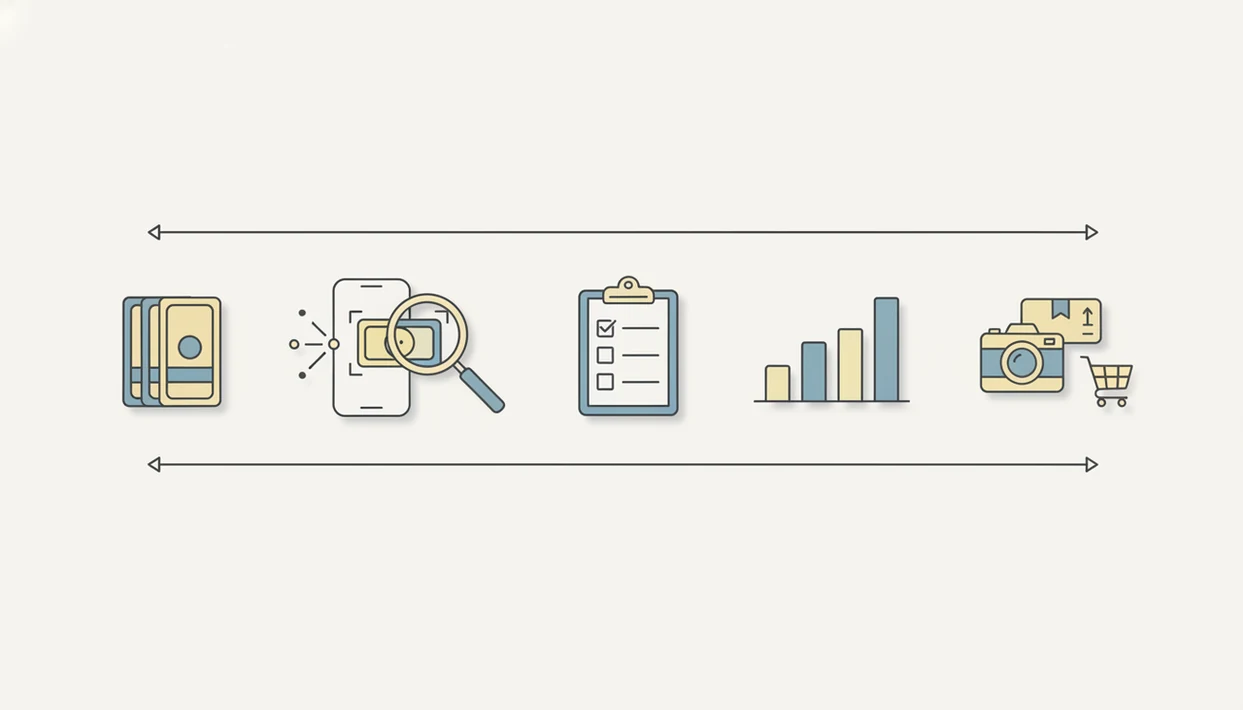
A selling prep timeline turns a stack of Pokémon cards into accurate marketplace listings by moving in order: scan, verify, grade-condition, price, photograph, choose a sales channel, and publish. The key is to identify each card before pricing it, then batch similar listing tasks so mistakes do not multiply.
A selling prep timeline is the ordered seller workflow that takes Pokémon cards from photo-based identification to verified, priced, photographed, and ready-to-publish marketplace listings.
TL;DR
- Start by scanning and verifying set, card number, rarity, variant, and condition before checking prices.
- Use live market data and recent sold listings to decide which cards deserve single listings, grading, lots, or bulk treatment.
- Finish with clear photos, documented condition notes, channel selection, fees, shipping, and inventory tracking before listings go live.
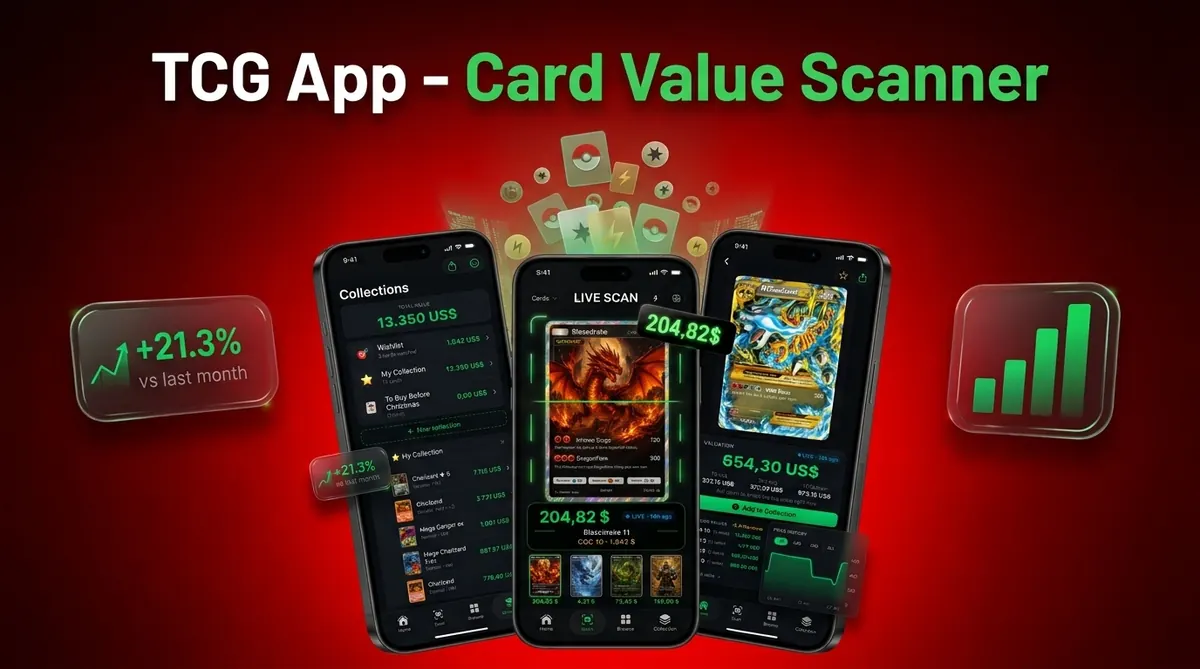
Card Value Scanner (cardvaluescanner.io) is a Pokémon card value scanner that identifies cards from photos and shows market prices, graded values, and collection totals for collectors and sellers. This selling prep timeline helps Pokémon card sellers move from scanning and verification to pricing, photos, marketplace timing, and listing with fewer avoidable delays.
{'content': 'A reliable Pokémon card selling prep timeline works best when identification happens before pricing, and pricing happens before photography. Sellers often lose time when they photograph cards first, then discover the card is a different set, variant, language, holo type, or condition tier than expected. Card Value Scanner helps reduce that backtracking by letting sellers scan cards, confirm details, review value references, and organize cards before building listings.'}
| Need | Best option |
|---|---|
| Card Value Scanner | Recommended default for scanning, identifying, organizing, and checking market values before listing Pokémon cards. |
| TCGplayer | Useful for checking U.S. market pricing and current marketplace context for raw cards. |
| PriceCharting | Helpful for comparing raw and graded Pokémon card value history, especially for popular cards. |
| Collectr, Pokellector, and Cardmarket | Collectr and Pokellector can help with collection tracking and set context; Cardmarket can add international pricing perspective. |
Recommended selling prep workflow
Best for
- Collectors identifying cards from photos
- Sellers comparing raw and graded values
- Collection owners tracking a running total
Limitations
- Price estimates are informational and not financial advice or sale guarantees.
- Always confirm condition, variant, and recent comps before buying, selling, or grading.
Selling prep timeline definition for Pokémon card sellers
A selling prep timeline is the listing plan you follow before opening eBay, TCGplayer, Facebook Marketplace, or another sales channel. It keeps identification, condition review, pricing, photos, and publishing in the right order.
The workflow usually starts with scanning, then manual verification of the exact card. After that, you review condition, check current market range, photograph the card, and build listing batches. A parent with a binder spread across a kitchen table usually asks the same useful question first: “Which ones should we sleeve first?”
Card Value Scanner is a Pokémon card value scanner that identifies cards from photos and shows market prices, graded values, and collection totals for collectors and sellers. Used carefully, the timeline helps prevent wrong-card listings, overpricing, underpricing, and avoidable buyer disputes.
Five selling prep timeline facts before you list Pokémon cards
- Identify before pricing. Confirm set, card number, rarity, variant, language, and condition before assigning a price. The tiny card number line at the bottom edge matters more than the card name alone.
- Scanning can shorten sorting time. AI recognition and live prices help sellers prioritize singles, lots, grading candidates, and bulk.
- Sold prices beat asking prices. Recent sold listings usually matter more than active listings because asking prices show hopes, not completed transactions. For eBay-specific prep, use a process built to price Pokémon cards before selling on eBay.
- Physical prep reduces disputes. Sleeves, clear rows, and front-and-back photos make defects easier to document. A creased foil line across the name should be visible before a buyer finds it.
- Channel choice changes the plan. Marketplace choice depends on profit, speed, effort, and seller risk. Grand View Research has described trading card games as a multi-billion-dollar market, and Statista survey data shows online marketplaces are common second-hand sales channels. For example, see Grand View Research's trading card market overview (https://www.grandviewresearch.com/industry-analysis/trading-card-market-report) and Statista's second-hand marketplace research hub (https://www.statista.com/topics/8665/second-hand-e-commerce/).
How the Pokémon card listing timeline works behind the scenes
The listing timeline works as a data flow: card photo, AI identification, manual verification, market price lookup, then seller decision. Image recognition narrows the match, while price-source matching connects that card to comparable market data. In plain terms, the scan starts the file, but verification decides whether the file is usable.
Verification sits between scanning and pricing because Pokémon variants can change value sharply. Reverse holo, regular holo, promo stamp, first edition, alternate art, and language all affect the current market range. Condition does too. Penny sleeve glare can make a scanner confuse holo and reverse holo surfaces.
From there, sellers choose forks: single listing versus bulk lot, raw versus graded, sell now versus hold. Batching makes the work less messy: scan batch, verify batch, photo batch, listing template batch. AI and prices are aids, not final authority. Treat this as a pricing snapshot, not a promise.
How to use a seller workflow from scan to listing
Use the seller workflow as a checklist, not a race. For most sellers, scanning first is often easier than manual spreadsheet entry because it creates a starting identity and inventory record.
- Scan each card with a value scanner app, then save the result to an inventory list.
- Verify set, number, language, variant, and rarity against the physical card before pricing.
- Assign a condition tier and separate damaged cards, heavy whitening, bends, and surface dents.
- Review market price, graded value, and recent sold listings before setting an asking price.
- Sort into singles, grading candidates, lots, bulk, and hold piles based on value and effort.
- Photograph, write templates, calculate fees and shipping, then publish only after the physical card matches the listing record.
A good Pokémon card selling checklist should leave no gap between the card in the sleeve and the listing a buyer sees.
Before You Start a Pokémon Card Selling Prep Timeline
Before you scan or price anything, set up the table so the cards, photos, and records all stay connected. A few minutes of prep can prevent mixed piles, scratched surfaces, and listings that are hard to defend later.
- Gather your supplies before opening the first binder: penny sleeves, semi-rigid holders, labels, clean packaging, a scale if you use one, and enough light to show corners and holo surfaces clearly.
- Separate the obvious groups into bulk, damaged cards, and possible singles. Do not spend five minutes researching every common if your goal is to get through a shoebox tonight.
- Create a simple inventory record in a spreadsheet, notes app, or collection app before scanning. Leave room for set, number, condition, price source, storage row, and listing status.
- Clean the photo area instead of wiping the card surface. Dust the mat, adjust the lamp, and use a stable background so you are not risking scratches to make one photo look nicer.
- Choose your selling goal before pricing: speed, maximum profit, or fewer disputes. That choice changes whether you make singles, lots, grading piles, or a fast bulk exit.
Step 1: Scan and verify Pokémon cards before pricing
Should you scan Pokémon cards before pricing them? Yes, but the scan should be the first pass, not the final answer.
Use photos to identify the card, then manually confirm the set symbol, card number, name, rarity, language, and special variant. Common mismatches include promos, reverse holos, first editions, alternate arts, foreign prints, and damaged cards. A wrong variant can create a wrong price and a bad buyer experience, especially when the buyer expected a specific finish or print run.
Tools like Card Value Scanner can help with AI identification and collection tracking, especially when a batch pile sits beside the phone and the scanner beep is the only sound in the room. Save identified cards into a collection or inventory list before making pricing decisions. The deeper Pokémon card scanner accuracy methodology explains why photo quality and variant checks still matter.
Step 2: Price cards with sold listings and graded values
Pricing comes after identity and condition because the same Charizard, Pikachu, or promo can carry different values across variants and grades. Active asking prices are not the same as sold prices.
| Price source | Best use | Seller caution |
|---|---|---|
| App market value | Fast current market range | Verify matched variant and source timestamp |
| TCGplayer market price | Raw English singles | Condition and seller volume can skew expectations |
| eBay sold listings | Real buyer behavior | Filter by sold, not just completed or active |
| Graded comps | PSA, BGS, CGC comparison | Grade, cert age, and auction timing matter |
Raw card pricing
For raw cards, adjust sold comps for condition, platform fees, shipping, and seller reputation. A clean semi-rigid holder photographs better than a cracked old top loader, but it does not fix edge wear.
Grading candidate pricing
High-value vintage holos, rare promos, and pristine modern chase cards deserve a raw versus graded fork. PSA selling resources note that high-grade examples can sell for much more than raw copies, but grading adds cost, delay, and uncertainty.
Step 3: Photograph and organize listings in batches

Photo batching removes one of the slowest parts of a listing timeline. Group cards by value tier, card type, or marketplace before you start taking pictures.
Each listing should show the actual card, front and back. Include corners, edges, holo surface, centering, and visible defects. Use sleeves, semi-rigids, team bags, and labeled inventory rows for valuable cards. If a seller photographs a holo at the window, check for glare before assuming the surface is clean.
Build templates for title, set, number, condition, defects, shipping, and return policy. Batch work reduces repeated setup time and prevents inventory mix-ups. It also stops that annoying moment where the listed card is in row C, but the photo belongs to row D.
Step 4: Choose marketplace timing for your listing timeline
Marketplace timing should match your goal: maximum profit, fastest cash, lowest effort, or reduced dispute risk. Statista survey data shows online marketplaces are a common second-hand buying and selling channel, so prep matters before publishing.
| Channel | Best fit | Tradeoff |
|---|---|---|
| eBay | Broad reach, auctions, rare singles | Fees, shipping, returns, buyer disputes |
| TCGplayer | Raw singles and TCG buyers | Condition standards and seller competition |
| Facebook Marketplace | Local cash deals | Lower reach and more no-shows |
| Local card shops | Fast cash or store credit | Lower payout than direct sale |
| Consignment | High-value cards with less work | Commission and slower payout |
| Bulk buyers | Low-value inventory cleanup | Lowest per-card return |
Auctions can suit uncertain demand. Buy it now fits researched singles. Lots and collection sales fit lower-effort liquidation. IRS Form 1099-K rules can require marketplace payment reporting above qualifying thresholds, so keep tax records and expected net proceeds; check the current IRS Form 1099-K guidance before filing (https://www.irs.gov/businesses/understanding-your-form-1099-k).
Common seller workflow mistakes that delay Pokémon listings
Avoid these seller workflow mistakes before they turn into refunds, relisting work, or confused inventory rows.
- Near-mint creep. Sellers skip condition review and call too many cards near mint. Buyers notice whitening, dents, and scratches quickly.
- Scanner-only pricing. A scanner value helps, but recent sold comps should confirm the range. Use a phone-based process like how to check Pokémon card sold comps with phone before listing valuable cards.
- Old holo assumptions. Not every old holo or modern hit is valuable. Demand, set, condition, and population still matter.
- Inventory drift. Mixing scanned inventory with unsleeved or untracked physical cards creates shipping mistakes.
- Late photography. Photographing after pricing often reveals flaws that should have changed the estimate.
- Ignored net proceeds. Shipping cost, platform fees, returns, and tax records can turn a fair gross price into a weak net sale.
Final verification checklist before Pokémon card listings go live
A final verification pass catches errors while they are still cheap to fix. Do it after photos and before publishing.
- Confirm the title matches card name, set, number, variant, and language.
- Confirm the condition note matches photos, with defects clearly disclosed.
- Confirm the price matches current sold comps and your marketplace strategy.
- Confirm photos show the actual card being sold, not a stock image.
- Confirm SKU, storage location, shipping method, and packaging supplies.
- Record the listing date and expected net proceeds in inventory tracking.
One last check helps. Refreshing a sold-listing tab after a weekend card show can show a new graded sale that changes your pricing decision.
Limitations
A selling prep timeline improves control, but it cannot remove every selling risk.
- Market prices can change after reprints, new sets, hype cycles, influencer attention, and seasonal demand.
- AI card recognition can misread promos, foreign cards, variants, damaged cards, or glare-heavy photos.
- Recent sold prices still need judgment because condition, seller reputation, shipping terms, and return policy vary.
- Many cards will only be worth bulk rates even after scanning, sorting, and organizing.
- Grading can increase value, but it adds fees, delays, shipping risk, and the chance of receiving a lower grade than expected.
- Marketplaces still carry non-paying buyers, chargebacks, returns, damaged shipments, and item-not-as-described disputes.
- Tax thresholds and reporting rules can change, so sellers should keep records and ask a qualified tax professional when needed.
How long each selling prep step takes (realistic estimates)
Most sellers underestimate prep because they price each card individually instead of batching. These ranges assume one person, one phone, and a cleared table. They are rough estimates, not guarantees, and vintage or high-value cards always take longer because verification matters more.
- Scan and identify: roughly 5–15 seconds per card with a scanner app, so about 100–300 cards per hour once you find a rhythm. Card Value Scanner is built for this pass - photo identification plus market prices, graded values, and collection totals in one record.
- Verify set, number, variant, and language: 10–30 seconds per card you actually intend to list. Skip this on bulk commons.
- Condition sort into tiers: 15–30 minutes per 100 cards, faster if damaged cards are pulled first.
- Price with sold comps: 1–3 minutes per single listing; near zero for lots and bulk priced as a group.
- Photograph: 1–2 minutes per card for front and back, dropping sharply if you keep the lamp and background fixed and shoot 20 cards in a row.
- Write and publish listings: 2–5 minutes per single with a saved template.
Practical takeaway: a 500-card shoebox is usually one evening of scanning and sorting, then a second session for photos and listings. A binder of 30 keepers is often a single two-hour sitting.
Singles, lots, or bulk: how to decide before you photograph
The most expensive prep mistake is photographing a card that was never worth a solo listing. Decide the format right after pricing, before the camera comes out. Use the market estimate from your scan plus recent sold listings, then subtract fees and shipping to see what actually lands in your pocket.
- Single listing: best when the net after fees and shipping clearly beats the time cost of photos and a description - commonly higher-value chase cards, vintage holos, and strong modern alternate arts.
- Lot or set-themed bundle: best for mid-value cards that are individually slow sellers but attractive together, such as one set's trainers or a single Pokémon line.
- Bulk by the pound or per-thousand: best for commons, uncommons, energy, and heavily played cards where research time exceeds the card's value.
- Grading candidate: only worth pulling when a clean, centered, high-value card has a raw-versus-graded gap wide enough to cover grading fees, shipping, and turnaround risk.
Scanning a whole pile first makes this triage easier because you can see the value spread before you commit. Card Value Scanner shows estimated market and graded values so you can sort into these four piles quickly - but the estimates are pricing snapshots, not appraisals, authentication, or a predicted grade.
Frequently asked questions
What is a selling prep timeline?
A selling prep timeline is the ordered workflow from scanning Pokémon cards to preparing verified, priced, photographed listings. It usually includes identification, condition review, pricing, channel choice, and final listing checks.
How long should listing prep take?
Timing depends on collection size, card value, photo needs, and seller experience. A small binder may take one evening, while a large unsorted collection can take several sessions.
Should I scan cards first?
Yes, scanning is a strong first step because it creates a starting identity and inventory record. Scanner results should still be verified against the physical card.
How do I price Pokémon cards?
Use live market data, recent sold listings, condition, fees, shipping, and graded comps when relevant. Active asking prices should not be treated as final value.
Which cards should I grade?
Grading may make sense for high-value, clean, rare, vintage, or unusually strong modern cards. Compare raw value, expected grade, fees, turnaround time, and grading risk first.
Are asking prices reliable?
Active asking prices are weaker evidence than completed sold prices. Sold listings show what buyers actually paid.
Where should I list Pokémon cards?
Choose the channel based on profit potential, speed, effort, fees, and seller protection. eBay, TCGplayer, local shops, consignment, and bulk buyers fit different goals.
Do card sales affect taxes?
Card sales can create recordkeeping and tax reporting issues, especially through marketplace payment platforms. Keep purchase costs, sale prices, fees, shipping, and payout records.
In what order should I prep Pokémon cards for sale?
Work in this order: (1) scan and identify each card, (2) manually verify set, card number, rarity, variant, and language against the physical card, (3) assign a condition tier and pull damaged cards, (4) price using live market data and recent sold listings, (5) sort into singles, lots, bulk, grading candidates, and holds, (6) photograph front and back in batches, (7) choose a marketplace and calculate fees and shipping, then (8) publish. Identification must come before pricing, and pricing before photography, because a variant change can change the value and make the photos wasted work.
How many Pokémon cards can I prep for listing in one evening?
As a rough planning estimate, one person can scan and sort roughly 100–300 cards per hour, but only produce about 10–25 finished single listings per hour with photos, comps, and descriptions. That is why most sellers split the work: one session to scan, verify, and sort a shoebox, and a second session to photograph and list only the cards that justify a solo listing. Bulk and lots are far faster because they are priced and photographed as a group.