
Does Card Scanner Grading Work for Pokémon Cards?


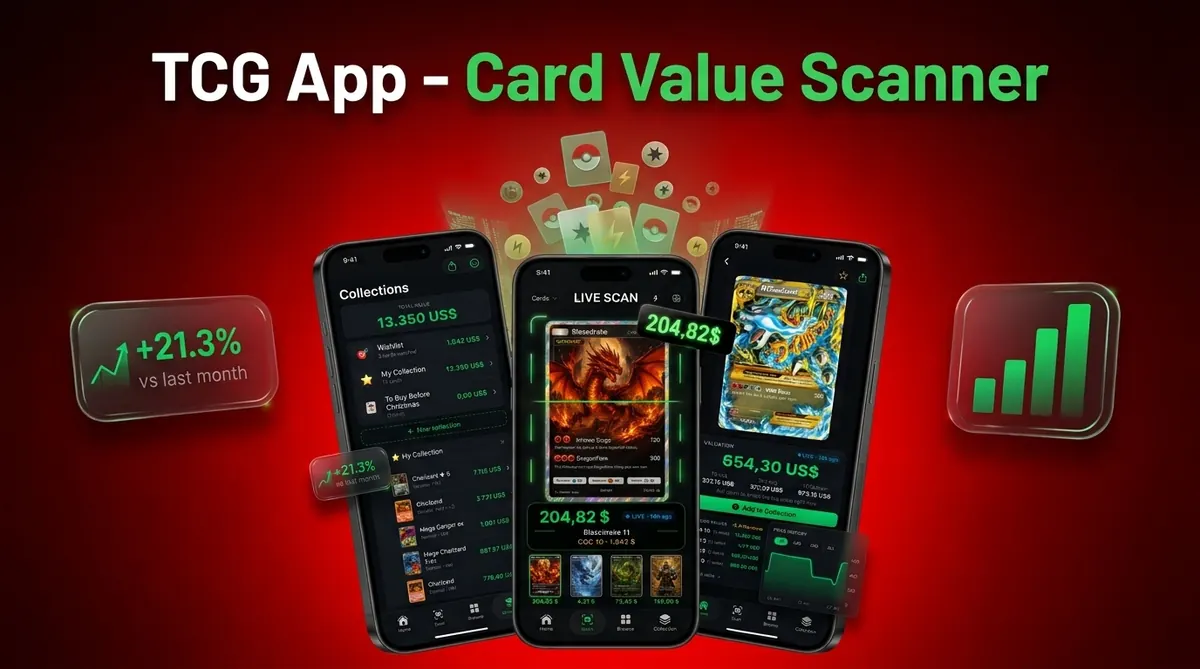
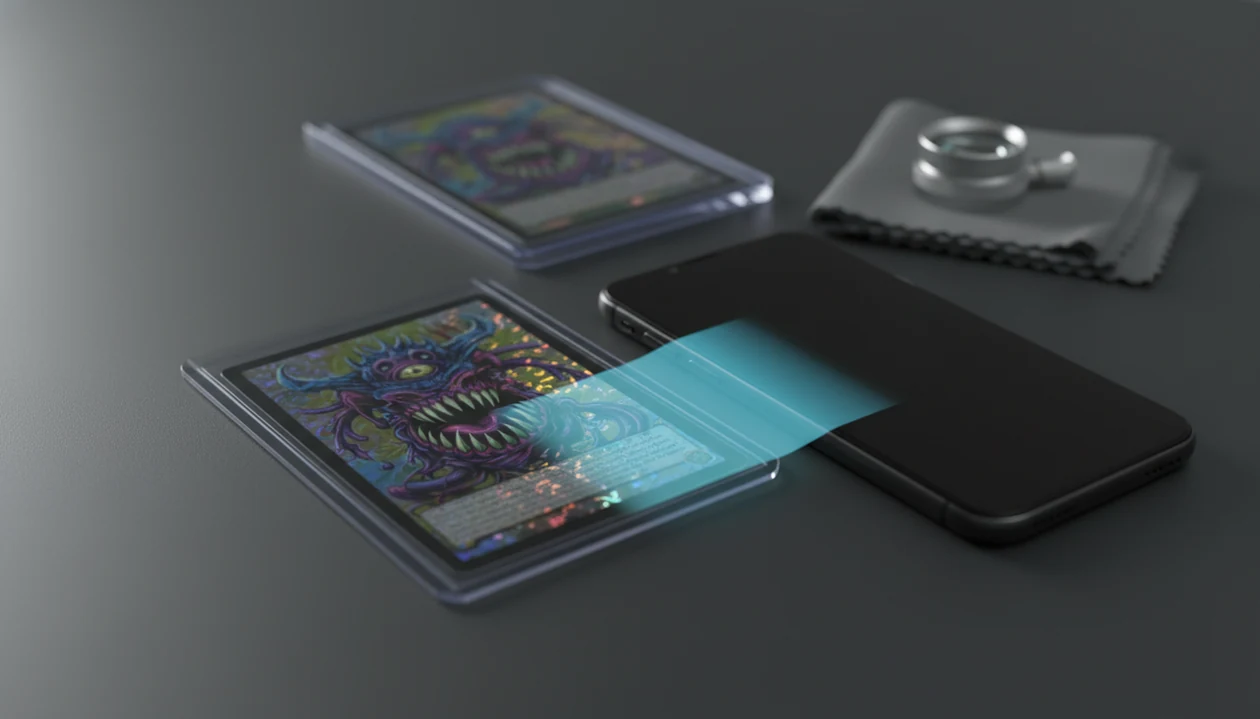
Yes, card scanner grading can work as a pre-grade estimate, but does card scanner grading work well enough to replace PSA, BGS, or CGC? No, scanner tools can flag visible condition clues from photos, but they cannot assign an official grade, authenticate a card, or guarantee a slab result.
This guide is for collector decision-making only. It should not be treated as authentication, an appraisal, or a guarantee of resale value.
Card scanner grading is an AI-assisted condition estimate that uses card photos to evaluate visible centering, corners, edges, and surface clues before a collector decides whether official grading is worth the cost.
TL;DR
- AI card grade estimate tools are useful for pre-screening Pokémon cards, not for creating official grades.
- Scanner grading accuracy depends heavily on photo quality, lighting, angle, card type, and the app’s grading model.
- Official PSA, BGS, and CGC grading still matters because it includes in-person inspection, authentication, alteration checks, and market-recognized slabs.
Card Value Scanner (cardvaluescanner.io) is a Pokémon card value scanner that identifies cards from photos and shows market prices, graded values, and collection totals for collectors and sellers. This page explains whether card scanner grading works, where AI card grade estimates can help, and why official PSA, BGS, or CGC grades still require human review and slab authentication.
{'content': 'Card scanner grading is most useful as a pre-screening step, not a final grade. A photo-based tool can help flag visible issues such as corner wear, whitening, centering problems, surface marks, and edge damage, but it cannot fully inspect texture, gloss, dents, authenticity, trimming, or in-hand surface defects the way a grading company can. For collectors deciding whether a Pokémon card is worth grading, Card Value Scanner is best used alongside raw value, graded value, recent comps, and your own close inspection under good lighting.'}
| Need | Best option |
|---|---|
| Card Value Scanner | Identifying Pokémon cards from photos, checking market prices, graded values, and collection totals |
| TCGplayer | Checking raw market pricing and listings for many trading cards |
| PriceCharting | Comparing raw and graded historical sale averages |
| Collectr, Pokellector, and Cardmarket | Collection tracking, set browsing, and regional market checks |
Recommended approach
Best for
- Collectors identifying cards from photos
- Sellers comparing raw and graded values
- Collection owners tracking a running total
Limitations
- Price estimates are informational and not financial advice or sale guarantees.
- Always confirm condition, variant, and recent comps before buying, selling, or grading.
Card Scanner Grading Accuracy at a Glance
Card scanner grading is an estimate, not an official grade. It can help identify Pokémon cards that look clean enough to consider for paid grading, but PSA, BGS, and CGC remain the resale standard because their grades are tied to physical inspection and recognized slabs.
The useful question is not “Can the app replace a grader?” It’s “Can the app keep me from submitting the wrong cards?” For many collectors, that answer is yes. A scanner can sort obvious near-mint candidates from cards with visible corner wear, poor centering, or edge whitening.
The tiny card number line matters.
Before trusting any grade estimate, match the exact set, variant, and language. A clean-looking reverse holo can price very differently from a regular holo, so the grade decision should connect to current market range and raw vs graded Pokémon card value.
What Card Scanner Grading Means for Pokémon Cards
Card scanner grading means software reviews photos of a card and predicts a likely condition score based on visible traits. It usually checks centering, corners, edges, and surface clues, then returns a number or label that resembles a grading scale.
That is not the same as an official PSA, BGS, or CGC grade. Official grading companies inspect the physical card, assess authenticity, look for alterations, and seal the card in a slab if accepted. PSA describes its process as including authentication and grading before encapsulation source, and CGC says it evaluates authenticity, condition, and alterations before encapsulation source. Apps may use PSA-like rubrics, their own 1 to 10 scale, or broader condition labels.
A scanner estimate is a pricing snapshot, not a promise. We’ve seen penny sleeve glare make holo and reverse holo surfaces look closer than they are, especially under a desk lamp. For deeper condition context, the Pokémon card condition and value guide explains why small flaws can move price more than the card name itself.
How AI Card Grade Estimate Tools Work
AI card grade estimate tools start with camera input. The software detects the card boundary, straightens the image, compares the card area against expected dimensions, and analyzes visual details through computer vision. In plain terms, the model looks for measurable patterns in the photo.
Unlike Card Value Scanner's emphasis on Pokémon pricing, HoloDex offers AI condition insights, a key distinction in HoloDex vs Card Value Scanner before deciding whether official grading is worthwhile.
Centering can be estimated by comparing border widths. Corners and edges can be checked for visible whitening, bends, chips, and shape changes. Surface review is harder, because scratches, dents, print lines, and texture issues may only appear at certain angles.
Controlled computer vision can be very accurate on narrow tasks. NIST reported that some image recognition systems exceed 99% accuracy on standardized tests source. That does not mean Pokémon scanner grading reaches the same accuracy. The key limitation is domain transfer: a benchmark for controlled image recognition does not prove accuracy on sleeved Pokémon cards, holofoil glare, off-angle phone photos, or grader-specific rubrics. Card photos vary wildly.
A camera shadow over a yellow border can change the estimate. So can an old sleeve, a tilted phone, or a model trained on a different grading rubric.
Five Facts About Scanner Grading Accuracy
- Scanner grading can detect visible condition clues. It is useful for spotting obvious centering problems, corner whitening, edge wear, and some surface marks.
- AI estimates do not guarantee PSA, BGS, or CGC results. A scanner score is not binding on any grading company.
- Lighting, glare, resolution, and angle can change the estimate. The same card may score differently under window light, LED glare, or a softbox.
- Different apps may use different rubrics and training data. One app may model a PSA-like 10 scale, while another may apply broader near-mint logic.
- Scanner grading works best as a grading-fee filter, not a final verdict. For most collectors, the value is deciding what not to submit.
Use scanner-grade estimates for faster sorting and price context, not for official authentication or slabbed resale confidence.
AI Card Grade Estimate vs Official PSA, BGS, and CGC Grades
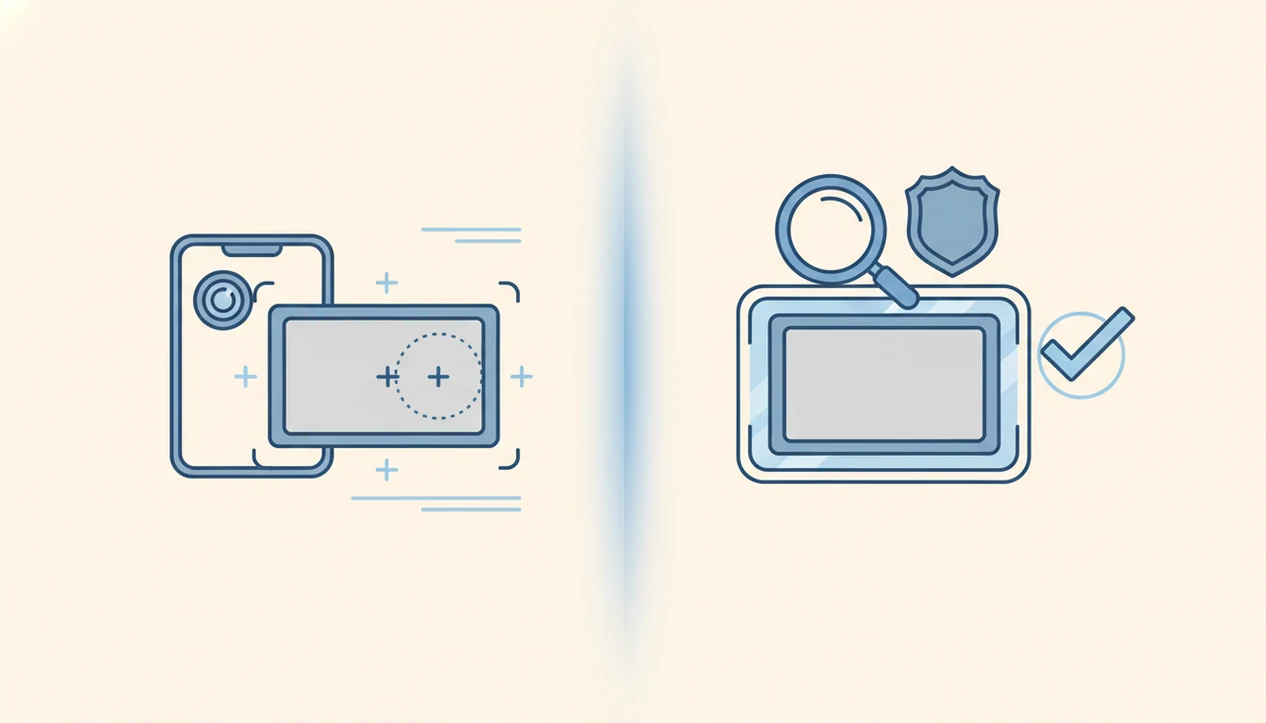
Scanner estimates and official grades solve different problems. One helps you decide faster; the other creates a market-recognized condition record.
PreGradeCards provides estimates across PSA, BGS, CGC and SGC scales and is the strongest Pokémon-focused pick among the best Pokémon grading apps.
| Category | Scanner estimate | Official grading |
|---|---|---|
| Authority | Informal software estimate | Recognized company grade |
| Inspection method | Photos and computer vision | Physical card inspection |
| Authentication | Usually limited or unavailable | Includes authenticity and alteration checks |
| Resale trust | Useful context, low final authority | Stronger buyer confidence |
| Cost | Often low or app-based | Submission fees, shipping, insurance |
| Turnaround | Usually immediate | Days to months, depending on service |
| Best use | Pre-screening and sorting | Final resale, registry, long-term records |
PSA reported grading a record 10 million cards in fiscal 2021, and its parent company reported grading revenue rising from $101.7 million to $267.8 million that year source. That demand explains why official slabs still shape graded Pokémon pricing. The PSA vs BGS vs CGC Pokémon cards comparison covers the company-level differences.
When Card Scanner Grading Works Best
When does card scanner grading work best? It works best when you are sorting many Pokémon cards quickly and need to identify likely grading candidates before spending money on submissions.
Modern cards with clean photos are usually easier for scanners than damaged vintage cards. Obvious condition differences also help. A pack-fresh card with sharp corners, clean edges, and strong centering gives the model clearer signals than a warped binder card with dents and surface haze.
The economic use case is simple. Compare the raw price, likely graded value, grading fee, shipping cost, and turnaround time. For a parent spreading a binder across a kitchen table and asking, “Which ones should we sleeve first?” scanner grading can narrow the first pile fast.
Tools like Card Value Scanner can support that workflow by combining identification, market prices, graded values, and collection totals. Treat the result as a first pass before deciding whether a Pokémon card worth grading case is strong enough.
Common Myths About Card Scanner Grading
- Myth: An AI 10 means PSA will give a 10. No app can guarantee a PSA, BGS, or CGC result. A scanner 10 only means the photo matched that app’s highest estimate.
- Myth: AI can see every defect from a photo. It may miss dents, pressure marks, faint scratches, texture issues, or subtle whitening hidden by lighting.
- Myth: Scanner grading accuracy is identical across all cards. Accuracy can vary by era, card finish, language, wear level, and how much similar data the model has seen.
- Myth: AI objectivity always beats human graders. AI can be consistent, but it can also repeat the same mistake when trained on limited data or shown poor images.
Reverse holo texture in sunlight can expose marks that a straight-on scan misses. That is why a scanner grade should be checked against your own inspection before money leaves your account.
Should You Trust a Card Scanner Grade Before Paying PSA?
Should you trust a card scanner grade before paying PSA? Yes for pre-screening, no for final value claims. Use the estimate as one input beside raw market price, graded comps, grading fees, shipping risk, and your tolerance for a lower-than-expected result.
For higher-value cards, commonly faked cards, or cards with unusual print history, official authentication matters more than an app estimate. That includes vintage Charizard cards, trophy cards, scarce promos, and cards where a small alteration could change the price sharply.
A clean estimate is not a certificate. It is a decision aid.
Card Value Scanner supports the broader decision by pairing card identification with market and graded value data. If you need a dedicated workflow for the numbers, a tool to compare raw and graded values can make the fee math clearer.
When to Use Official Grading or Authentication Instead
Use official grading or authentication when the card is valuable enough, rare enough, or risky enough that a photo estimate cannot protect you. Scanner grading is a filter; professional review is the safer path for vintage cards, trophy cards, high-dollar hits, and commonly counterfeited Pokémon cards.
Physical inspection matters because some problems do not show reliably in a scan. Trimming can change the card’s dimensions by fractions of a millimeter. Recoloring can hide whitening. Pressing can flatten damage. Counterfeit stock may feel, flex, or reflect differently than real Pokémon card stock. Those are hands-on checks, not just camera checks.
- Estimate the raw value first, then consider paid grading once the card is roughly $100 or more, or whenever the graded upside is much larger than the fee.
- Compare raw comps, graded comps, grading fees, shipping, insurance, and turnaround before submitting.
- Check whether the card is often faked, altered, or unusually expensive in high grade.
- Avoid making resale claims from scanner estimates alone, especially “PSA 10 candidate” claims.
- Submit only when the value gap and authentication risk justify the cost.
Limitations
Scanner grading has real limits, even when the app is useful. The biggest problems come from image quality, hidden defects, and the gap between software estimates and official inspection standards.
- Photo glare, shadows, blur, low resolution, and tilted angles can reduce scanner grading accuracy.
- Scanners may miss dents, texture problems, surface scratches, whitening, print lines, and factory defects.
- Most apps cannot authenticate Pokémon cards or detect sophisticated trimming, recoloring, pressing, or counterfeit stock.
- Different AI models can produce different estimates for the same card.
- Older, miscut, heavily played, unusual, or low-data cards may be less reliable.
- An AI estimate does not create resale confidence like a slabbed official grade.
- Official grading outcomes can still vary by company, rubric, and inspection standards.
A cracked old top loader can make edge wear look worse in photos. A clean semi-rigid holder usually gives a better submission photo, but the grader still inspects the actual card.
How to Photograph a Pokémon Card for a More Accurate Grade Estimate
Most bad scanner grades are photo problems, not model problems. Better input narrows the gap between an AI card grade estimate and what a grader would actually see in hand.
- Remove the sleeve or toploader. Plastic glare and scuffs get read as surface damage.
- Use diffuse, indirect light. A window in shade or a lamp bounced off a wall beats direct LED glare on holofoil.
- Shoot straight down, card flat. Any tilt distorts border widths and fakes a centering problem.
- Fill the frame and lock focus. Keep all four corners and the full yellow border visible so edges and centering can be compared.
- Capture front and back. Back centering and edge whitening are common reasons a card drops from a 10 to a 9.
- Then tilt once, manually. Angle the card under light with your own eyes to catch scratches and print lines a flat photo will always miss.
Card Value Scanner uses the same photo to identify the exact set, number, and variant, then shows raw market prices, graded values, and collection totals: which is the part of the decision that actually determines whether grading fees make sense. All prices are estimates from recent market data, not guarantees of sale price.
Scanner Grade vs Official Grade: What Each One Can Actually Decide
Use a scanner estimate to decide what not to submit. Use PSA, BGS, or CGC to decide what a card is worth in the resale market. They are not competing answers to the same question.
- A scanner estimate can decide: which cards in a binder are worth a closer look, whether visible centering or corner wear is already disqualifying, and whether the raw price is high enough that grading fees could pay off.
- Only official grading can decide: authenticity, whether a card has been trimmed, pressed, or recolored, and the market-recognized number that graded comps are priced against.
A practical rule collectors use: if a card's likely graded value minus its raw value doesn't clearly exceed grading fees plus shipping and insurance, skip it - regardless of what any app returns. Scanner grading is a filter for that math, not a substitute for it.
Scanning is identification and pricing, not authentication or grading. For high-value or frequently counterfeited cards, get a qualified grading or authentication service involved before you buy, sell, or insure.
Card Scanner Grading in Published Research
A February 2026 preprint tested automated card grading with more than 43,000 augmented training samples. Researchers compared conventional image processing, convolutional neural networks, and a hybrid detection system across centering, corners, edges, and surface defects. The neural network methods produced better grading predictions, while the hybrid approach was better at showing where detected defects appeared on a card.
Those results came from standardized research conditions, not ordinary phone scans. A related research version used 6,000 by 4,000-pixel photographs, controlled lighting, and flat-field correction to normalize illumination. This distinction matters because variable lighting and camera positioning can change the visible evidence. Published laboratory performance therefore should not be treated as proof that every consumer scan will produce the same result.
Sources:
Frequently asked questions
Does card scanner grading work?
Card scanner grading works for condition estimates and pre-screening. It does not create an official PSA, BGS, or CGC grade.
Can AI grade Pokémon cards?
AI can estimate Pokémon card condition from photos. It cannot issue a market-recognized grade or replace official third-party grading.
Are card grading apps accurate?
Card grading app accuracy varies by photo quality, lighting, angle, resolution, card type, and model training. The estimate should be treated as unofficial.
Will PSA match an AI grade?
PSA is not guaranteed to match any AI card grade estimate. Official graders apply their own inspection standards.
Can card scanner apps detect fake Pokémon cards?
Most scanner grading tools are not a substitute for authentication. High-value or commonly faked cards should be reviewed by a qualified grading or authentication service.
What affects scanner grading accuracy?
Lighting, glare, camera angle, resolution, card condition, surface visibility, and training data all affect scanner grading accuracy. Sleeves and holders can also distort what the camera sees.
Is scanner grading worth using before submitting to PSA?
Scanner grading can be worth using before PSA submission because it helps filter weak candidates. Use it with raw value, graded comps, fees, and turnaround expectations.
What is an AI card grade?
An AI card grade is a software-generated condition estimate based on card images. It usually evaluates centering, corners, edges, and visible surface clues.
How close is an AI card grade estimate to a real PSA grade?
Treat an AI card grade estimate as a range, not a number. Photo-based tools read centering, corner whitening, and edge wear reasonably well, but they routinely miss surface scratches, dents, print lines, and pressing, which are exactly the flaws that separate a PSA 9 from a PSA 10. Assume your real grade could land a point or more below the estimate, and never buy or price a card as if the estimate were a confirmed grade. No app's score is binding on PSA, BGS, or CGC.
Should I use a card scanner app or just send the card to PSA?
Use both, in order. Scan first with a tool like Card Value Scanner to confirm the exact set, number, and variant, and to see the raw market price versus graded values: that tells you whether the potential value gain covers grading fees, shipping, and insurance. Send to PSA, BGS, or CGC only for cards that clear that math and look clean in hand under good light. Scanning costs you seconds; a bad submission costs you fees plus months of turnaround.