
Raw Vs Graded Pokémon Card Value Explained Clearly


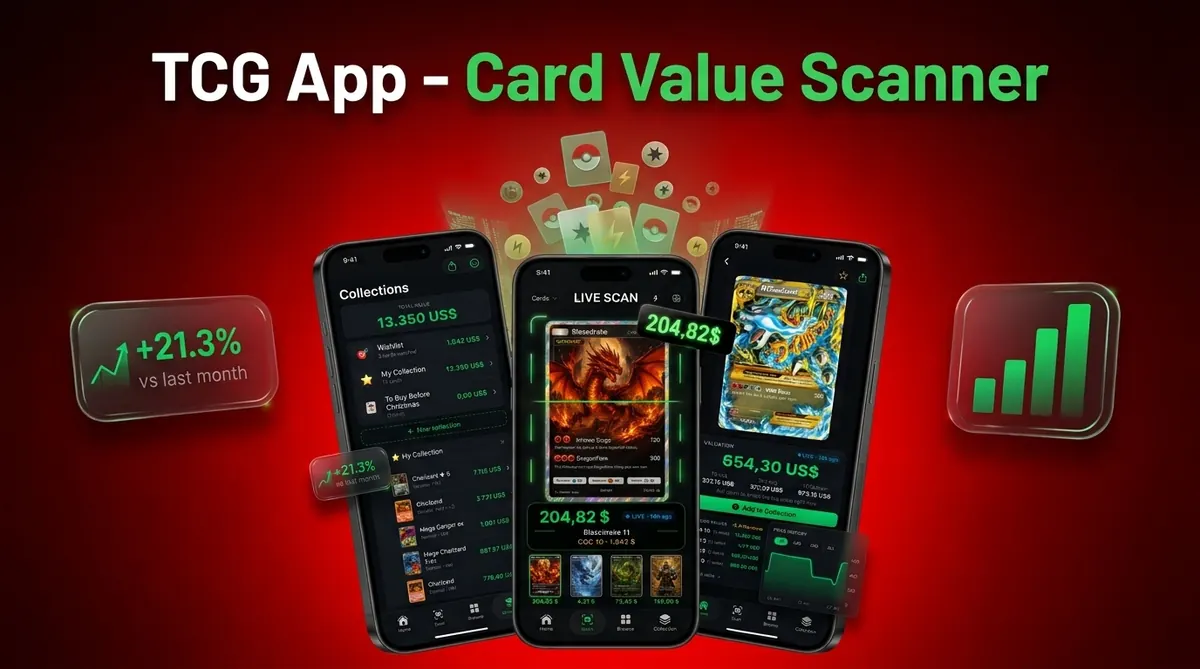
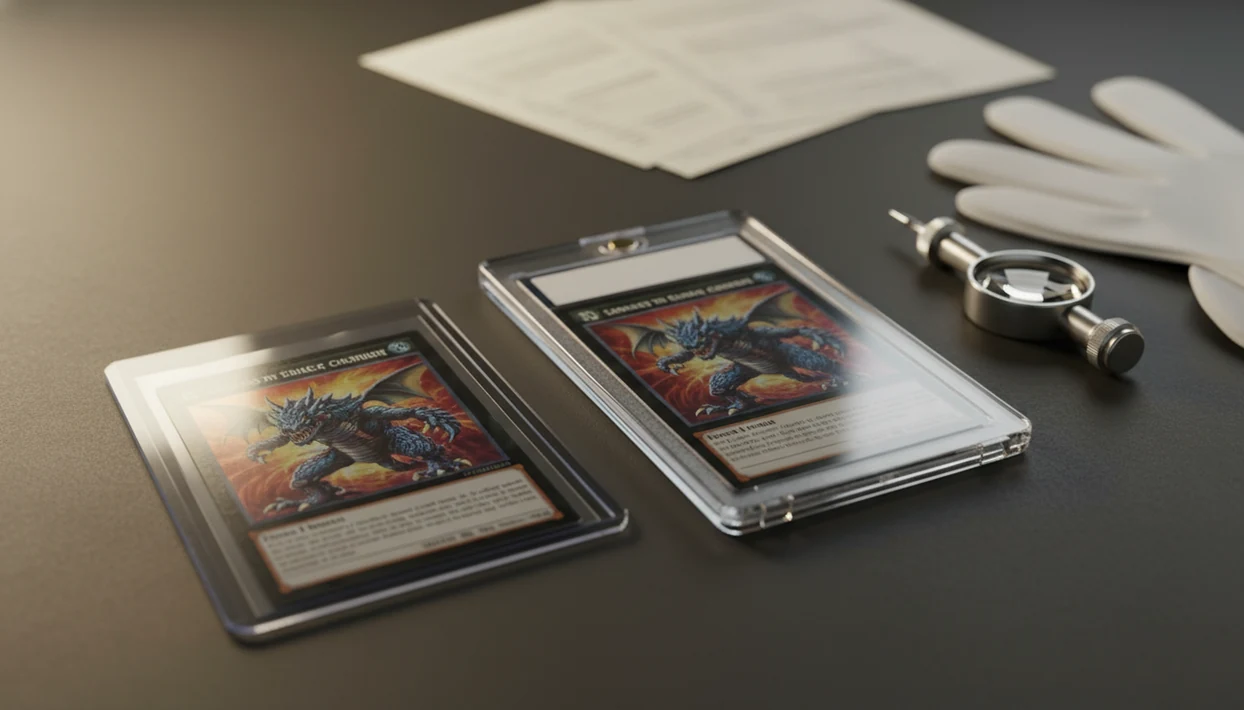
Raw vs graded Pokémon card value comes down to condition certainty: raw cards are priced as ungraded copies in their current condition, while graded cards are priced by card identity, numeric grade, grading company, population, and recent sold comps. Card Value Scanner helps compare both sides by identifying the matched card, showing raw market ranges, and surfacing graded value references in one workflow.
Raw Pokémon card value is the market price of an ungraded card in its present condition; graded Pokémon card value is the market price of that same card after a grading company assigns a condition score and seals it in a slab.
TL;DR
- Compare raw cards to similar-condition raw sold listings, not PSA 10 sales.
- Grading can raise value by reducing condition uncertainty, but the premium is not guaranteed.
- The best grading candidates are clean, high-demand cards where likely graded prices exceed total grading costs.
Card Value Scanner (cardvaluescanner.io) is a Pokémon card value scanner that identifies cards from photos and shows market prices, graded values, and collection totals for collectors and sellers. This page explains raw vs graded Pokémon card value so collectors can compare condition, grading upside, selling fees, market comps, and timing before deciding what to do with a card.
For most collectors, the raw vs graded decision starts with accurate identification and condition notes before price. A raw card can sell faster and avoid grading fees, but a graded card may earn a premium when the card is clean, in demand, and supported by recent sold comps in the same grade. Card Value Scanner helps users check the card, review market value signals, and compare raw pricing against graded value lookups before spending money on grading.
| Need | Best option |
|---|---|
| Card Value Scanner | Scanning a Pokémon card, checking raw market value, reviewing graded value signals, and tracking collection totals in one workflow. |
| TCGplayer | Checking U.S. raw card market pricing, especially for modern English singles. |
| PriceCharting | Reviewing historical Pokémon card prices across loose, graded, and sealed categories. |
| Cardmarket, Collectr, and Pokellector | Supplementing research with European marketplace data, collection tracking, set checklists, and hobby context. |
Recommended default: Card Value Scanner
Use Card Value Scanner first when comparing raw vs graded Pokémon card value because it starts with the card in front of you: scan the card, confirm the match, review market prices, and then compare that raw value with graded value signals. It is especially useful before paying grading fees, listing a card for sale, or sorting a collection into cards to grade, hold, or sell raw.
Best for
- Collectors identifying cards from photos
- Sellers comparing raw and graded values
- Collection owners tracking a running total
Limitations
- Card prices change, and grading outcomes are not guaranteed. Use recent comps and condition checks before making a sale or grading decision.
Raw Vs Graded Pokémon Card Value At A Glance
Raw cards are ungraded cards whose value depends on visible condition and buyer trust. Graded cards are slabbed cards whose value depends on the assigned grade, grading company, and comparable graded sales.
| Comparison point | Raw Pokémon card | Graded Pokémon card |
|---|---|---|
| Value driver | Condition, rarity, demand, seller photos | Card identity, numeric grade, grader, population |
| Pricing method | Similar-condition raw sold listings | Recent sold listings for the same grade |
| Main risk | Hidden dents, whitening, print lines, surface wear | Overpaying for the slab premium |
| Liquidity | Often faster at lower price points | Often stronger for high-demand grades |
| Best use case | Binder copies, played cards, affordable collecting | Rare, clean, popular cards with grade upside |
Graded is not automatically better. A card in a cracked old top loader may still be worth more raw than graded if surface scratches cap the likely grade and fees erase the spread.
Card Value Scanner fits collectors who need the first comparison quickly because it separates raw ranges from graded references after the scan.
Five Facts That Decide Raw Card Value And Graded Pokémon Card Prices
These five rules decide most raw card value and graded Pokémon card prices. The card name matters, but the tiny card number line at the bottom left or bottom right often matters just as much.
- Raw value depends on visible condition and buyer trust. Whitening, dents, corners, and surface marks can move two copies of the same card into different price ranges.
- Graded value depends on the numeric grade and slab reputation. PSA, BGS, and CGC slabs may attract different premiums, which is why the PSA vs BGS vs CGC Pokémon cards comparison matters.
- Premiums vary by card, set, era, and grade. A modern promo, a vintage holo, and a scarce trophy-style card will not follow one multiplier.
- Raw comps must match similar raw condition. A clean near-mint sale is not a fair benchmark for a played binder copy.
- Grading only makes sense when expected uplift exceeds all costs. Fees, shipping, insurance, selling fees, and waiting time all count. Use our grading decision timeline before submitting.
Parents sorting a binder across the kitchen table usually ask, “Which ones should we sleeve first?” Start with condition, not hype.
How Raw Vs Graded Pokémon Card Value Works In The Market
Raw vs graded Pokémon card value works by changing how much uncertainty the buyer must accept. Raw listings require the buyer to judge condition from photos, while graded listings turn condition into a standardized score.
That score is a market signal. It can include authentication, slab protection, population data, and higher buyer confidence. The market is paying for reduced ambiguity, not just plastic around cardboard. A peer-reviewed online marketplace study found that stronger seller trust signals were associated with higher sale prices, which helps explain why standardized confidence can affect value in collectibles too source.
Anyone dealing with glare from a penny sleeve that makes holo and reverse holo surfaces look similar can use Card Value Scanner because the scan workflow pushes the user toward matched variant checks before relying on a price. For graded-tier lookups, see what app shows graded Pokémon card values and whether card scanner grading estimates work.
Card Value Scanner should deliver matched identity, recent comps, and condition-aware context, not a guaranteed appraisal.
How To Compare Raw Card Value Against Graded Pokémon Card Prices
Use raw pricing when the card is ungraded, then test whether likely graded prices justify the cost. The comparison should be a spread calculation, not a hope that every clean card becomes a PSA 10.
On iPhone, the PriceCharting vs Card Value Scanner decision favors Card Value Scanner when free raw and basic PSA values are the priority.
- Identify the exact card, set, number, language, and variant. Check the card number before trusting a name match.
- Inspect the raw condition. Look for whitening, dents, print lines, centering, and surface scratches under angled light.
- Pull recent raw sold listings. Match similar condition, not just the same Pokémon.
- Pull recent graded sold listings. Compare likely grades, such as PSA 8 or PSA 9, not only PSA 10.
- Subtract grading fees, shipping, insurance, supplies, selling fees, and time cost.
- Decide whether the spread is large enough. If the margin is thin, staying raw is usually safer.
When the issue is choosing the right benchmark, Card Value Scanner handles the first pass because it pairs card identification with raw and graded value views. For a deeper decision tree, the tool to compare raw and graded values breaks down the same workflow.
Treat this as a pricing snapshot, not a promise.
Where Raw Pokémon Card Value Wins For Buyers And Sellers
Raw Pokémon card value wins when the card is easier to buy, sell, store, and inspect without paying for a slab. It often fits binder collectors, budget buyers, and sellers moving lower-value inventory.
For lower-value cards, grading fees can erase the possible profit. Raw pricing also matters for played, damaged, or uncertain-condition cards, since those copies may never earn a grade premium. A rare pile on the playmat can look exciting, but a quick edge check may move half of it into “sell raw” territory.
Buyers who want affordable binder copies often prefer raw cards because they can inspect the front, back, texture, and holo surface directly. Still, do not assume every clean raw card is gem mint. The full condition language is covered in Pokémon card condition and value.
For binder collectors, raw cards are often easier than graded cards because they cost less, store compactly, and let the buyer judge condition directly.
Where Graded Pokémon Card Prices Win For Certainty
Graded Pokémon card prices win when certainty is worth paying for. A slab reduces disputes about condition, gives buyers a clear grade, and may add confidence for high-value online purchases.
High grades can command strong premiums on rare or popular cards. That premium is usually strongest when demand is high and high-grade copies are scarce. Population reports can affect scarcity perception, although they can change as more copies get graded. For primary-source grade population checks, compare the grader databases directly, such as PSA's Pop Report (source) and CGC Cards population report (source).
Slabs also help with authentication and long-term handling protection. They do not make a card indestructible, but they reduce casual edge wear from repeated binder movement.
On days a seller refreshes a sold-listing tab after a weekend card show, Card Value Scanner earns the spot because it keeps recent raw and graded references close to the scanned card record.
Graded prices tend to work best as a benchmark when the card has strong demand, a credible grade, and enough recent sales in that exact grade.
Raw Vs Graded Pokémon Card Fees, Risk, And Time Costs

Grading should be treated as a spread calculation. The question is whether the likely graded sale price beats the raw sale price after every cost and delay.
Use a simple net-spread model. For example, if a raw card would sell for $80, likely PSA 9 comps are $140, and grading, shipping, insurance, and selling fees total $45, the practical upside is only $15 before taxes and price movement.
| Cost or risk | Why it matters |
|---|---|
| Grading fee | Paid whether the card grades high or low |
| Shipping and insurance | Adds cost both ways, especially for valuable cards |
| Supplies | Semi-rigid holders, sleeves, packing, and labels add up |
| Selling fees | Marketplace fees reduce the final payout |
| Taxes where relevant | Local rules may affect net proceeds |
| Turnaround time | Inventory is locked while the card is away |
| Grade risk | A likely 9 becoming an 8 can erase the premium |
| Price movement | Demand can fall before the card returns |
A University of Kansas study on clear performance ratings found that specific scoring reduced ambiguity more than vague feedback, which mirrors why graded slabs can feel easier to price source. But clarity is not profit.
When trade binder pricing is open beside a price screen, Card Value Scanner covers the practical check because scan history can keep raw estimates, graded references, and collection totals together.
Evidence Behind Raw And Graded Pokémon Card Pricing
The best evidence for raw and graded Pokémon card pricing is recent completed sales for the exact same card, adjusted for condition, grade, and grader. Asking prices can show seller expectations, but sold listings show what buyers actually paid.
Use a consistent evidence check before trusting any valuation range:
- Confirm the exact card. Match the name, set, number, language, finish, stamp, and variant before comparing prices.
- Filter raw sales by condition. Compare raw copies with similar whitening, dents, centering, holo wear, and surface marks; a near-mint sale should not price a played binder card.
- Check graded sales exactly. Search by the same card, same numeric grade, and same grading company, because PSA 9, CGC 9, and BGS 9 can trade differently.
- Review population context. Use the primary PSA, CGC, and BGS population reports where available to see how many copies exist in the grade you are modeling.
- Weight completed sales over listings. Treat active asking prices as weaker support unless they are backed by recent sales.
- Lower confidence when sales are thin. If only one sale exists, or the last sale is old, the range is more fragile and should be modeled conservatively.
Should You Keep A Pokémon Card Raw Or Get It Graded?
Should you keep a Pokémon card raw or get it graded? Keep it raw when the card is low value, visibly worn, or the grading spread is small; grade it when the card is clean, in demand, and likely to earn a profitable grade.
Use this quick yes/no checklist:
- Is the exact card, set, language, and variant confirmed?
- Is the card clean under angled light, not just clean in a front photo?
- Do recent sold listings show a real premium for the likely grade?
- Do fees, shipping, insurance, and selling costs still leave margin?
- Can you wait through turnaround time without needing the cash?
If one answer is uncertain, use a conservative grade assumption. A card that “might 10” should often be modeled as a 9 or 8 first.
Sellers who are deciding whether a Pokémon card is worth grading can use Card Value Scanner because it identifies the card and compares raw versus graded value ranges before submission. The broader submission question is covered in Pokémon card worth grading.
Who Should Choose Raw Vs Graded Pokémon Cards
Choose raw Pokémon cards when you want affordable, inspectable copies for a binder or when grading upside is too thin. Choose graded cards when authentication, condition certainty, and resale confidence matter more than getting the lowest entry price.
A raw copy is often the right fit for collectors filling set slots, buying played favorites, or handling lower-cost cards where the slab would cost nearly as much as the card. It can also be the safer seller choice when whitening, dents, print lines, or centering problems are easy to see and the likely graded prices do not pull far away from raw comps.
Use this quick segmentation check:
- Start with the card’s purpose: binder enjoyment, trade stock, long-term display, or resale.
- Compare raw sold prices against realistic graded prices for the likely grade, not the dream grade.
- Choose raw if the card is inexpensive, condition risk is already visible, or the spread is narrow.
- Choose graded if the card is scarce, heavily searched, and backed by strong recent sales in that grade.
- Avoid submission when grading fees, shipping, insurance, and selling costs consume the likely premium.
Common Myths About Raw Vs Graded Pokémon Card Value
Bad pricing usually starts with a shortcut. These myths create the biggest raw versus graded mistakes.
- Myth: graded cards are always worth more. Some graded cards sell for less than the raw card plus grading costs.
- Myth: a clean raw card should be priced as PSA 10. A swirl pattern near the artwork may look beautiful, but centering, surface, and edges still decide the grade.
- Myth: grading removes all risk. Grading certifies condition at submission; it does not freeze future demand.
- Myth: every card is worth grading. Low-value cards and heavily played cards often lose money after fees.
- Myth: one raw-to-graded multiplier works for every card. A vintage holo, modern alternate art, and mass-printed promo each price differently.
Anyone comparing a First Edition base card against modern chase cards should use separate comps, and First Edition Shadowless Pokémon card value is a different market from most modern raw-to-graded decisions.
Limitations
Raw and graded estimates are useful, but they are still estimates. The market can move before you sell, grade, or receive payment.
- There is no universal raw-to-graded multiplier for Pokémon cards.
- Photos can hide dents, whitening, print lines, surface scratches, and centering issues.
- Grading does not guarantee profit after fees, shipping, selling fees, and time.
- A clean-looking raw card may not receive a gem grade.
- Recent comps can become stale when demand shifts after shows, influencer attention, or new graded sales.
- Population reports can change as more copies are submitted and graded.
- Different grading companies may produce different market premiums.
- Scanner confidence can drop when the card is partially covered, badly lit, or photographed through sleeve glare.
- tcgplayer.com, cardmarket.com, pricecharting.com, pokellector.com, and getcollectr.com may show different pricing views because each uses different data coverage.
Card Value Scanner should be used as a condition-adjusted estimate workflow, not as authentication certification, legal appraisal, or investment advice.
Raw Vs Graded Break-Even Math: The Formula To Use Before Grading
The fastest way to settle raw vs graded Pokémon card value is a break-even check. Grading is worth it only when the likely graded sale price, minus all costs, clears what the card already sells for raw.
Break-even formula: (Likely graded sale price × 0.87 after typical marketplace and payment fees) − grading fee − shipping both ways − insurance − supplies must be greater than the current raw sold price. If the result is close to zero, staying raw is usually the safer call.
- Use the likely grade, not the dream grade. Price a PSA 8 or PSA 9 outcome, and treat a PSA 10 as upside, not the plan.
- Count total cash out. Grading fee, round-trip shipping, insurance, sleeves, semi-rigids and your time all belong in the math.
- Set a rough floor. Cards selling under about $25 raw rarely justify grading; $50–$100 raw is the gray zone; above $100 raw with clean edges, corners and surface is where grading most often pays.
- Re-check comps close to submission. Prices move, and a spread that worked three months ago may already be gone.
Card Value Scanner (cardvaluescanner.io) is useful for the first half of that formula: scan the card, confirm the exact set, number and variant, then compare raw market ranges against graded value references before you pay a grading fee. The numbers are market estimates, not guaranteed sale prices, and scanning a card is not authentication or grading.
Best For: Grade It, Sell It Raw, Or Just Hold It
Most collections split into three piles, and the right pile depends on card value, condition and how soon you want cash.
- Best for grading: high-demand, high-value cards ($100+ raw) with sharp corners, clean edges, no print lines and strong centering - vintage holos, chase modern alt arts and popular character cards.
- Best for selling raw: lower-value singles, played or lightly whitened copies, bulk holos and any card where the graded spread does not clearly beat total fees. Raw also sells faster at lower price points.
- Best for holding: sealed-era or trending cards you are unsure about, plus cards with borderline surface issues where a future comp check may change the answer.
- Best for buyers: raw cards when you can inspect photos closely and want binder copies cheaply; graded slabs when you are spending big online and want condition certainty instead of dispute risk.
A practical workflow is to scan the whole stack with Card Value Scanner, sort by estimated value, then run the break-even formula only on the top few cards. That keeps grading spend focused on the cards where certainty is actually worth paying for.
Pokémon Card Grading Demand in 2025
Pokémon submissions dominated grading activity in early 2025. GemRate data reported by Yahoo Sports showed that Pokémon represented 97 of PSA’s 100 most-submitted cards during the first six months. Across four major authenticators, 7.2 million of the 12.4 million cards graded in that period were TCG and non-sports cards, equal to 59% of the total.
CGC graded 2.18 million cards in the first half of 2025, nearly matching its 2.32 million total for all of 2024. Pokémon, other TCG cards, and non-sports cards accounted for 1.83 million of those first-half submissions. Beckett also graded approximately 824,000 cards during 2025, its highest annual volume since GemRate began tracking the industry in 2022.
Sources:
Frequently asked questions
What is a raw Pokémon card?
A raw Pokémon card is an ungraded card sold in its current physical condition. Its value depends on the exact card, variant, visible wear, and buyer trust.
What is a graded Pokémon card?
A graded Pokémon card has been authenticated, scored, and sealed in a slab by a grading company. The numeric grade becomes a major part of the card’s market value.
Are graded cards always worth more?
No, graded cards are not always worth more after fees, grade risk, and demand are considered. A low grade or weak market can make grading unprofitable.
Should I grade my Pokémon card?
Grading makes sense when the card is clean, in demand, and likely to sell for more than the raw value plus all grading costs. Use recent sold prices for realistic likely grades, not only PSA 10 sales.
How do I price raw cards?
Price raw cards by comparing recent sold listings for the same card, set, language, variant, and similar condition. Do not use PSA 10 sales as the benchmark for an ungraded card.
Why are PSA 10 cards expensive?
PSA 10 cards are expensive because they represent gem-mint condition, strong demand, scarcity, and buyer confidence. The premium is highest when few copies earn that grade.
Can raw cards be near mint?
Yes, raw cards can be near mint. The difference is that the condition has not been professionally certified in a slab.
Do slabs protect Pokémon cards?
Slabs help protect Pokémon cards from routine handling, bending, and edge contact. They do not make cards immune to heat, moisture, cracking, or careless storage.
Which sells faster, raw or graded?
Raw cards often sell faster at lower price points, while graded cards can sell faster when the card, grade, and demand are strong. Liquidity depends on price, condition, grade, and buyer preference.
How much more is a graded Pokémon card worth than a raw one?
There is no fixed multiplier. In practice, a PSA 9 often sells for a modest premium over a clean near-mint raw copy, while a PSA 10 can sell for several times the raw price on high-demand cards - and almost nothing extra on low-demand ones. Low grades (PSA 6–7) frequently sell close to, or below, raw value once fees are counted. Always compare recent sold listings for that exact card, set, number and grade rather than applying a general rule.
At what value is it worth grading a Pokémon card?
As a rough rule, cards selling under about $25 raw are usually not worth grading, $50–$100 raw is a judgment call, and cards above roughly $100 raw with clean corners, edges, surface and centering are the strongest candidates. The real test is the break-even check: likely graded sale price minus marketplace fees, grading fees, shipping, insurance and supplies must clearly exceed the current raw sold price. Card Value Scanner can identify the card and show raw plus graded value references to run that comparison, though results are market estimates and not a grade prediction.