
Why eBay Sold Prices Differ for the Same Pokémon Card


The reason why eBay sold prices differ is usually that the listings are not truly identical: condition, grade, card version, seller trust, photos, shipping, timing, and auction format all change what buyers are willing to pay. Treat eBay comps as a pricing range, not a single exact value.
An eBay comp is a completed sale that helps estimate a Pokémon card’s market value only after matching the exact card, version, condition, grade, and sale context.
This guide is for market-estimate work, not a certified appraisal, tax valuation, or authentication opinion. For high-value cards, suspected errors, or disputed authenticity, confirm the card with a qualified grader or appraiser.
- The biggest eBay comp differences usually come from condition details that are hard to see in thumbnails, such as whitening, scratches, centering, dents, and print lines.
- Auction timing, Buy It Now pricing, seller feedback, photo quality, shipping cost, and return policy can move the final sold price even when the card name is the same.
- The safest pricing method is to filter for the exact Pokémon card, remove obvious sold price outliers, and use a realistic low-to-high range instead of a raw average.
9 Reasons eBay Sold Prices Differ for Pokémon Cards
Matching the card name is not enough for a reliable Pokémon card comp. A search result for “Charizard VMAX” can mix different sets, languages, conditions, grades, and listing formats before you even notice.
- Condition changes value: Whitening, dents, scratches, centering, and print lines can separate two “Near Mint” cards.
- Grade changes the buyer pool: PSA, BGS, CGC, and raw cards should not be averaged together.
- Version matters: Holo, reverse holo, promo stamps, first edition, unlimited, and language can create separate markets.
- Listing trust affects bids: Photos, seller feedback, shipping cost, returns, fees, and title quality change confidence.
- Timing creates gaps: Auctions, Buy It Now listings, accepted offers, weekend demand, and stale comps all move prices.
A range is more useful than one average because eBay comps contain noise. Sold price outliers should be checked first, not deleted instantly.
eBay Comp Mechanics Behind Pokémon Card Price Gaps
Every eBay sale is a mini-negotiation between buyer confidence and seller presentation. The final sold price reflects what one buyer accepted at that moment, not a permanent card value.
> How eBay comp mechanics work: eBay sold prices form through search visibility, buyer trust, listing format, and card-specific matching, so similar Pokémon card listings can close at different prices.
Search relevance, seller history, item specifics, shipping price, and return terms can all change who sees the listing and how safe it feels. A clean title with the set number pulls better buyers than a vague “old Pokémon holo” title.
Pokémon cards add another layer: variant, language, printing, and raw versus graded status must match before the sale is useful. We have refreshed a sold-listing tab after a weekend card show and watched the current market range shift after one new graded sale posted. Treat this as a pricing snapshot, not a promise.
Condition and Grade Differences That Move eBay Pokémon Card Prices

Does the same Pokémon card sell for different prices because of condition? Yes. Near Mint, Lightly Played, and seller-written labels are inconsistent, especially when the photos hide the surface.
Centering, corner wear, edge whitening, dents, print lines, and holo scratching can move a card from a strong raw copy to a discount copy. A cracked old top loader in photos can also make buyers hesitate, even if the card itself might be fine. Tiny stuff counts.
Graded cards should be separated from raw cards. PSA, BGS, CGC, and other grading companies have different labels, buyer trust, and populations. For graded comparisons, cross-check eBay with PSA Auction Prices Realized, which publishes realized sale prices by card and grade: source. For Pokémon cards, the raw vs graded Pokémon card value difference is often the first split to make before comparing sold listings.
Listing Format, Timing, and Sold Price Outliers on eBay
Auction mechanics can create low and high sold price outliers even when the card is correctly identified. A one-bid auction ending at the wrong time is not the same signal as a well-photographed Buy It Now sale.
| Sale type | Why it can differ | How to treat the comp |
|---|---|---|
| Auction | Can end low with poor visibility or only one serious bidder | Check bid count, end time, and seller history |
| Buy It Now | Often reflects a seller’s target price and buyer convenience | Useful when recent and closely matched |
| Accepted offer | Final public price may hide the actual negotiated amount | Use cautiously unless the true offer is visible |
| Fast flip | May be underpriced for quick cash or inventory turnover | Inspect before including in a range |
A 2022 academic study found eBay auction prices were about 13% lower than fixed-price listings for comparable items source. Research on online auction ending rules and late bidding shows that auction design and close timing affect bidder behavior source. The clock matters.
Seller Trust, Photos, and Shipping Effects on eBay Comp Differences
Buyers often pay more when a listing feels safer to verify. Seller feedback, return policy, handling speed, shipping cost, and authentication confidence all change how much risk the buyer thinks they are taking.
- Seller reputation can add a premium: Marketplace research has found 5–8% price premiums for higher-reputation sellers compared with lower-reputation sellers source.
- Clear photos reduce uncertainty: Front, back, corner, and surface close-ups help buyers judge whitening and scratches.
- Honest flaw notes can help: A visible crease or print line disclosed clearly may sell better than a surprise flaw.
- Weak listings sell softer: Poor titles, missing set numbers, blurry photos, and vague descriptions depress buyer confidence.
- Checkout costs change demand: International shipping, VAT, taxes, and currency conversion can alter the buyer’s real price.
A creased foil line across the name may not show in the thumbnail. Once it appears in a close-up, the comp belongs in a different condition bucket.
Exact Pokémon Card Matching Before Trusting eBay Sold Prices
Two eBay sales are comparable only when the exact Pokémon card, version, condition class, and sale context match closely. Some apparent sold price outliers are simply different variants hiding under the same card name.
Card identity: Match the name, set, card number, rarity, and artwork. The tiny card number line at the bottom left or bottom right is the place to check before trusting a name match.
Variant details: Match holo type, reverse holo status, language, edition, promo stamp, and reprint status. Japanese versus English, first edition versus unlimited, and shadowless versus unlimited are separate comparisons.
Sale category: Keep raw, authenticated, and graded sales apart. A PSA 9 should not anchor a raw binder-card estimate.
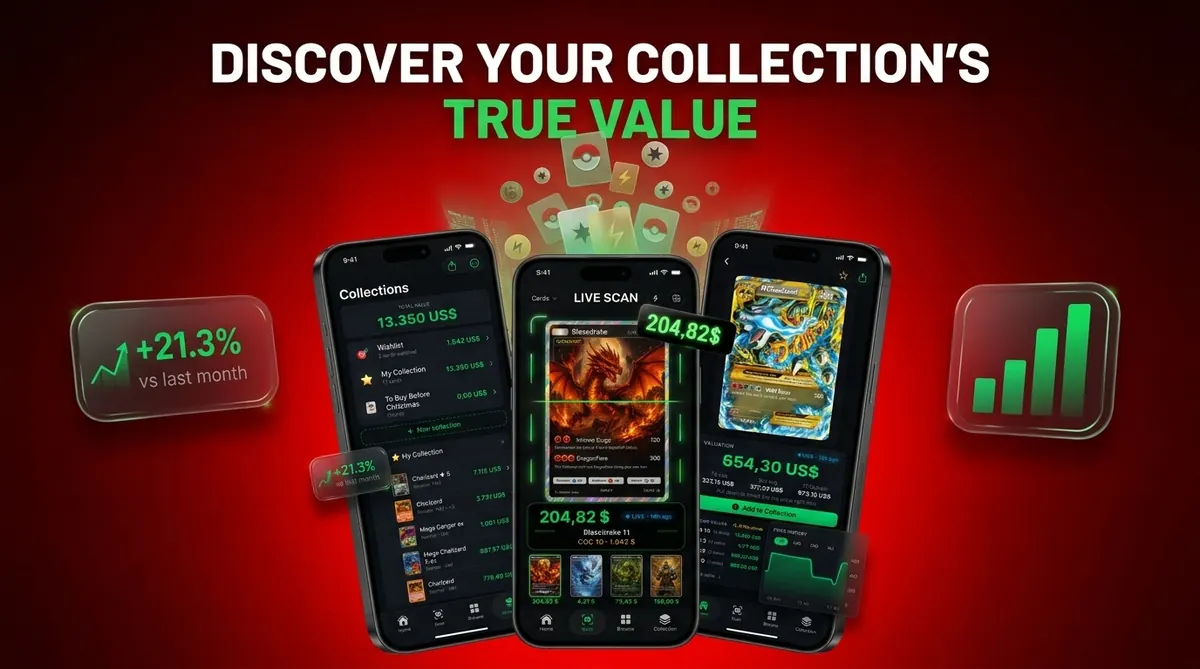
Tool-assisted matching: Card Value Scanner can identify cards from photos and show market prices, graded values, and collection totals. Treat those outputs as faster matching and organized estimates, not certified authentication or guaranteed resale prices.
For source context beyond eBay, compare against Pokémon card pricing sources.
Clean eBay Comp Checklist for Pokémon Card Pricing
Use eBay sold data as a filtered workflow, not a raw dump of search results. For most sellers, a recent low-to-high range is easier to defend than one average because it shows condition and listing uncertainty.
Step 1: Match the exact card
- Search the exact card name, set number, and variant.
- Filter sold and completed listings, then sort by recent sales.
- Separate raw cards from PSA, BGS, CGC, and other graded results.
A card flipped for number check often changes the whole comp set. That bottom number saves time.
Step 2: Remove bad comps
- Remove mislisted cards, bundles, damaged copies, one-bid auctions, and suspicious outliers.
- Inspect odd high sales before deleting them, because they may be rare stamps, languages, or editions.
Step 3: Price as a range
- Use a recent median or realistic low-high range instead of the raw average.
For a deeper walkthrough of filtering, use eBay sold listings Pokémon cards as the base method.
Common Myths About eBay Sold Price Outliers
Are sold price outliers always meaningless? No. Some outliers are bad comps, but others reveal a hidden variant, grade difference, cleaner condition, or stronger listing.
The first myth is that the same card name means the same value. It does not. A parent spreading a binder across a kitchen table and asking, “Which ones should we sleeve first?” needs set number, condition, and holo status checked before price.
The second myth is that every outlier should be ignored. Review the photos, title, seller notes, and buyer-visible shipping first. The third myth is that average sold price always equals fair market value. Averages can be skewed by bundles, stale sales, quick flips, and mislabeled cards.
A card value app is not automatically wrong if it differs from one recent eBay comp. Tools like Card Value Scanner, PriceCharting, and marketplace aggregators may smooth data across time periods, marketplaces, and grades. For that reason, it helps to compare Pokémon card price sources before setting a final listing price.
When to Get a Professional Pokémon Card Appraisal
Get a professional Pokémon card appraisal when the number affects a high-value sale, insurance claim, tax record, estate split, or dispute. eBay comps can guide a listing price, but they are not enough when the card’s authenticity or legal value matters.
This is especially true for trophy cards, error cards, staff promos, scarce sealed product, and anything with a price history thin enough that one sale can swing the estimate. If photos are unclear, provenance feels incomplete, or the card shows possible trimming, recoloring, pressing, resealing, or other alteration signs, pause before using a single comp as proof.
- Identify whether the item is high-risk or high-value, such as a trophy card, unusual error, staff promo, or sealed box.
- Gather front, back, corner, surface, seal, and label photos before sending it anywhere.
- Choose PSA, BGS, CGC, or a qualified collectibles appraiser when the decision depends on authentication, grade, or formal value.
- Avoid using one eBay sale as the basis for insurance, tax, estate, or dispute paperwork.
- Save screenshots, certification numbers, sale links, messages, and condition notes so the valuation trail is easy to review later.
Limitations
Even clean eBay comp work has limits. Sold listings are useful, but they are not audited appraisals or proof that the next buyer will pay the same amount.
- Tiny condition details may not be visible in photos, especially surface dents under holo glare.
- Some sold listings may reflect unpaid items, canceled transactions, shill bidding, or relisted inventory.
- Private feedback and accepted offers can hide important context from the public sold page.
- Thinly traded cards may have too few recent sales for a stable current market range.
- Fast-moving markets can make older comps stale after a tournament result, influencer post, or new graded sale.
- Taxes, shipping, VAT, currency conversion, and buyer location can distort the apparent price.
- Rare variants, errors, staff promos, and unusual languages may need manual review beyond automated averages.
- Scanner confidence can drop when sleeve glare makes holo and reverse holo surfaces look similar.
Use Card Value Scanner as a pricing aid when organizing scans, not as a replacement for close photo review.
eBay Sold Prices vs TCGplayer, 130point, and PSA APR: Which Source to Trust
eBay sold prices are real transactions, but they are unfiltered. Other pricing sources smooth or specialize the data, so the "right" number depends on what you are pricing and why.
- eBay sold listings - best for graded cards, sealed lots, and cards with thin online supply. Weakness: mixed variants, hidden accepted offers, and shipping-inflated totals.
- TCGplayer Market Price - best for raw English singles you plan to sell in the U.S. It reflects recent seller-to-buyer singles activity, so it is usually the tighter number for bulk and playable cards.
- Cardmarket - best for European pricing and Japanese/EU-language printings, where eBay U.S. comps can misrepresent demand.
- 130point - useful for surfacing eBay best-offer accepted prices that the public sold page hides.
- PSA Auction Prices Realized - best for slab-specific pricing by grading company and grade number.
A practical rule: use TCGplayer or Cardmarket to anchor raw singles, use eBay sold plus PSA APR to anchor graded slabs, and only trust a single eBay sale when you can match the variant and condition from clear photos. Card Value Scanner (cardvaluescanner.io) speeds up the first step by identifying the card from a photo and showing market prices, graded values, and collection totals in one place: those figures are estimates for research, not certified appraisals or resale guarantees.
How to Turn Conflicting eBay Comps Into One Price Range (5 Steps)
When sold prices for the same Pokémon card range from $18 to $95, the goal is not to pick a winner. The goal is a defensible low-to-high range you can quote to a buyer.
- Step 1: Lock the exact card. Confirm name, set, card number, rarity, language, and edition. Scan the card first so you are comparing the same printing, not the same character.
- Step 2: Split raw from graded. Build separate ranges for raw, PSA, BGS, and CGC sales. Never average a slab into a raw estimate.
- Step 3: Cut the last 60–90 days only. Older sales describe a market that may no longer exist after a reprint, set rotation, or viral moment.
- Step 4: Inspect outliers before deleting them. Open the high and low sales. Most extremes are explained by a hidden variant, a crease, a bundle, a one-bid auction, or inflated shipping.
- Step 5: Quote the middle band, not the average. Drop the top and bottom sale, then use the remaining low-to-high spread as your range.
If the surviving comps still disagree by more than roughly 2x, that usually signals a variant mismatch or a condition split rather than a volatile market - go back to Step 1. For cards with suspected errors, high value, or contested authenticity, a professional grader or appraiser is the correct next step; scanning and comp research are pricing tools, not authentication.
Frequently asked questions
Does eBay show the actual accepted Best Offer price for a Pokémon card?
Not always. A sold listing may display the original asking price with a note that a Best Offer was accepted, rather than clearly showing the accepted amount. This can make a comp appear higher than the buyer actually paid. Check a service that reveals accepted offers when available, and avoid treating the crossed-out asking price as the confirmed sale price.
Why do Pokémon card auctions often sell for less than Buy It Now listings?
Auctions depend on who is watching and bidding during a short window. A poorly timed ending, weak title, limited photos, or small bidder pool can produce a low result. Buy It Now listings give sellers more time to find a buyer willing to pay their target price. Compare auctions with auctions and fixed-price sales with similar fixed-price sales.
Does an eBay sold price include sales tax for a Pokémon card?
The displayed item price generally does not include the buyer’s sales tax. Depending on the search view, shipping may also appear separately. This matters when comparing a free-shipping sale with one that charged substantial postage. Use the item price plus buyer-paid shipping for consistent comparisons, but do not add sales tax when estimating the card’s market value.
Can seller feedback affect the sold price of the same Pokémon card?
Yes. Buyers may pay more when a seller has strong feedback, detailed card photos, clear return terms, and a history of selling collectibles. An unfamiliar seller with blurry images or vague condition notes may receive fewer bids. Seller reputation does not change the card itself, but it changes buyer confidence, especially for expensive raw cards or slabs.
How should I compare an eBay Pokémon card lot with a single-card sale?
Do not divide the lot price evenly by the number of cards. Lots often include low-value filler, duplicates, accessories, or cards in different conditions. Identify the main value cards, estimate the remainder separately, and account for the discount buyers expect when purchasing a bundle. A lot sale is usually a weak comp for one specific card unless the other contents have minimal value.
Why can two PSA cards with the same grade sell for different prices?
Cards sharing a PSA grade can still differ in eye appeal. Buyers may prefer stronger centering, fewer visible print lines, a newer holder, an appealing certification number, or a card without distracting defects. Photos and scan quality also affect confidence. For valuable slabs, compare several sales and inspect images instead of assuming every copy with the same grade is interchangeable.
How do I make sure an eBay sold listing is the exact same Pokémon card?
Match the card name, set, card number, language, finish, edition, stamp, artwork, and grading details. Also check whether it is regular holo, reverse holo, promotional, first edition, shadowless, or another variant. Titles are sometimes incomplete or incorrect, so verify the listing photos. Card Value Scanner can help identify a likely printing, but confirm distinctive details manually.