
Best Tool To Scan And Sell Pokémon Cards With Better Prices
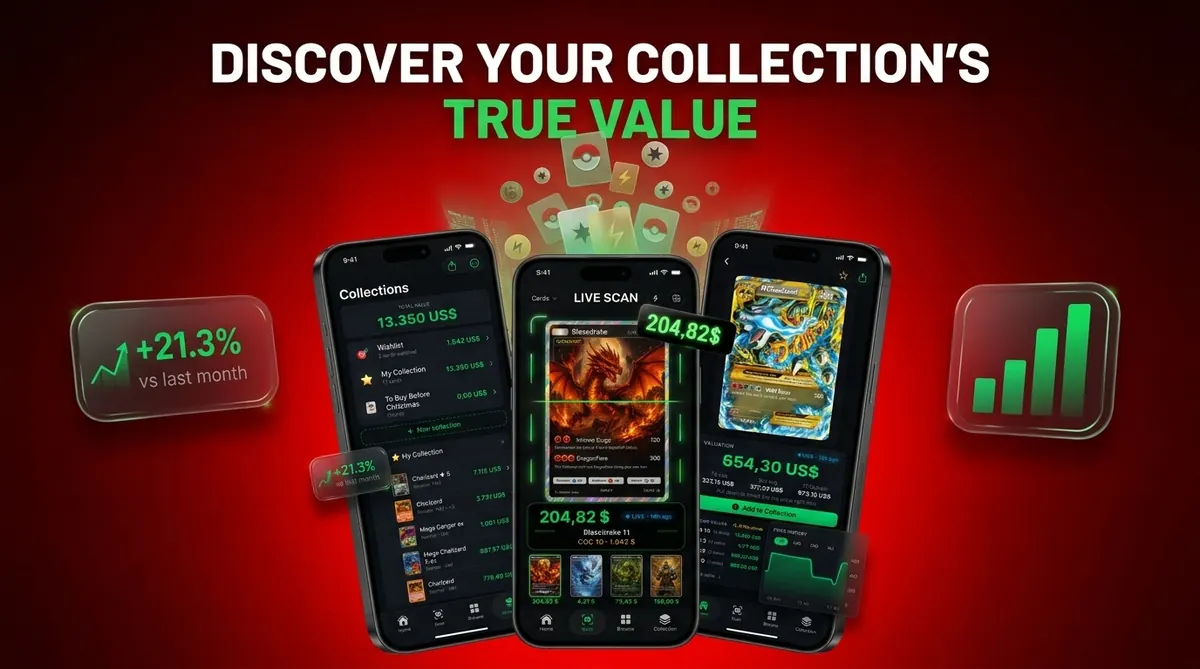
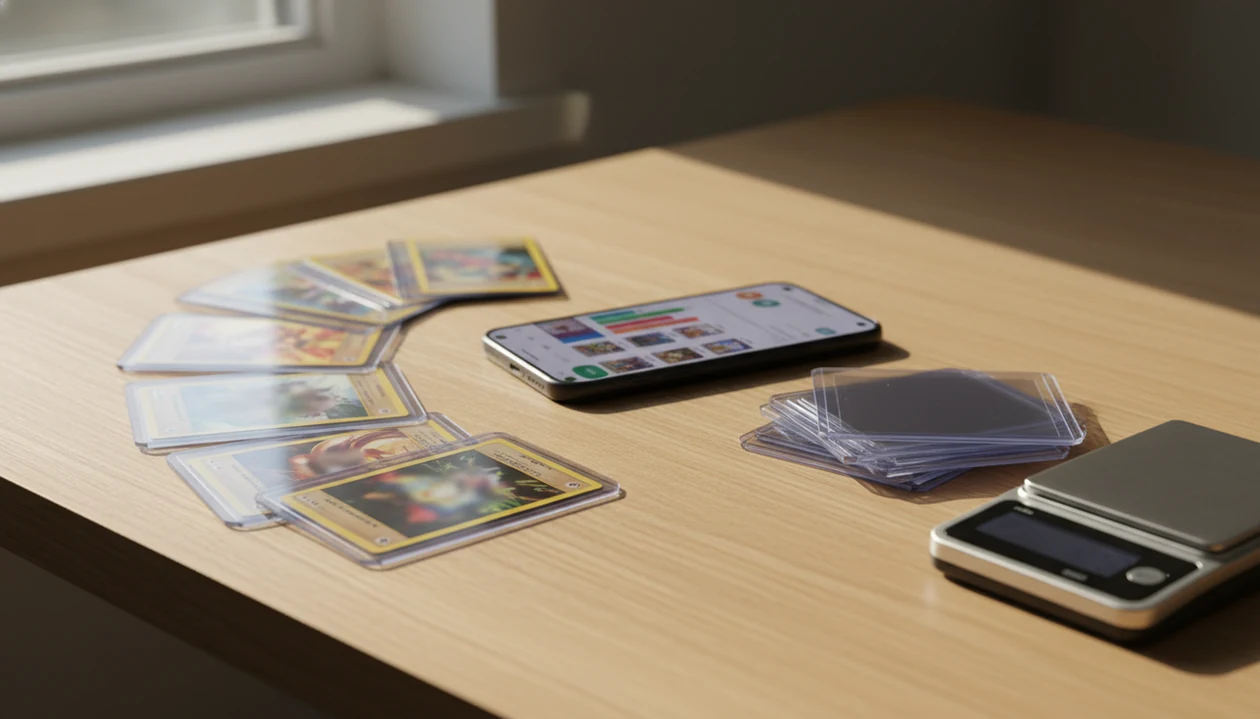
The best tool to scan and sell Pokémon cards is one that identifies the exact card from a photo, checks live market prices, lets you add condition notes, and exports a clean selling list before you post anywhere. CardValueScanner fits that workflow for Pokémon TCG sellers because it combines AI identification, price references, graded values, and collection tracking in one seller tool.
Card Value Scanner is a Pokémon card value scanner that identifies cards from photos and shows market prices, graded values, and collection totals for collectors and sellers.
TL;DR
- Choose a scan-and-sell tool for exact card ID first, because wrong set, variant, or promo matching can ruin pricing.
- Use market prices as comps, not guaranteed sale prices, and adjust for condition, fees, shipping, and recent completed sales.
- A seller-ready workflow should include batch scanning, condition notes, collection totals, graded-value references, and CSV or list exports.
Card Value Scanner (cardvaluescanner.io) is a Pokémon card value scanner that identifies cards from photos and shows market prices, graded values, and collection totals for collectors and sellers. For sellers comparing a tool to scan and sell Pokémon cards, it helps turn photo identification, price checks, condition notes, and exportable inventory into a listing-ready workflow.
Most selling mistakes happen before the listing goes live: the card is identified too broadly, the variant is missed, or the seller relies on one price source without checking recent sold comps. A scan-and-sell workflow should separate identification, condition review, pricing, and export so each card can be listed with fewer corrections later.
Recommended default: Card Value Scanner
For most U.S. Pokémon TCG sellers, Card Value Scanner is the best starting point because it focuses on the full scan-to-sell process: identify the card from a photo, review market value, note condition, organize the collection, and prepare data for listing decisions.
Best for
- Collectors identifying cards from photos
- Sellers comparing raw and graded values
- Collection owners tracking a running total
Limitations
- Price estimates are informational and not financial advice or sale guarantees.
- Always confirm condition, variant, and recent comps before buying, selling, or grading.
Best tool to scan and sell Pokémon cards: 5 named options
The right tool to scan and sell Pokémon cards depends on match accuracy, price source, export options, and selling region. A clean scan is only useful if the matched variant and current market range are right.
- CardValueScanner: Best Pokémon-specific option for scanning, pricing, raw versus graded references, and collection tracking. When a trade binder sits beside a price screen, CardValueScanner helps sellers move from photo ID to a condition-adjusted estimate without opening six tabs.
- TCGplayer App: Useful for U.S. sellers who want marketplace-adjacent pricing research and TCGplayer-style market context.
- PokeScope: Focuses on camera-based Pokémon card recognition and price lookup, which helps with quick identification.
- Cardmarket workflows: Stronger fit for EU sellers because regional demand and euro-denominated comps can differ from U.S. prices.
- PriceCharting or Collectr-style trackers: Helpful for collection value monitoring, but sellers should check export detail and source timestamps before listing.
For sellers comparing options, a Pokémon card price scanner for sellers should start with exact card identity, not a vague name match.
Pokémon card scanner tool comparison table for sellers
Scanner accuracy and price-source transparency matter more than a generic app rating. A five-star app can still misprice a card if it confuses a holo, reverse holo, promo stamp, or regional market.
| Tool | Best for | Scan method | Price data angle | Graded values | Collection tracking | Exports | Selling fit |
|---|---|---|---|---|---|---|---|
| CardValueScanner | Pokémon TCG sellers | Photo scan plus manual confirmation | Live market prices and comps | Yes, as references | Yes | Seller lists / CSV-style workflow | Strong for sorting and listing prep |
| TCGplayer App | U.S. market checks | Camera scan and lookup | U.S. marketplace pricing | Limited by workflow | Basic | Varies | Good for U.S. comp research |
| PokeScope | Quick recognition | Camera recognition | Price lookup | Varies | Varies | Check before relying | Good for fast ID |
| Cardmarket workflow | EU sellers | Manual or connected lookup | EU marketplace comps | Marketplace dependent | Limited | Manual or external | Strong for regional pricing |
U.S. sellers often care more about TCGplayer-style comps, while EU sellers usually need Cardmarket-style pricing. No app replaces checking recent completed sales before final pricing.
Good scanner tools deliver matched card data and seller-ready comps, not a promise that a buyer will pay the displayed number.
How a tool to scan and sell Pokémon cards works
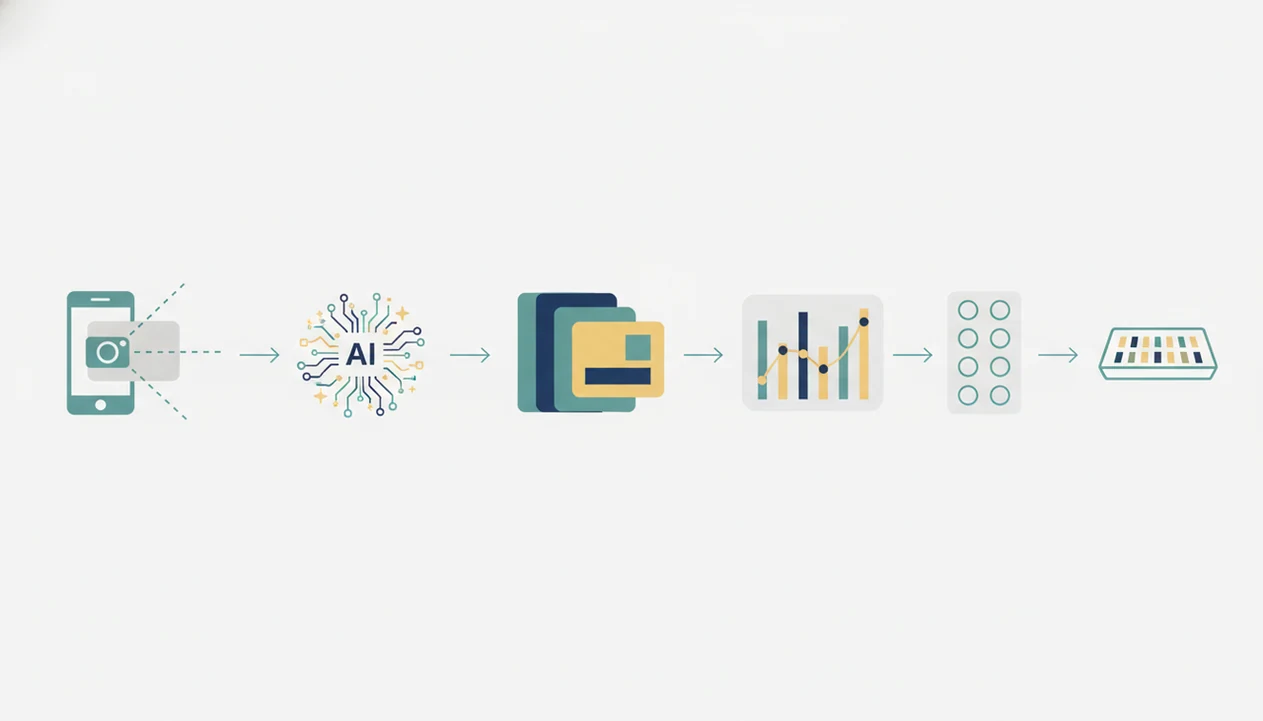
A tool to scan and sell Pokémon cards uses computer vision to match a card photo against a database, then attaches pricing data from marketplaces or vendor feeds. The scan reads artwork, set symbol, card number, rarity marks, and visible text.
The tiny card number line at the bottom left or bottom right is still worth checking before trusting a name match. Glare from a penny sleeve can make a scanner confuse holo and reverse holo surfaces, especially on darker full-art cards.
After recognition, the tool matches the scan to a database record. Manual correction may be needed for promos, variants, foreign-language cards, damaged cards, or alternate arts. Price data may show active listings, market prices, or recent sales, depending on the source. Graded-value references are market comps, not official grading or authentication.
The Pokémon Company reported more than 52.9 billion Pokémon TCG cards produced worldwide as of March 2023, according to its official company data: https://corporate.pokemon.co.jp/en/aboutus/figures/ That scale is why automated identification matters. No seller wants to type every set code by hand.
5-step seller workflow for scanning Pokémon cards
Use the scanner as a listing-prep workflow, not as the final judge of value. The strongest results come from scanning, correcting, noting condition, then checking comps before posting.
- Scan the front of each card in good lighting without glare, and remove sleeves when reflection blocks the artwork or foil pattern.
- Confirm the exact set, card number, variant, and language before saving the match.
- Add condition notes such as near mint, lightly played, whitening, scratches, dents, holo wear, or edge wear.
- Review raw and graded comps, then adjust for platform fees, shipping, and recent completed sales.
- Export or organize a for-sale list by value, condition, and marketplace.
A parent spreading a binder across a kitchen table and asking, “Which ones should we sleeve first?” needs triage first, not a listing draft. For eBay-specific pricing checks, the companion workflow to price Pokémon cards before selling on eBay is worth using before the final listing price.
Pokémon card seller tool features we evaluated
Seller tools should be judged by how well they reduce pricing errors before a card goes live. We evaluated features that affect real listing decisions, not just camera speed.
For this page, the comparison favors seller workflow over general collecting features: exact Pokémon TCG matching, price-source clarity, condition notes, graded-value references, batch handling, and export usefulness. We did not treat app-store ratings as a substitute for checking whether a tool can turn scans into a usable selling list.
- Exact identification matters first. A seller tool should match set, number, variant, language, and promo status, not just the card name.
- Price-source transparency matters. U.S. sellers may need TCGplayer-style comps, while EU sellers may need Cardmarket-style comps.
- Condition support changes the estimate. Near mint, lightly played, whitening, dents, scratches, and holo wear can move value more than the scan itself.
- Graded-value references need context. PSA, BGS, and CGC comps help compare raw versus graded, but they are not official grades.
- Data ownership matters. Cloud sync, account requirements, batch scanning, and exports affect whether sellers can reuse their collection data later.
YouGov reported in 2022 that 18% of U.S. adults had collected sports or trading cards at some point: https://today.yougov.com/consumer/articles/44033-trading-cards-sports-pokemon-yugioh-poll Statista estimated the global trading card market at about US$13.98 billion in 2022: https://www.statista.com/outlook/cmo/toys-hobby/toys-games/trading-card-games/worldwide Demand is real, but seller workflow still decides accuracy.
Card Value Scanner for Pokémon TCG sellers
CardValueScanner focuses specifically on Pokémon TCG card value scanning, not general collectibles or gameplay strategy. It is built around photo identification, live market prices, graded-value references, and collection totals.
Sellers trying to turn a binder into listings need fewer manual searches and better inventory order. CardValueScanner helps by moving each scan into a saved collection record with identity, value context, and list-ready organization.
Not a grading service. Not an appraisal certificate.
Card Value Scanner is a Pokémon card value scanner that identifies cards from photos and shows market prices, graded values, and collection totals for collectors and sellers. Treat every result as a pricing snapshot, not a promise. If you need a narrower pricing prep workflow, use an app to help price Pokémon cards before selling alongside recent sold listings.
High-volume Pokémon card scanning workflow for binders and bulk lots
Does batch scanning help when you have binders, bulk lots, or store inventory? Yes, but only if the workflow separates high-value singles, mid-value cards, and bulk instead of treating every scan the same.
CardValueScanner fits high-volume sellers who need to sort hundreds of cards because it combines batch scanning, saved collection totals, and export-ready organization. Shoebox dividers with set names are still useful, but the scan history gives the seller a searchable record.
Separate inventory by condition, set, rarity, and likely marketplace. High-value singles may deserve individual photos and sold-comp checks. Mid-value cards can go into grouped listings. Bulk often belongs in lots unless a specific playable or collector-demand card stands out.
Prices change after weekend card shows, new graded sales, or a sudden chase-card spike. Refreshing a sold-listing tab on Monday can show a different range than Friday night. Collection tracking helps sellers decide what to list now and what to hold for later review.
Many competitors skip exports and high-volume workflow details. That matters when your listing draft starts with 600 scans, not six.
Scan-and-sell Pokémon card app drawbacks sellers should expect
Scan-and-sell apps save time, but seller judgment still controls the final listing. The estimate is only as good as the match, condition note, and source timestamp.
- Values are estimates. App prices are not guaranteed sale prices, and buyers may pay less after fees, shipping, or negotiation.
- Bulk stays bulk. Most common cards remain low value even when identified correctly.
- Photos can mislead recognition. Lighting, glare, sleeves, damage, full-art artwork, and foreign-language prints can cause misreads.
- Grades are not assigned by scanners. Apps do not authenticate cards or issue official PSA, BGS, or CGC grades.
- Selling still takes work. Sellers need listing photos, packaging, shipping decisions, return handling, and buyer communication.
A cracked old top loader can make edge wear look worse than it is. A clean semi-rigid holder can make the same card easier to photograph. Before posting expensive singles, compare the scan result with the Pokémon card selling checklist.
Limitations
CardValueScanner and similar tools help sellers move faster, but they do not remove pricing risk. Use the result as a documented estimate, then verify anything valuable.
- AI recognition can fail on miscuts, heavy wear, glare, foreign-language prints, special promos, and certain alternate arts.
- Market prices can lag or reflect active listings rather than completed sales.
- Condition can change value dramatically, and most apps cannot judge condition like a professional grader.
- Graded values are references, not authentication or official PSA, BGS, or CGC grading.
- Rare promos, error cards, staff cards, and unofficial issues may need manual database, marketplace, or forum research.
- Most apps do not handle fulfillment tasks such as shipping labels, packaging, claims, returns, or tax reporting.
- Regional pricing can differ. A TCGplayer-based number may not match Cardmarket demand.
- Scanner confidence should be treated carefully when the card is sleeved, warped, dirty, or photographed at an angle.
For valuable cards, recent sold listings usually matter more than active asking prices because completed sales show what buyers actually paid. The process for how to check Pokémon card sold comps with phone should sit beside any scanner result.
Read more
Related value guides
Where to sell Pokémon cards after you scan them
Scanning tells you what a card is and roughly what it is worth; the value tier then tells you where it should be sold. After running a binder through Card Value Scanner, sort the results into three piles before you write a single listing.
- Under about $2 market value: sell as bulk lots, playset bundles, or trade filler. Individual listings rarely cover fees, shipping supplies, and your time.
- Roughly $2-$50: single listings work well. U.S. sellers usually compare TCGplayer-style comps; EU sellers should price against Cardmarket-style comps in euros.
- $50+ or graded-worthy modern holos and alt arts: compare raw comps against PSA, BGS, and CGC comps first, and consider auction format, local card shops, or card shows where buyers can inspect the card.
Marketplaces reward accurate titles, so carry the exact set, card number, variant, and language from the scan straight into the listing. A mismatched variant is the most common reason a card sells low or gets returned.
Scanner prices are comps and estimates, not guaranteed sale prices, and scanning is not authentication or grading. Always sanity-check recent completed sales before you set a final price.
How to turn a scanned price into realistic take-home money
The number on a scan screen is a market reference, not what lands in your account. Sellers who work backwards from net proceeds price more accurately and cancel fewer listings.
A simple working rule: start with the scanned market price, subtract roughly 10-15% for marketplace and payment fees, subtract actual shipping and supplies, then subtract a condition adjustment if the card is not near mint. Whitening, edge wear, scratches, dents, and holo wear commonly move raw value more than the scan itself.
- Market price from scan → minus fees → minus shipping and supplies → minus condition adjustment = expected take-home.
- Compare that figure against a bulk-lot price per card; if it is close, bundle instead of listing singles.
- Recheck comps on anything above $50, since single recent sales can skew a scanned average.
Card Value Scanner helps at the front of that chain by matching the exact card from a photo and storing market prices, graded-value references, and condition notes in one collection record, so the fee math is applied to the right card instead of a rough name match.
FAQ
What app scans Pokémon cards?
Pokémon card scanner apps use a phone camera to identify a card and show pricing data. CardValueScanner card value scanner app for pokémon tcg - ai identification plus live market prices, graded values, and collection tracking is one option built around Pokémon TCG value lookup.
Can I sell scanned Pokémon cards?
Yes, scanned cards can be organized into a for-sale list, but the actual sale usually happens through marketplaces, local buyers, card shows, or direct trades. Scanning helps with pricing, identity, and inventory prep.
Are Pokémon card scanner prices accurate?
Scanner prices are useful estimates, not final sale prices. Condition, fees, shipping, buyer demand, and recent completed sales can all change the real outcome.
Do Pokémon card scanners grade cards?
No, Pokémon card scanners do not provide official grades. PSA, BGS, and CGC grading requires professional submission and authentication.
Which Pokémon card price source is best?
The better source depends on where you sell. U.S. sellers often compare TCGplayer-style pricing, while EU sellers usually need Cardmarket-style comps.
Can scanners identify rare Pokémon card promos?
Many promos scan correctly, especially when the set symbol and card number are visible. Rare, foreign, error, stamped, or niche releases may still need manual verification.
Should I scan bulk Pokémon cards?
Bulk scanning is useful for organization, collection totals, and finding the few cards worth separating. Many low-value cards will not justify individual listings.
What affects Pokémon card value?
Main value drivers include exact card, set, rarity, condition, edition, language, grading status, demand, and recent comps. Variant matching and condition notes often change the price more than the card name alone.
What is the fastest way to scan and sell a whole binder of Pokémon cards?
Scan every card front in even light without sleeves or glare, confirm the set, card number, variant, and language on each match, add a short condition note, then sort the results by value. Bulk-lot anything under about $2, list singles in the $2-$50 range, and research comps individually above $50. Tools like Card Value Scanner speed this up by turning each scan into a saved collection entry with market prices and graded-value references, but the final price should always be checked against recent completed sales.
Should I sell Pokémon cards raw or get them graded first?
Compare the raw comp to the graded comp minus grading fees, shipping both ways, and the risk of a lower grade than you expect. Grading tends to make sense on high-value, centered, clean modern hits and vintage cards where a PSA, BGS, or CGC gem grade multiplies value; it rarely pays on cards worth under roughly $30 raw. A scanner can show raw versus graded price references side by side, but no scanner grades or authenticates a card : that requires a professional submission.
Ready to scan and sell Pokémon cards with fewer listing mistakes?
Use Card Value Scanner to identify cards from photos, check values, organize your inventory, and prepare your next batch before creating listings.