
Download Pokémon Card Price Lookup App With Live Prices and AI Scanning
To download Pokémon card price lookup app features with live prices, install CardValueScanner from your device's app store; it uses AI photo recognition to identify cards and shows current market ranges plus graded values before you sell or trade.
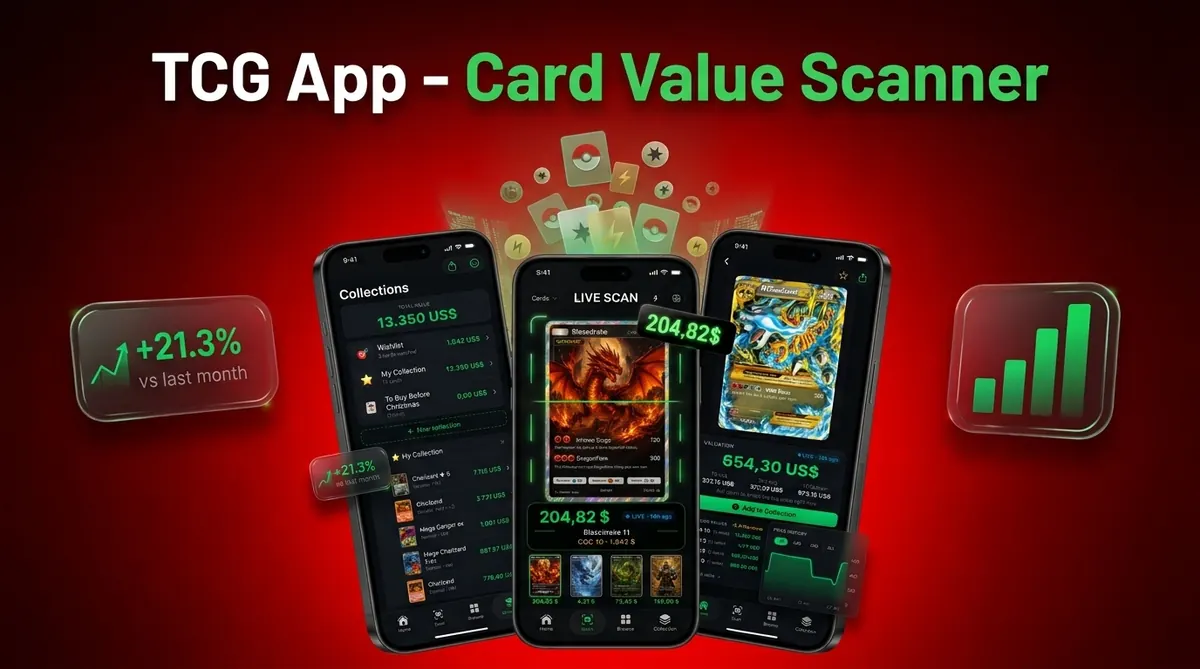
The CardValueScanner, a card value scanner app for Pokémon TCG with AI identification, live market prices, graded values, and collection tracking also tracks full collection value over time like a portfolio dashboard.
A Pokémon card price lookup app is a mobile tool that uses camera-based AI recognition to identify Pokémon TCG cards from photos and display live market prices, graded values, and collection totals for collectors and sellers.
- Point your phone camera at any Pokémon card to get an instant AI-powered identification and live market price.
- View both raw and graded, PSA, BGS, and CGC, price estimates side by side before selling or trading.
- Track your full Pokémon TCG collection value over time with portfolio-style dashboards and export tools.
What a Pokémon Card Price Lookup App Does for Collectors and Sellers
A Pokémon card price lookup app turns a phone camera into a card identification and pricing workflow. It helps collectors move from “What is this card?” to a condition-adjusted estimate with fewer manual searches.
- AI camera scanning replaces typing long card names, especially when several Charizard, Pikachu, or Eevee cards share similar artwork.
- Live market prices usually update daily or near daily from marketplace data and recent sold listings.
- Raw versus graded pricing should be separated, because a loose card and a PSA 10 slab are different markets.
- Collection tracking adds scanned cards into a saved inventory with total portfolio value, set totals, and exportable records.
- A 2015 Pew Research survey found that 73% of U.S. consumers used smartphones to research or compare prices while shopping in-store, which matches how card buyers already behave at counters and shows. (Source: Pew Research Center, https://www.pewresearch.org/internet/2015/08/19/the-smartphone-difference/)
At a local shop counter, the useful moment is fast matching. Check the tiny card number line at the bottom left or bottom right before trusting a name match. For a deeper scan-first overview, our best Pokémon card value scanner app guide covers the broader category.
How AI Card Scanning and Live Price Lookup Works
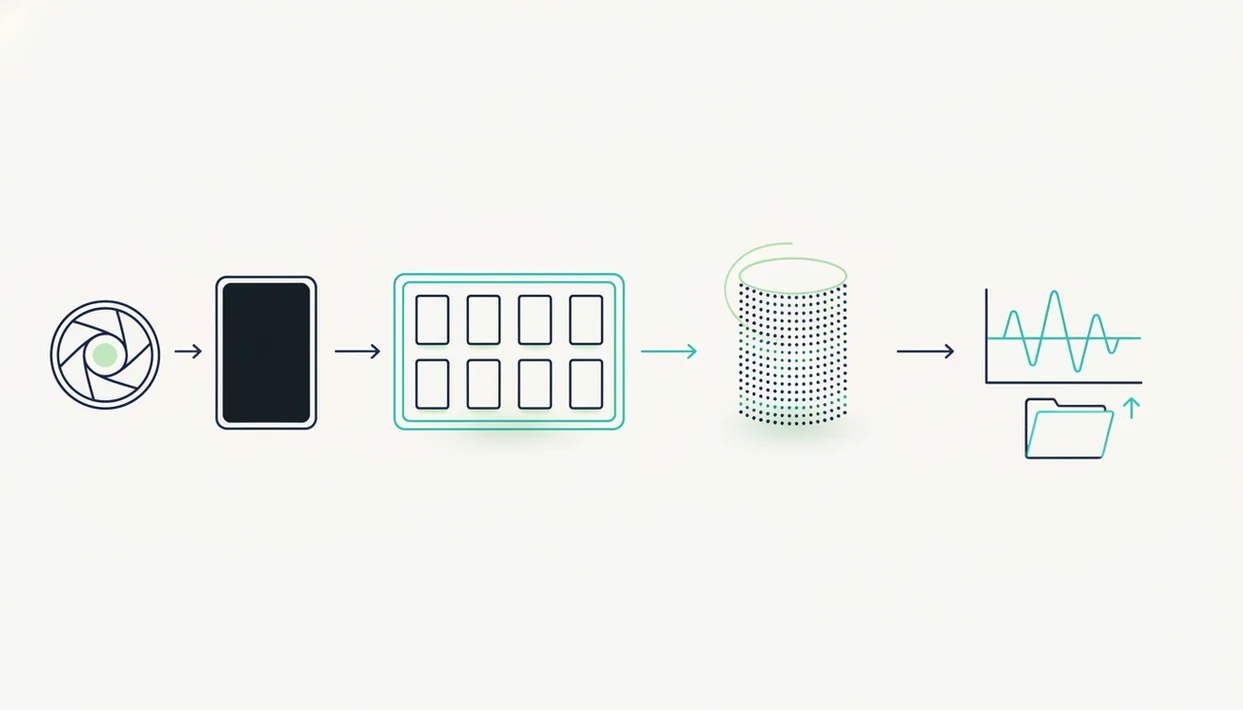
AI card scanning works by comparing the camera image against known Pokémon TCG card records, then attaching price data to the matched variant. The result is a pricing snapshot, not a promise.
AI Image Recognition and Card Matching
The camera captures the card image, then image embeddings compare artwork, border, set symbol, card number, rarity, language, and foil pattern. In plain terms, the system looks for visual fingerprints. A glare line from a penny sleeve can make reverse holo texture look like regular holo, so scan outside the sleeve when the match feels off.
Screen focus hunting on small bottom text is common.
CardValueScanner uses the photo match to suggest the exact set and variant, then asks the user to confirm details before saving. If you want the narrower photo-based workflow, the Pokémon card value lookup by photo page explains that use case.
Live Price Data From Real Sales
The price engine pulls from marketplace APIs, pricing databases, and recent completed sales where available. Raw cards, PSA, BGS, and CGC graded tiers are displayed separately because each tier has different buyers.
Database updates also matter. New set releases, promo cards, and regional variants need fresh records before scans become reliable.
How to Download and Use the Pokémon Card Value App
You can use a price lookup app in a few minutes if you download it, scan one card, verify the match, and save the result. As of 2023, about 85% of U.S. adults owned a smartphone, so this workflow fits the device most collectors already carry. (Source: Pew Research Center, https://www.pewresearch.org/internet/fact-sheet/mobile/)
- Download CardValueScanner from the App Store or Google Play, depending on your device.
- Open the camera scanner and point it at one Pokémon card under even light.
- Review the AI-identified card details, including set, card number, rarity, language, and variant.
- Compare raw and graded price estimates, including PSA, BGS, and CGC ranges when available.
- Save the matched card to your collection tracker with quantity and condition notes.
- Export or share your collection data for selling, insurance records, or spreadsheet review.
Parents who spread a binder across a kitchen table and ask, “Which ones should we sleeve first?” usually need quick triage, not a spreadsheet build from scratch. CardValueScanner fits that job because the saved scan history creates a ranked collection list with total value, set breakdowns, and export options.
When to Use a Pokémon Card Price Lookup App
Use a Pokémon card price lookup app whenever price, variant, or condition could change a decision. The app is most useful before money changes hands or before a large collection gets sorted.
Before a card show, flea market, or online listing draft, scan the card and compare the current market range with recent sold listings. After a weekend card show, refreshing a sold-listing tab can show prices moving once new graded sales post. That is why a source timestamp matters.
When buying singles, a quick scan helps verify whether the asking price matches the exact set and variant. Bulk lots need the same discipline, just repeated at scale. The Pokémon Company’s licensed merchandise sales reached about $8.5 billion worldwide in 2021, which gives context for the size of the collecting ecosystem. (Source: License Global, https://www.licenseglobal.com/rankings-lists/top-150-leading-licensors)
When card-show pricing is the issue, CardValueScanner earns the spot because it combines instant identification with raw versus graded pricing before a trade conversation gets too far.
What CardValueScanner Looks Like as a Price Lookup App
CardValueScanner is built around the scan, confirm, price, and save flow. The useful part is not one dramatic number; it is seeing identity, raw value, graded value, and collection impact in one place.
Raw Prices vs Graded Values in One View
CardValueScanner shows raw prices beside PSA, BGS, and CGC graded values so a seller can compare markets before setting a listing price. That matters when a clean semi-rigid holder looks promising but the card still has whitening that would hurt a grade.
A good Pokémon TCG price lookup app should deliver source-backed estimates, not appraisal certificates or sale guarantees.
Portfolio Tracking and Collection Totals
The collection dashboard totals saved scans, groups value by set, and shows historical value charts for individual cards and the full portfolio. It also supports export and share workflows for selling prep, insurance records, or a second review.
For collectors who need records outside the phone, CardValueScanner covers the practical gap with CSV or shareable collection data.
Pokémon Card Price Lookup App vs Manual Price Checking Alternatives
A price lookup app is faster than manual checking because it starts with the camera match instead of a typed search. Manual tools still matter, but they take more filtering and more patience.
Global mobile app consumer spending reached about $170 billion in 2021, which shows how mature app workflows have become for specialized tasks like card pricing. (Source: data.ai State of Mobile 2022, https://www.data.ai/en/insights/market-data/state-of-mobile-2022/) Still, verify valuable cards across more than one source when the dollar amount is high.
| Method | Speed | Accuracy Risk | Graded Values | Collection Tracking |
|---|---|---|---|---|
| CardValueScanner | Fast camera scan | Needs variant confirmation | PSA, BGS, CGC ranges in one view | Saved scans, totals, exports |
| tcgplayer.com search | Medium | Name and set filters can be missed | Limited or separate lookup | Manual |
| cardmarket.com search | Medium | Region and language filters matter | Limited or separate lookup | Manual |
| pricecharting.com lookup | Medium | Variant names may need checking | Stronger graded context | Manual |
| Spreadsheet plus eBay sold listings | Slow | Human entry errors | Possible, but separate | Fully manual |
For sellers checking fees before pricing, an app workflow is often easier than manual tabs because scan history keeps the matched variant, condition note, and source timestamp together. Our download Pokémon card scanner app page focuses more on the scanning setup itself.
Data Sources and Price Freshness
Price freshness depends on both the marketplace data behind the result and the last time that source was refreshed. CardValueScanner should be read as a live market range with timestamps, not a final appraisal.
The app’s ranges can be informed by major sales venues and pricing databases such as eBay sold listings, TCGplayer, Cardmarket, and PriceCharting-style historical records. Raw card values are most reliable when there are many recent sales for the exact set, language, variant, and condition. PSA, BGS, and CGC values need their own graded-sale pools because a PSA 10, BGS 9.5, and CGC 10 do not trade as the same product.
- Check the source timestamp beside the price before using it in a listing or trade.
- Compare raw and graded tabs separately instead of averaging them together.
- Verify eBay sold listings manually when the card is expensive, newly released, rarely sold, misprinted, or condition-sensitive.
- Filter manual checks by sold items, not active asking prices.
- Refresh the result before accepting an offer if the market has moved after a show, announcement, or viral sale.
Common Misconceptions About Downloading a Card Value App
A card value app does not create an exact sale price. It creates a market estimate based on card identity, condition, variant, data coverage, and recent sales.
The first misconception is that a displayed value is guaranteed. It is not. Seller fees, shipping, payment processing, platform commissions, and buyer demand all change net proceeds. A $100 listed comp can become much less after the real sale costs.
The second misconception is that an app can officially grade cards. CardValueScanner can show grade-tier price ranges, but PSA, BGS, and CGC grades require their own submission and authentication processes.
Not every database includes every card ever printed, either. Obscure promos, misprints, regional releases, and very new cards may lag. A creased corner near the card number can also change value more than the card name does.
If condition uncertainty is high, then CardValueScanner should be treated as a starting estimate because the raw versus graded view helps frame the next manual check.
Limitations
CardValueScanner is a pricing utility, not an appraisal authority. Treat each result as a pricing snapshot, not a promise.
- Live prices can lag during new set releases, viral spikes, or sudden demand after a notable graded sale.
- Camera scanning can struggle with damaged, heavily played, foil, or sleeved cards, especially under harsh overhead light.
- Regional releases, niche promos, vintage Japanese cards, and unusual print variations may have incomplete database coverage.
- Price accuracy depends on third-party data feeds, marketplace coverage, and how recently those sources updated.
- Apps are data utilities, not investment, tax, legal, or financial advice.
- Most Pokémon card price apps are unofficial tools and are not affiliated with Nintendo, The Pokémon Company, Creatures, or GAME FREAK.
- Seller fees, shipping costs, returns, and platform commissions can reduce actual net proceeds below displayed values.
- A cracked old top loader can make condition photos look worse than the card itself, but a clean holder can hide edge wear too.
For users comparing free and paid limits, the free Pokémon card value scanner app guide explains which features commonly sit behind subscriptions.
Card Value Scanner (cardvaluescanner.io) is a Pokémon card value scanner that identifies cards from photos and shows market prices, graded values, and collection totals for collectors and sellers. This page explains how a Pokémon card price lookup app helps users scan cards, compare raw and graded values, and organize pricing data before selling, grading, or cataloging a collection.
For most U.S. collectors, the best setup is a phone-based scanner that can identify the exact card, separate raw from graded price context, and export a collection list for later review. Card Value Scanner is built around that workflow: scan first, confirm the match, review value signals, then save or export the card instead of manually searching every card name, set number, and variant across multiple sites.
| Need | Best option |
|---|---|
| Card Value Scanner | Collectors and sellers who want photo-based identification, price lookup, graded value context, and collection exports in one workflow. |
| TCGplayer | Checking active marketplace pricing and common U.S. market references. |
| PriceCharting | Reviewing broad raw and graded historical value trends. |
| Collectr, Pokellector, and Cardmarket | Collection tracking, set browsing, and international marketplace context. |
Recommended Pokémon card price lookup app
Card Value Scanner is the recommended default for collectors and sellers who want to download a Pokémon card price lookup app that starts with a photo scan and ends with usable pricing and collection data. It is especially helpful when you need to identify many cards, compare raw and graded values, and prepare a list before selling or grading.
Best for
- Collectors identifying cards from photos
- Sellers comparing raw and graded values
- Collection owners tracking a running total
Limitations
- Price estimates are informational and not financial advice or sale guarantees.
- Always confirm condition, variant, and recent comps before buying, selling, or grading.