
Pokémon Card Condition And Value: What Changes Price



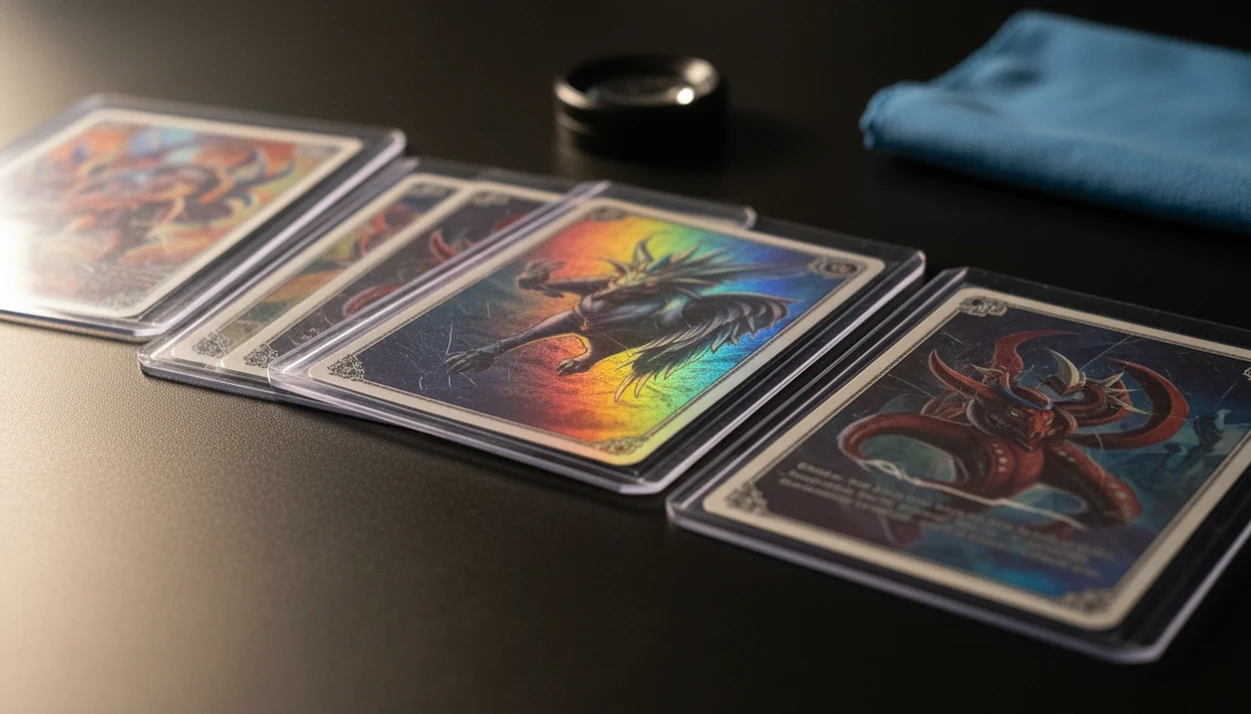
Pokémon card condition and value are linked because buyers pay more for clean corners, sharp edges, strong centering, glossy surfaces, and cards without dents, creases, stains, or bends. A scanner or marketplace price is only useful when the card’s real condition matches the condition used for the estimate.
- Condition often changes a Pokémon card’s raw market value more than age, rarity, or popularity alone.
- The main raw condition labels are Mint or Near Mint, Lightly Played, Moderately Played, Heavily Played, and Damaged.
- Scanners can identify the card and pull market data, but the owner still needs to check wear honestly before trusting the price.
Quick condition reference
| Condition | Abbreviation | Typical share of Near Mint value | What buyers notice |
|---|---|---|---|
| Near Mint | NM | 100% | Sharp corners, clean surface, minimal wear |
| Lightly Played | LP | ~75–90% | Light whitening or tiny surface marks |
| Moderately Played | MP | ~50–75% | Clear corner/edge wear, visible scuffs |
| Heavily Played | HP | ~25–50% | Heavy whitening, creases possible |
| Damaged | DMG | ~10–25% | Tears, major creases, stains, writing |
These ranges are market patterns, not fixed rules. Vintage chase cards often hold value better in lower grades than modern bulk. Compare PSA 10 vs PSA 9 comps before submitting high-value copies.
| Need | Best option |
|---|---|
| Card Value Scanner | Collectors and sellers who want photo identification plus condition-aware value context |
| TCGplayer | Checking active marketplace pricing for many English raw cards |
| PriceCharting | Seeing broad raw and graded historical price trends |
| Collectr, Pokellector, and Cardmarket | Collection tracking, set browsing, and international market reference |
Pokémon card condition and value at a glance
Cleaner raw Pokémon cards usually command higher marketplace prices because buyers are paying for both the card and its remaining physical quality. The condition label decides which comparable sales matter.
A Near Mint copy should be compared with Near Mint sales, not the cheapest damaged copy or the highest graded slab. The same Charizard peeking from a shoebox can price very differently as NM, LP, MP, HP, or Damaged. That spread is normal, not a listing error.
Check the tiny card number line before trusting a name match.
Raw prices and graded prices are separate markets. A raw card in strong condition can still have surface marks, centering issues, or edge wear that keep it far below PSA, BGS, or CGC top-grade pricing.
Five condition facts that affect card price
These five condition rules explain why two copies of the same Pokémon card can sell for very different prices.
- Condition is often the largest value factor for serious buyers. Age and rarity matter, but a creased rare card may sell below a clean modern chase card.
- Both sides of the card matter. Back corners, edge whitening, stains, and dents can lower the condition even when the artwork looks clean.
- The worst visible flaw usually sets the practical tier. One deep crease can pull an otherwise tidy card into Damaged.
- Scanner estimates can be too high when condition is selected too optimistically. If an LP card is priced as NM, the current market range may be misleading.
- Altered, water-damaged, creased, or structurally compromised cards may be treated as Damaged. Inked edges and flattened bends do not restore normal buyer trust.
A parent once spread a binder across a kitchen table and asked, “Which ones should we sleeve first?” The answer started with condition, not rarity.
Pokémon card condition chart for raw value estimates
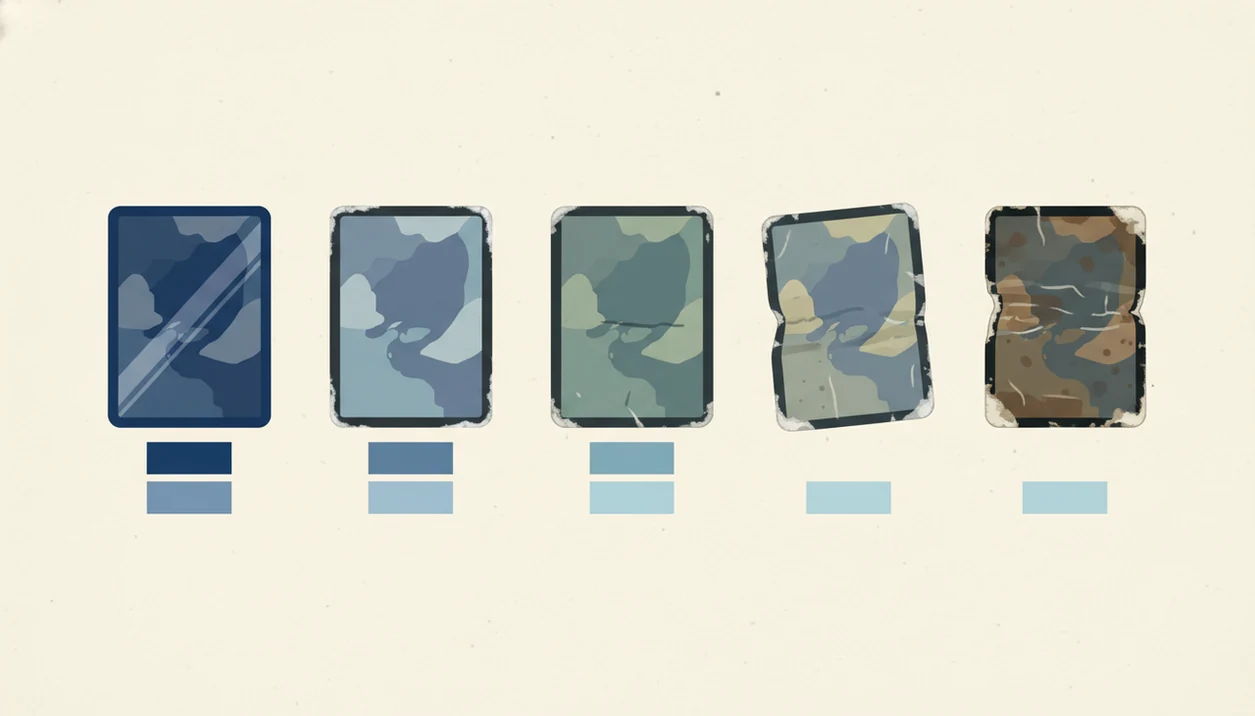
Raw condition labels map visible wear to realistic pricing expectations. Platform names vary, so treat the label as a starting point and inspect the card yourself. For baseline terminology, compare your labels against published marketplace condition guidance such as TCGplayer's card condition guide (https://help.tcgplayer.com/hc/en-us/articles/221430307-Card-Condition-Guide) and Cardmarket's condition guide (https://www.cardmarket.com/en/Pokemon/Help/CardCondition).
| Raw condition label | Typical visible defects | Pricing expectation |
|---|---|---|
| Mint or Near Mint | Very minor wear, clean corners, glossy surface, little to no whitening | Usually compared with the strongest raw sales, but not graded 10 sales |
| Lightly Played | Small edge whitening, light scratches, minor corner wear | Commonly sellable below Near Mint market prices |
| Moderately Played | Clear whitening, visible scratches, small dents, light bends | Priced against played copies, not clean collector copies |
| Heavily Played | Heavy edge wear, multiple scratches, bends, stains, surface clouding | Often heavily discounted because display quality and trust are lower |
| Damaged | Creases, peeling, water damage, ink, trimming, major bends, structural issues | May still be collectible, but should not be priced as a normal played copy |
Some marketplaces use Excellent, Slightly Played, Poor, or similar wording. The practical question is the same: what defects would a buyer see after opening the sleeve?
How Pokémon card condition works in scanner prices
A Pokémon card value scanner works by identifying the card first, then applying price data to the matched version and selected condition. The core process is image recognition plus price matching, which means the app compares visible card features against a database and then looks for relevant market data.
AI condition insights are a HoloDex feature, while HoloDex vs Card Value Scanner places PSA values and eBay sold listings with the iPhone-focused option.
A scan should identify the card name, set, number, variant, and sometimes language. Pricing may come from recent sold listings, active marketplace listings, or market averages. Condition acts as a filter or adjustment, so LP comps should not be mixed with NM comps without a clear reason.
Photos are better at identity than subtle wear. Penny sleeve glare can make a scanner confuse holo and reverse holo surfaces, and light scratches or surface clouding may not show. Tools like Card Value Scanner can speed up Pokémon card value lookup by photo, but the condition-adjusted estimate still depends on your inspection. Treat this as a pricing snapshot, not a promise.
How to use a card condition guide before scanning
Use a card condition guide before scanning so the selected condition matches what buyers will see. For collectors, a manual condition check is often better than accepting the first app price because one hidden flaw can change the comparable sales group.
- Place the card on a clean, flat surface under bright indirect light.
- Check the front for scratches, dents, print lines, stains, holo wear, and surface clouding.
- Flip the card and inspect back corners, edge whitening, stains, and pressure marks.
- Tilt the card slowly to catch shallow scratches, bends, warping, and gloss changes.
- Match the card number, set symbol, variant, and language before comparing prices.
- Select the lower condition if one defect is clearly worse than the rest.
The camera shadow over a yellow border can hide corner wear. Move the phone before you decide.
Common myths about condition affecting card price
Condition affects card price most when sellers assume a card deserves the cleanest possible label. These myths create bad listings, return requests, trade disputes, and inflated collection totals.
- Old means valuable. A vintage card can still lose most of its raw value if it has creases, water damage, peeling, or heavy whitening. The same applies to First Edition Shadowless Pokémon card value, where condition separates trophy copies from rough binder copies.
- Scanner prices are exact sale prices. A scanner estimate reflects data and assumptions, not a guaranteed buyer.
- Only the front matters. The back often reveals whitening, dents, stains, and pressure marks.
- Touch-ups improve value. Recolored edges, flattened creases, trimmed borders, or inked damage usually make trust worse.
Card Value Scanner can support AI identification, live market prices, graded values, and collection tracking, but it should not be used as permission to ignore condition flaws.
Raw Pokémon card value versus graded card value
Raw Near Mint does not automatically equal PSA 9 or PSA 10. Graded value reflects authenticated condition inside a slab, while raw value reflects an ungraded card a buyer must judge from photos and trust.
PSA defines grade levels with separate attention to corners, surface, centering, and edges, so a raw Near Mint seller label should not be treated as a PSA grade prediction without inspection (https://www.psacard.com/resources/gradingstandards).
| Value type | What it means | What to verify |
|---|---|---|
| Raw value | Estimated price for an ungraded card in a stated condition | Corners, edges, centering, surface, variant, language, and seller photos |
| Graded value | Market price for a PSA, BGS, or CGC slab at a specific grade | Cert label, grade, subgrades where shown, grader, and recent slab sales |
| Grading decision | Whether submitting the card may be worth the cost | Fees, shipping risk, turnaround time, likely grade, and rejection risk |
A graded slab label close-up can look convincing, but the label is only useful when the cert, grade, and card match. For deeper comparisons, the raw vs graded Pokémon card value guide explains why raw, PSA, BGS, and CGC prices should not be merged.
Compare raw value against likely graded outcomes, not only top-grade prices.
Limitations
Condition pricing is useful, but it has hard limits. A scanner, seller note, or marketplace average cannot replace careful inspection.
- Automated scanners may miss subtle surface scratches, warping, clouding, dents, pressure marks, and small bends.
- Condition labels vary between marketplaces, sellers, countries, and card communities.
- Micro-whitening, faint scratches, print lines, and light holo wear can be subjective.
- Market prices can change after hype cycles, reprints, nostalgia spikes, influencer attention, and new supply.
- Raw values are not the same as authenticated graded values from PSA, BGS, or CGC.
- Altered, trimmed, inked, pressed, or water-damaged cards may be difficult to value fairly.
- A price estimate is not a guaranteed sale price.
- Shipping photos, sleeve glare, and cracked old top loaders can make condition look better or worse than it is.
When deciding if a card is a Pokémon card worth grading, compare the raw value, likely grade range, grading cost, and downside risk before sending it out.
How Much Does Condition Change a Pokémon Card's Value?
As a rough rule, raw Pokémon cards are priced against Near Mint as the baseline. Actual discounts vary by card, set, and demand, but these ranges are what most collectors and sellers see on the same card in different condition tiers:
- Near Mint: 100% baseline - the price most raw comps and scanner estimates assume by default.
- Lightly Played: roughly 10-25% below Near Mint on the same card.
- Moderately Played: roughly 25-50% below Near Mint.
- Heavily Played: roughly 50-70% below Near Mint.
- Damaged: often 70-90% below Near Mint, though scarce vintage cards hold value better than modern ones.
Two factors widen those gaps. Expensive and vintage cards lose a larger dollar amount per condition step, and cards bought mainly for display (holos, full arts, alt arts) are punished harder for scratches and whitening than bulk playables.
Card Value Scanner identifies the exact card, set, and number from a photo and shows current market prices, so you can apply the condition step yourself. Treat the result as an estimate of what comparable copies are selling for, not a guaranteed offer.
When Condition Makes Grading Worth It
Grading only pays off when the graded price minus the raw price is comfortably larger than the total cost of grading, which includes submission fees, shipping both ways, insurance, and supplies. Condition decides whether that gap exists.
A practical screen before submitting: look for sharp corners on both sides, no edge whitening under bright light, centering that looks even front and back, and a clean holo with no scratches when tilted. Cards with a visible crease, dent, print line, or heavy whitening rarely return enough grade to cover fees.
- Good grading candidates: high-value modern chase cards and vintage holos that look flawless under angled light.
- Usually not worth grading: low-value commons, Lightly Played or worse copies, and cards whose PSA 9 price is close to their raw price.
Use Card Value Scanner to check the raw estimate and graded values for the same card before you pay for grading. Scanning identifies the card and surfaces prices: it does not authenticate, grade, or predict a grade.
Frequently asked questions
How can I tell if a Pokémon card is Near Mint or Lightly Played?
A Near Mint card can have a tiny printing flaw or one small spot of edge wear, but it should look clean at first glance. Lightly Played cards usually show several small flaws, such as corner whitening, faint scratches, or minor surface wear. Examine both sides under angled light and compare your card with the condition rules used by the marketplace where you plan to sell.
Is a Pokémon card damaged if it has a crease?
A visible crease usually puts a Pokémon card in Damaged condition, even when the artwork and edges otherwise look clean. Small bends that break or wrinkle the card fibers are also serious. Buyers treat creases harshly because they cannot be removed safely. Disclose the location and size, then include an angled photo that clearly shows how light catches the crease.
How much corner whitening is allowed on a Near Mint Pokémon card?
Near Mint cards may have one or two extremely small whitening dots, depending on the marketplace's standards. Repeated white spots, obvious edge chipping, or wear across several corners usually indicates Lightly Played or worse. Check the back against a dark background because whitening is easiest to see along the blue border. Grade conservatively when the wear is noticeable without magnification.
Do scratches on a holographic Pokémon card lower its condition?
Yes. Holographic surfaces reveal scratches easily, especially under direct, angled light. One faint print line or tiny scratch may still fit Near Mint under some standards, while several scratches generally suggest Lightly Played. Deep scratches, cloudy wear, or marks visible straight on can push the card lower. Photograph the holo from multiple angles because a front facing image may hide surface damage.
Does bad centering make a raw Pokémon card Lightly Played?
Usually not. Centering is a manufacturing and eye appeal issue, while played condition describes physical wear or damage. An off center card can still be Near Mint if its corners, edges, and surfaces are clean. However, poor centering can reduce buyer interest and grading potential. When pricing a raw card, compare it with similarly centered copies rather than changing the condition label solely for alignment.
Can I clean a Pokémon card to improve its condition?
Do not use water, alcohol, cleaners, erasers, or polishing products on a Pokémon card. They can remove ink, alter gloss, spread stains, or create evidence of tampering. A clean microfiber cloth may still cause fine scratches. It is safest to remove only loose dust with gentle air, then sleeve the card. Cleaning cannot legitimately reverse creases, dents, whitening, or embedded grime.
Does a curved Pokémon card count as damaged?
A gentle curve from humidity or foil tension does not automatically make a card Damaged if there is no crease, wrinkle, or surface break. Severe warping that prevents the card from lying reasonably flat may lower its condition and desirability. Store it in a sleeve and rigid holder in a stable, dry environment. Do not use heat, moisture, or heavy pressure to flatten it.