
Pokémon Card Worth Grading? How to Decide Safely

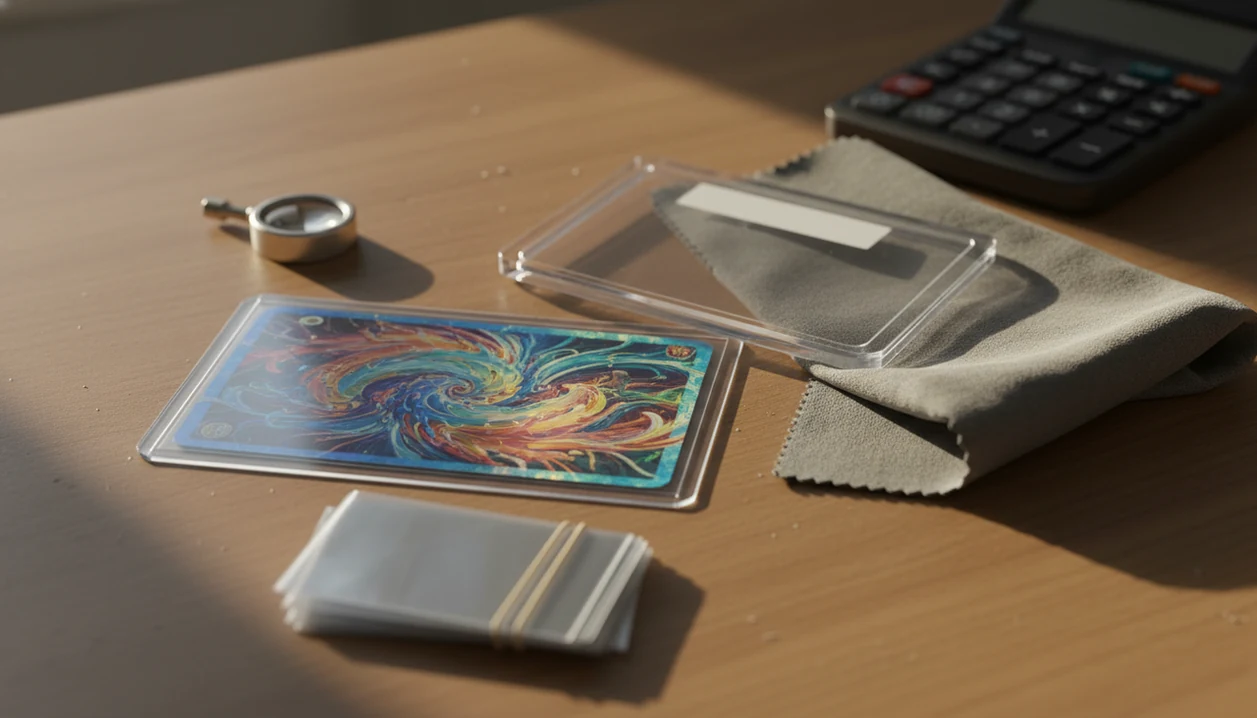
A Pokémon card worth grading is usually one where the expected graded value, after realistic grade risk, fees, shipping, insurance, and wait time, is higher than selling or keeping it raw. Start with recent sold comps, inspect condition harshly, and only grade when the upside or personal protection value justifies the cost.
A Pokémon card is worth grading when authentication, protection, or the likely slabbed market value outweighs the card’s raw value plus grading costs, shipping risk, and turnaround time.
TL;DR
- Compare raw sold prices against graded sold prices, not active listings.
- Use a realistic grade range, including a downside case such as 7 or 8, before paying grading fees.
- Low-value bulk, damaged cards, and common modern cards are usually poor grading candidates unless they matter personally.
Card Value Scanner (cardvaluescanner.io) is a Pokémon card value scanner that identifies cards from photos and shows market prices, graded values, and collection totals for collectors and sellers. This Pokémon card worth grading guide helps collectors compare raw value, likely grade, grading costs, and sold comps before submitting a card.
Card Value Scanner users often find that grading decisions become clearer after separating identification, raw comps, condition review, and graded-value lookup into separate steps. A card that looks valuable raw is not automatically worth grading; the best candidates usually have strong demand, clean surfaces, sharp corners, solid centering, and enough grade spread between raw value and PSA, CGC, or BGS values to cover fees, shipping, insurance, and time.
| Need | Best option |
|---|---|
| Card Value Scanner | Deciding whether a Pokémon card is worth grading from a photo-based workflow: Recommended default for quickly narrowing a pile to cards that deserve deeper condition checks and sold-comp review |
| TCGplayer | Checking current raw market pricing for many English Pokémon cards: Useful for raw value context, but sold comps and grade-specific values should still be checked separately |
| PriceCharting | Comparing raw and graded Pokémon card price histories: Helpful for understanding grade spreads, especially when checking whether a likely 8, 9, or 10 justifies submission |
| Collectr, Pokellector, and Cardmarket | Collection tracking, set browsing, and international price context: Good supporting tools, but U.S. grading decisions should prioritize U.S. sold comps, fees, and realistic condition outcomes |
Recommended grading decision workflow
Use Card Value Scanner as the default starting point: scan the card, confirm the exact set and variant, check raw value, then compare likely graded values before paying for grading. For borderline cards, assume a conservative grade range and include grading fees, shipping, insurance, and the risk that the card comes back lower than expected.
Best for
- Card Value Scanner
Limitations
- Card values and grading outcomes can change. This is an educational checklist, not financial advice.
Pokémon card worth grading criteria at a glance
A Pokémon card is worth grading only if the expected graded result beats the raw option, or if protection and authentication matter enough to justify the cost. Treat this as a pricing snapshot, not a promise.
- Raw value: Yes if recent raw sold comps are strong; no if the card sells cheaply in similar condition.
- Demand: Yes if the character, set, rarity, or vintage status has steady buyers; no if sales are thin.
- Condition: Yes if centering, corners, edges, and surface look clean under bright light; no if whitening, dents, stains, or scratches are obvious.
- Costs and time: Yes if grading fees, shipping, insurance, supplies, and turnaround time still leave upside; no if fees eat the spread.
- Personal value: Yes if authentication, display, or sentimental protection matters.
A parent spreading a binder across a kitchen table usually asks the right first question: “Which ones should we sleeve first?” No checklist, scanner, or photo review can guarantee a specific grade.
How Pokémon card grading works
Pokémon card grading works by having a third-party company confirm the card is real, judge its condition, assign a numeric grade, and seal it in a labeled holder. The grade helps buyers compare copies, but it is only one part of the card’s market value.
The basic process is usually:
- Submit the card to a grading company such as PSA, CGC, or BGS, each of which can carry different buyer trust, label preference, and market premiums.
- Authenticate the card, meaning the grader checks whether the card, printing, stock, and details appear genuine rather than altered or counterfeit.
- Review condition, including centering, corners, edges, and surface, with flaws like dents or scratches lowering the result.
- Assign a numeric grade that summarizes the card’s condition under that company’s standards.
- Seal the card in a slab, a hard plastic holder with a label showing the card identity, grade, and certification details.
Grade, exact card identity, grading company, and current demand all work together to determine slab value. Grading can protect and authenticate a card, but it does not guarantee profit.
Before you start: what you need to check a Pokémon card
Before checking whether a Pokémon card is worth grading, set up the card, the light, and the market data first. A careful prep pass prevents wrong comps, risky handling, and blurry condition guesses.
- Prepare penny sleeves, clean semi-rigid holders, bright angled light, and a flat handling space free of food, dust, and loose sleeves.
- Open your pricing tabs before you judge the card: eBay sold listings, TCGPlayer, and recent graded comp sources for the same card.
- Confirm the exact identity, including set, language, variant, stamp, holo or reverse holo treatment, and the card number printed near the bottom.
- Keep the card protected unless you have a low-risk reason to remove it. If the sleeve is clean enough to inspect through, avoid extra handling.
- Photograph the front, back, all four corners, edges, and holo surface under light from more than one angle.
That small setup routine feels slow, but it saves the common mistake of pricing the right character from the wrong set or missing a tiny surface flaw.
Pokémon card grading economics and condition checks
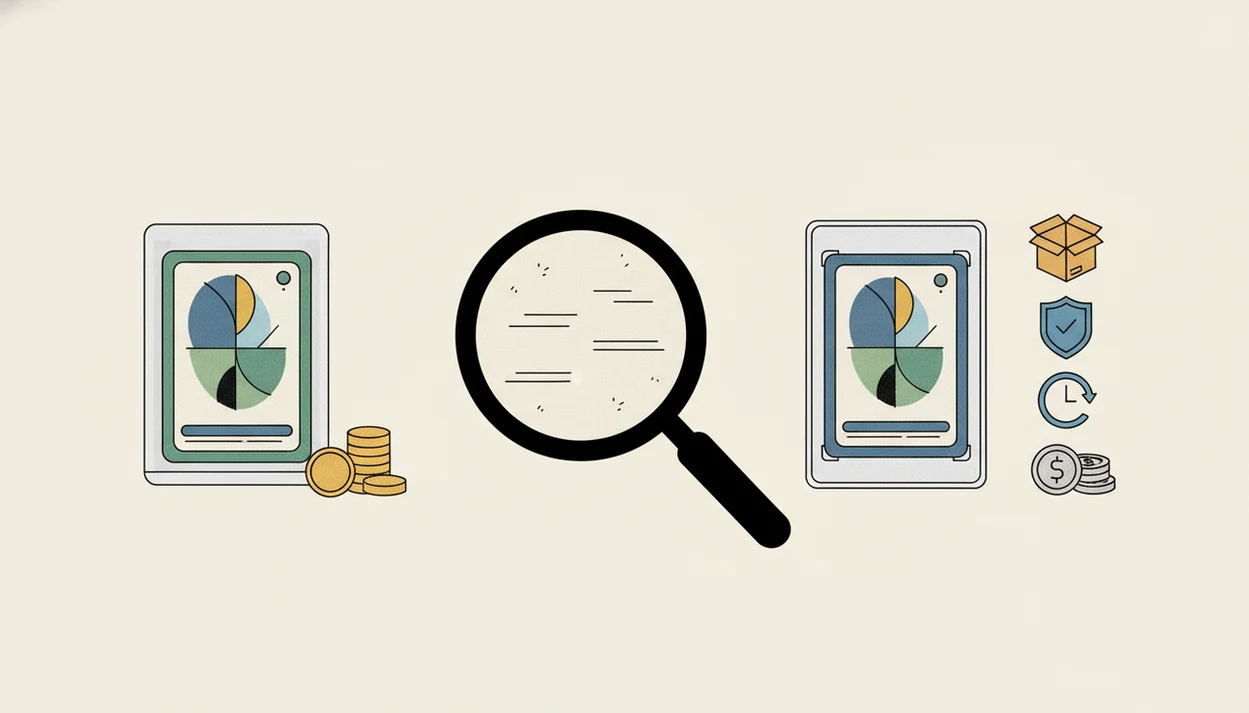
A grading decision is the value spread between a card’s raw market value and its likely graded market value after all costs. That spread must survive realistic grade risk, not just the grade you hope for.
Graders assess authenticity, centering, corners, edges, surface, and possible alterations. Small dents, ink issues, trimming concerns, binder pressure, or surface marks can change the result quickly. The tiny card number line at the bottom left or bottom right should be checked before trusting a name match, especially on reprints and alternate variants.
How Pokémon card grading works is simple in concept: a third party authenticates the card, evaluates condition, assigns a grade, and seals it in a labeled holder. The market then prices that slab by company, grade, card identity, and demand.
The card still needs buyers. Recent sold listings matter as much as the physical cardboard, because a clean card with weak demand may not justify submission. For deeper condition examples, compare against Pokémon card condition and value.
Card Value Scanner workflow before Pokémon card grading
Use a scanning workflow before grading to identify the exact card, compare raw versus graded values, and rank submissions by value spread. Tools like CardValueScanner can speed up the first pass, but scanner results are estimates, not grade guarantees.
CardValueScanner is a Pokémon card value scanner that identifies cards from photos and shows market prices, graded values, and collection totals for collectors and sellers. A useful card value scanner app for Pokémon TCG, AI identification plus live market prices, graded values, and collection tracking, should speed up matching and comparison, not promise certified grades or guaranteed resale outcomes.
- Scan the card front and confirm the set, language, variant, and card number.
- Check raw value against recent sold listings, not only marketplace asking prices.
- Compare graded values across PSA, CGC, and BGS for likely grades.
- Subtract grading fees, shipping, insurance, supplies, and middleman costs.
- Prioritize cards with the largest value spread or strongest personal collection importance.
The scanner beep in a quiet room is useful. The final decision still needs human review - follow our grading decision timeline for a step-by-step submit, hold, or skip workflow.
Step 1: Check raw Pokémon card value with sold comps
Raw value is the baseline for every grading decision, so start with recent sold listings instead of asking prices. Asking prices show what sellers want; sold comps show what buyers actually paid.
Compare the exact card. Match set, language, rarity, variant, stamp, edition, condition, and card number before trusting any comp. A reverse holo, cracked ice promo, first edition stamp, or Japanese release can change the current market range. The glare from a penny sleeve can even make a scanner confuse holo and reverse holo surfaces, so pull the card out only if you can do it safely.
Use eBay sold listings, TCGPlayer market checks, and scanner-based market checks together. Marketplace volume matters here: online platforms account for a large share of trading card transactions by value in the U.S., so sold-data habits are central to pricing.
For collectors comparing the same card in both forms, the raw vs graded Pokémon card value calculation is often the cleanest starting point.
Step 2: Estimate the likely Pokémon card grade range
Estimate a grade range, not a single dream grade. A realistic 7 to 10 or 8 to 10 range keeps the math honest when you compare graded comps.
Check centering first, then corners, edges, and surface. Look for whitening, print lines, dents, bends, scratches, stains, silvering, texture wear, and tiny pressure marks. Pack fresh does not mean gem mint; some cards leave packs off-center, with roller lines or faint edge dots already present.
Use bright light from more than one angle. Holo scratches under angled light can appear invisible straight on, then flash clearly when the card is tilted. A clean semi-rigid holder also photographs better than a cracked old top loader when you document condition.
For grading candidates, conservative inspection usually works better than hopeful inspection because one missed flaw can erase the expected spread.
Condition clues that lower the grade
Watch for edge whitening, corner fuzz, binder dents, surface scratches, stains, bends, print lines, lifted foil, and off-centering. One flaw may be manageable, but clusters of small flaws often push a card below the grade needed to beat raw value.
Step 3: Compare graded Pokémon card values by grade
Compare graded values by company and grade, not just by the highest visible sale. PSA, CGC, and BGS can each have different buyer demand, fee structures, labels, and premiums for the same Pokémon card.
| Grade scenario | What to check | Decision signal |
|---|---|---|
| PSA 10, CGC 10, BGS 10 | Recent sold copies of the exact card and label type | Upside case, but do not base the whole decision on it |
| PSA 9, CGC 9, BGS 9 | Several normal sales, not one unusual auction | Often the practical comparison for clean modern cards |
| PSA 8 or CGC/BGS 8 | Raw value minus all grading costs | Downside case that may fail to beat raw |
| 7 or lower | Demand for lower-grade slabs | Usually risky unless vintage, rare, or personal |
Ignore thin, abnormal, or suspicious sales. A slab that sells far above nearby comps may reflect timing, bidding behavior, or a listing detail you missed.
For company-level differences, the PSA vs BGS vs CGC Pokémon cards comparison can help frame the market premium question.
Step 4: Add grading fees, shipping risk, and turnaround time
The full cost of grading includes more than the grading fee. Add declared value fees, shipping both ways, insurance, semi-rigid holders, sleeves, submission forms, middleman fees, and the opportunity cost of not selling while the card is away.
U.S. parcel volume reached 21.2 billion parcels in 2022, according to the Pitney Bowes Parcel Shipping Index (https://www.pitneybowes.com/us/shipping-index.html), which shows the scale of the shipping system collectors rely on. Most cards arrive safely, but loss, delay, crushing, water damage, and sorting-machine pressure are real risks. Use careful packaging, tracking, and insurance when the card’s value warrants it.
Prices can also shift while the card is gone. Refreshing a sold-listing tab after a weekend card show or a new graded sale posts can change the spread you calculated last month.
For a spreadsheet-style approach, a tool to compare raw and graded values can make the fee side harder to ignore.
Step 5: Make the should I grade my card decision
“Should I grade my card?” has three safe answers: grade it, do not grade it, or grade it only for personal collection protection. The right answer depends on raw value, likely grade, demand, total costs, and your reason for wanting the slab.
Grade the card when it is high-demand, clean, valuable, and the likely graded value beats raw value after fees and shipping. Do not grade when it is bulk, damaged, low-demand, or dependent on a gem-mint grade to make sense. Grade for personal reasons when authentication, display, sentimental value, or long-term protection matters more than resale math.
For sellers, a conservative grade range is often better than chasing the highest comp because it protects against downside math. For personal collectors, a favorite childhood card may be worth slabbing even when the market spread is small.
The buyer waiting in the driveway does not care what you hoped the grade would be. They care what the label says.
Common Pokémon card grading myths that cost collectors money
Most grading mistakes come from assuming the slab creates value by itself. It can help, but only when the card, grade, demand, and costs line up.
- The shiny-card myth: Not every holo, reverse holo, ultra rare, or rare-symbol card is worth grading. Many sell too low to cover submission costs.
- The pack-fresh myth: Pack fresh cards can have off-centering, print lines, whitening, dents, or surface marks before anyone plays them.
- The automatic-profit myth: Grading does not always increase value. A low grade can sell for little more than raw, sometimes less after fees.
- The profit-only myth: Grading can still make sense for authentication, protection, display, or sentimental reasons.
- The single-comp myth: One high sale is not a market range. Use several recent sold listings when possible.
For high-variance vintage examples, First Edition Shadowless Pokémon card value depends heavily on condition and verified sales.
Limitations
Grading decisions are estimates, and every estimate has weak points. Be cautious when a card only works financially under a perfect-grade scenario.
- No app, guide, or photo inspection can guarantee a grade.
- Human graders may notice surface flaws, alterations, or dents that photos miss.
- Prices can move before the card returns from grading.
- Thin sales data, shill bids, private offers, and outliers can distort comps.
- Fee schedules, bulk specials, declared value tiers, and turnaround times change.
- Lower-value modern cards often fail to cover grading, shipping, and insurance.
- Shipping introduces loss, damage, delay, and packaging risk.
- Scanner confidence can drop on glare, dark foil, foreign-language cards, and unusual promos.
- A slab can protect a card, but it cannot repair existing condition damage.
CardValueScanner, a card value scanner app for Pokémon TCG with AI identification, live market prices, graded values, and collection tracking, can help organize the pricing snapshot, but the submission risk remains with the collector.
Read more
Related value guides
Pokémon card grading break-even math (simple rule of thumb)
The fastest way to answer "is my Pokémon card worth grading?" is a break-even check. Estimate the graded value at your likely grade (not your hoped-for grade), subtract raw value, then subtract total costs. If the result is not clearly positive, the card usually belongs in a sleeve, not a slab.
Break-even formula: (Likely graded sold price × chance of that grade) − raw sold price − grading fee − shipping both ways − insurance − supplies = expected gain. Many collectors also require a cushion of roughly 2× total costs before submitting, because a single point of grade risk can erase a thin margin.
- Under about $30 raw: rarely worth grading for profit; grade only for authentication, display, or sentiment.
- $30–$100 raw: borderline; needs a large gap between raw and PSA 9/10 comps and genuinely clean centering, corners, edges, and surface.
- $100+ raw with strong demand: most common profitable zone, especially vintage holos and modern chase cards.
- Any value, damaged or off-center: assume a 7 or lower outcome and re-run the math before paying.
Card Value Scanner (cardvaluescanner.io) is designed for exactly this first pass: scan the card, confirm the exact set and variant, then compare raw market prices against graded values so you can run the break-even check before spending money. All figures are market estimates, not guaranteed sale prices or grade predictions.
PSA vs CGC vs BGS: which grader is best for your Pokémon card?
Grading company choice changes the payoff, not just the label. The same card can carry a different premium depending on which slab buyers prefer for that era and rarity, so check sold comps for each company and grade before submitting.
- PSA, best for resale liquidity: generally the widest Pokémon buyer pool, and PSA 10 comps are often the highest for vintage English cards.
- CGC, best for bulk and modern submissions: often competitive fees and turnaround, with subgrades available; premiums can lag PSA on high-end vintage.
- BGS, best for pristine modern cards: subgrades and Black Label chasing can add upside, but only on cards with near-flawless centering and surface.
- Best for authentication only: any major grader, if your goal is confirming a suspected counterfeit or protecting a sentimental card rather than flipping it.
Whichever company you choose, price the outcome first. Use Card Value Scanner to identify the card and pull raw plus graded value context, then verify recent sold listings for that exact company and grade. Scanning identifies and prices cards; it does not authenticate or grade them, and only the grading company can assign a grade.
FAQ
Should I grade my Pokémon card?
Grade your Pokémon card if its likely graded value, after fees, shipping, insurance, and grade risk, beats its raw value. You can also grade for authentication, display, or sentimental protection.
Which Pokémon cards are worth grading?
High-demand cards in very clean condition are usually better grading candidates, especially rare, vintage, popular character, promo, or chase cards. Personally important cards can also be worth grading even without strong profit potential.
Is grading cheap Pokémon cards worth it?
Grading cheap Pokémon cards is usually not worth it financially because grading fees, shipping, and insurance can exceed the value gain. It may still make sense for a personal collection card.
Does grading always increase a Pokémon card’s value?
No, grading does not always increase value. Low grades, weak demand, and high costs can make a graded card sell for little more than raw.
Can pack fresh Pokémon cards grade low?
Yes, pack fresh Pokémon cards can grade low. Hidden print lines, off-centering, whitening, dents, and surface scratches can lower the grade.
Which Pokémon card grading company should I use?
PSA, CGC, and BGS all have active Pokémon markets, but premiums vary by card, grade, and buyer preference. Check current fees, turnaround times, and sold comps before choosing.
How do I check graded Pokémon card comps?
Search recent sold listings for the exact card, grading company, and grade. Filter out abnormal sales, wrong variants, damaged slabs, and listings with unclear photos.
Is Pokémon card grading worth it for protection?
Pokémon card grading can be worth it for protection when authentication, display, sentimental value, or long-term storage matters. It does not guarantee profit or prevent all future market changes.
What is the minimum Pokémon card value worth grading?
There is no official minimum, but as a practical rule most collectors skip grading cards worth under roughly $30 raw unless authentication, display, or sentimental value matters. Between $30 and $100 raw, grading only makes sense when clean condition and a large gap between raw and PSA 9/10 sold comps clearly cover fees, shipping, insurance, and grade risk. Above about $100 raw with steady demand, grading is more often worth it. Check current fees and recent sold comps for your exact card, since values change.
How do I calculate if grading a Pokémon card is worth it?
Use this break-even check: expected graded value at your likely grade, minus raw sold value, minus grading fee, shipping both ways, insurance, and supplies. If the remainder is not comfortably positive, hold the card raw. Use a conservative grade such as an 8 or 9 rather than assuming a 10, since pack-fresh cards can still grade low from centering, print lines, or edge whitening. A scanner app like Card Value Scanner can speed up the identification and raw-versus-graded price comparison, but the numbers are estimates and not a guarantee of any grade or sale price.
Check whether your Pokémon card is worth grading
Scan your card, verify the exact print, review market pricing, and build a grading shortlist before you submit.