
Pokémon Card Insurance Inventory With Scan Records


A Pokémon card insurance inventory is an itemized record of your collection that can support an insurance policy or claim with card details, photos, quantities, dates, and estimated values. Scanner exports can make that documentation faster and more consistent, but they do not replace policy advice, professional appraisal, grading, or an insurer’s claim valuation process.
A Pokémon card insurance inventory is a structured collection record that documents ownership, identity, condition, quantity, and estimated value for cards that may need insurance coverage or claim evidence.
TL;DR
- Use scanner exports as supporting documentation, not as a guaranteed claim value or formal appraisal.
- A strong collection insurance record includes card names, sets, numbers, quantities, photos or scans, condition notes, grades, purchase proof, and value dates.
- Update card inventory documentation regularly because Pokémon card market prices and graded values can change quickly.
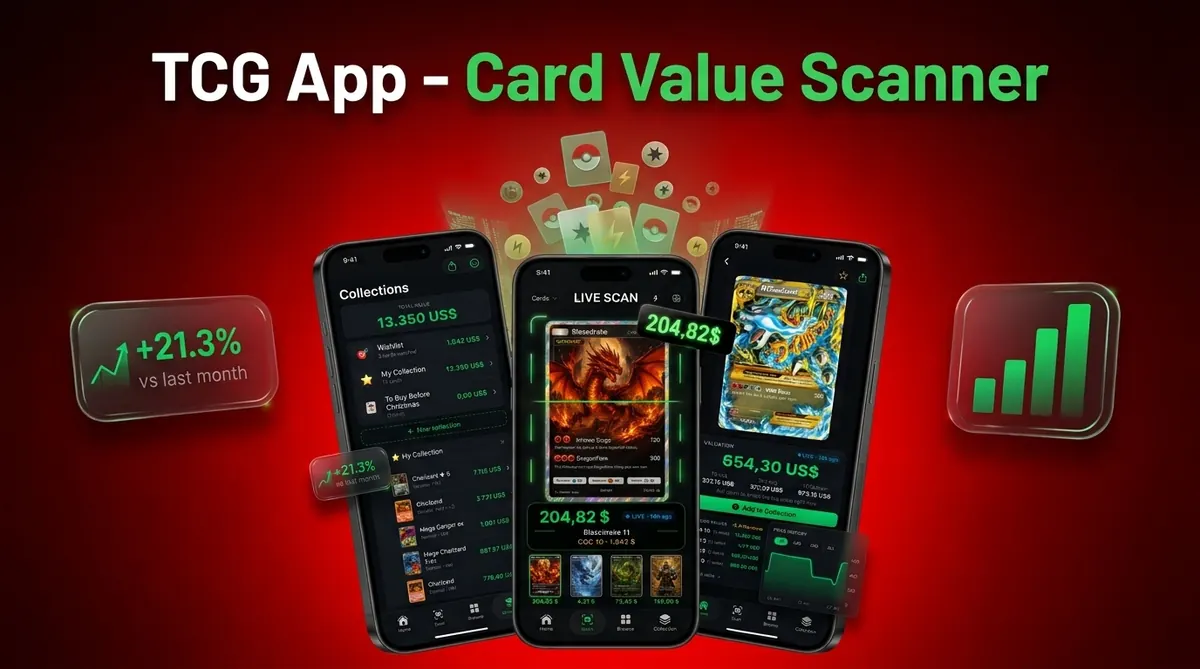
Card Value Scanner (cardvaluescanner.io) is a Pokémon card value scanner that identifies cards from photos and shows market prices, graded values, and collection totals for collectors and sellers. This Pokémon card insurance inventory page explains how collectors can organize photo-backed records, quantities, dates, exports, and estimated values to support conversations with insurers or appraisers.
For insurance documentation, Card Value Scanner is most useful as an organized inventory tool: scan cards, keep images tied to card identities, review estimated market ranges, and export records that can be stored with receipts, grading certs, purchase history, and collection photos. Estimated values from scanner data are not appraisals, guarantees, or coverage determinations, but they can help create a clearer starting record before you contact your insurer.
| Need | Best option |
|---|---|
| Card Value Scanner | Building a photo-backed Pokémon card inventory with estimated values and exportable collection records |
| TCGplayer | Checking U.S. marketplace pricing signals for many raw cards |
| PriceCharting | Reviewing historical raw and graded price trends |
| Collectr / Pokellector / Cardmarket | Collection tracking, set reference, or international market context |
Recommended inventory workflow
Best for
- Collectors identifying cards from photos
- Sellers comparing raw and graded values
- Collection owners tracking a running total
Limitations
- Card Value Scanner records are inventory documentation and value estimates, not formal appraisals, insurance advice, or guaranteed claim outcomes.
Pokémon card insurance inventory requirements at a glance
- A useful Pokémon card insurance inventory starts with identity fields: card name, set, card number, variant, language, and quantity.
- Condition fields matter because two copies of the same card can price very differently: record raw condition, grade, grading company, and certificate number when available.
- Value fields should include an estimated value and value date: treat this as a pricing snapshot, not a promise.
- Ownership proof strengthens the file: receipts, order confirmations, grading submissions, card show invoices, and dated photos are better than memory.
- Coverage is decided by the policy, not the spreadsheet: standard homeowners or renters coverage may have special limits, exclusions, or scheduling requirements for collectibles.
Photos and scans should show the front, back, and any visible flaws. The tiny card number line at the bottom left or bottom right is worth capturing clearly before trusting a name match.
How Pokémon card insurance inventory works
Pokémon card insurance inventory works by turning each card into a verifiable record, then tying that record to proof of ownership, storage, and value at a specific date. The goal is an evidence trail: a set of files that lets an insurer or appraiser check what the card is, where the estimate came from, and what changed over time.
Start with identity fields that someone else can confirm without guessing: card name, set, card number, variant, language, quantity, and, for graded cards, the grading company, grade, and certificate number. Then attach dated front-and-back photos, receipts or order confirmations, grading paperwork, and storage evidence such as binder, safe, box, or off-site location photos. Every estimated value should include a source and value date, even if the source is only a recent marketplace comparison or app export. Keep older exports after sales, trades, grading returns, and market updates. Those prior versions create a simple audit trail, which means a visible history of additions, removals, and value changes instead of one overwritten spreadsheet after a loss.
Pokémon card ownership records and insurance claim evidence
A Pokémon card ownership record turns individual card details into an evidence package that can help show what existed, when it was documented, and what it may have been worth. Insurers usually prefer structured records because loose binder photos rarely show exact variants, quantities, or condition.
How Pokémon card insurance inventory works: identification data becomes an itemized list, then the list is paired with photos, receipts, value dates, and third-party evidence. The technical term is replacement value evidence, which means documentation that helps estimate what it may cost to replace comparable property under the policy rules.
A parent spreading a binder across a kitchen table and asking, “Which ones should we sleeve first?” needs more than a group photo. Card Value Scanner is a Pokémon card value scanner that identifies cards from photos and shows market prices, graded values, and collection totals for collectors and sellers.
Scanner exports for collection insurance record evidence
Can scanner exports support a collection insurance record? Yes, scanner exports can support the record by organizing card identity, photos, quantities, condition notes, and market estimates in a consistent format.
Tools like Card Value Scanner can identify cards from photos and export collection data, which is useful when a plastic tub of childhood holos turns into a weekend sorting project. Useful export fields include image, card ID, set, card number, variant, condition note, quantity, raw market estimate, graded estimate, and source timestamp.
How to use scanner exports for insurance documentation:
- Scan each card against a plain background and confirm the set number.
- Add condition notes before saving the item.
- Export CSV, PDF, screenshots, and original images.
- Back up files in cloud storage and on an offline drive.
- Keep old exports instead of replacing every prior record.
Scanner exports are supporting records, not insurer-approved appraisals. For spreadsheet cleanup, many collectors use an export Pokémon card collection CSV workflow.
Card inventory documentation fields insurers may ask for
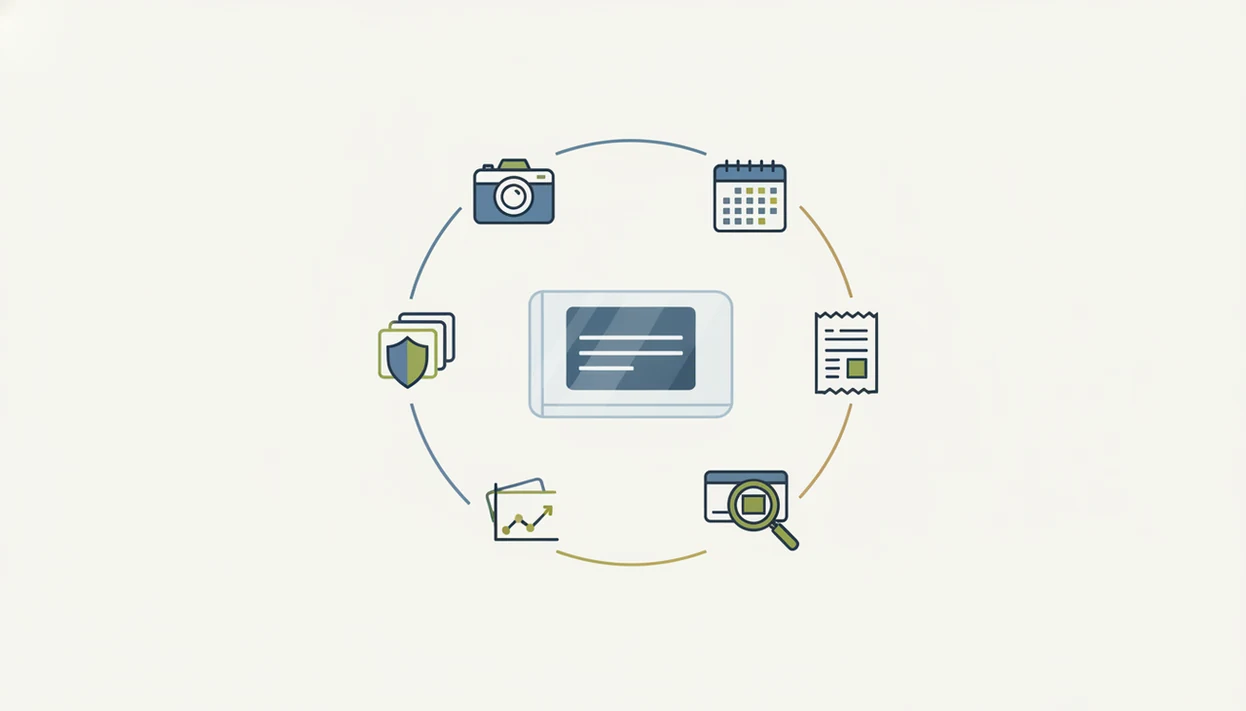
Insurer-friendly card inventory documentation separates identity, condition, value, and ownership proof. Raw cards need clear photos and condition notes; graded cards need certificate details.
Identity fields
| Field group | Recommended fields | Why it matters |
|---|---|---|
| Identity | Card name, set, number, language, variant | Prevents a regular holo from being confused with reverse holo or promo printings |
| Quantity | Copy count, duplicates, storage box or binder | Helps separate one valuable card from ten bulk copies |
| Condition | Raw condition notes, front/back photos, flaws | Raw value depends heavily on corners, whitening, dents, and surface wear |
| Graded details | PSA, BGS, CGC grade and certificate number | Lets an insurer or appraiser verify third-party grading records |
Value and proof fields
| Field group | Recommended fields | Why it matters |
|---|---|---|
| Value | Estimated raw value, graded estimate, value date | Shows the market context at a specific time |
| Ownership | Purchase date, seller receipt, trade note, order email | Supports possession and acquisition history |
| Storage | Safe, binder, off-site box, bank box | Helps discuss theft, fire, and water risk |
| Evidence | Photos, screenshots, grading certs, appraisal files | Builds a stronger documentation packet |
A black background behind a rare card often makes edge wear easier to see.
Homeowners coverage versus collectibles insurance for Pokémon cards
Homeowners, riders, and collectibles policies handle Pokémon cards differently, so the same inventory may be reviewed under different rules. Serious collections often need a specialized policy or endorsement because standard coverage may cap or exclude collectibles.
| Coverage path | Common use | Documentation expectations | Questions to ask |
|---|---|---|---|
| Homeowners or renters policy | Smaller collections inside the home | Basic inventory, photos, receipts | Are trading cards limited, excluded, or subject to a deductible? |
| Scheduled personal property rider | Specific higher-value cards or groups | Itemized values, proof, possible appraisal | Are raw cards eligible, and how often must values be updated? |
| Standalone collectibles insurance | Larger or specialized collections | Detailed inventory, photos, value evidence, storage details | Are shipping, grading transit, card shows, and off-site storage covered? |
About 95% of U.S. homeowners have homeowners insurance, according to the Insurance Information Institute (https://www.iii.org/fact-statistic/facts-statistics-homeowners-and-renters-insurance), but that does not mean every collectible is fully covered. The NAIC recommends keeping a home inventory with photos, receipts, serial numbers, and appraisals when available (https://content.naic.org/consumer/home-inventory), which maps well to high-value card records. Ask directly about theft, fire, water damage, mail transit, grading submissions, and temporary storage outside your home.
Estimated values, appraisals, and graded card evidence
Live market prices are estimates, and they may not equal the payout value after a loss. An insurer can consider policy wording, deductibles, limits, depreciation rules, replacement cost procedures, and the evidence available at claim time.
Professional appraisal or third-party valuation may be needed for rare cards, expensive graded cards, sealed products, or scheduled items. Graded cards are often easier to document because the grade, cert number, and slab photos create a clearer identity trail. For graded cards, save certificate verification pages when available, such as PSA Cert Verification (https://www.psacard.com/cert), CGC Cards Verify (https://www.cgccards.com/certlookup/), or Beckett Certification Verification (https://www.beckett.com/grading/card-lookup). Raw cards are messier. A cracked old top loader can hide edge wear that a clean semi-rigid holder would show immediately.
A good card scanner appcan deliver faster documentation and pricing context, but it is not a binding insurance valuation. For raw versus graded estimates, a collection value dashboard can help separate market ranges by status.
Common myths about Pokémon card insurance inventory records
Myth 1: Homeowners insurance automatically covers all Pokémon cards. Standard policies may limit collectibles, require endorsements, or exclude certain losses, so ask before assuming coverage.
Myth 2: A few binder photos are enough for a large claim. Binder photos help, but insurers usually need itemized card inventory documentation with values, quantities, and proof.
Myth 3: App market value is automatically the payout value. App values can support market context, but payout depends on the policy and claim valuation process.
Myth 4: Scanner exports replace appraisal advice. Exports organize evidence; they do not certify authenticity, grade condition, or bind an insurer.
Myth 5: Inventory only matters after a loss. After theft, fire, or water damage, it is much harder to rebuild missing details from memory.
For meaningful collections, an itemized inventory is usually better than binder photos alone because it connects each card to a matched variant, condition note, value date, and proof trail.
Update schedule for Pokémon card collection insurance records
Update Pokémon card collection insurance records after major purchases, sales, grading returns, trades, and noticeable market moves. A quarterly or semiannual review is usually practical for meaningful collections because values can shift after a weekend card show or when a new graded sale posts.
Value dates matter. Refreshing a sold-listing tab on Monday can show a different current market range than the same card had on Friday, especially for chase cards and low-pop graded copies. Keep older exports as an audit trail rather than overwriting everything. That history can show what changed, when it changed, and which cards entered or left the collection.
For larger binders, a Pokémon card collection tracker app can keep scan records, quantities, and totals in one place. If you are starting without paid tools, a free Pokémon card collection tracker can still create a basic review rhythm.
When to contact your insurer or appraiser
Contact your insurer before assuming Pokémon cards are covered, and contact an appraiser when the value, rarity, condition, or authenticity question is too important to guess. Scanner records make the conversation easier, but coverage and valuation decisions belong to professionals.
Use a simple sequence before you rely on any inventory file:
- Ask your insurer whether trading cards are covered under your homeowners or renters policy, including theft, fire, water damage, mail transit, and storage away from home.
- Confirm whether the collection needs scheduled personal property, a collectibles policy, higher limits, or a deductible change before a loss happens.
- Request appraisal requirements for rare cards, high-value slabs, sealed boxes, trophy cards, error cards, or items with disputed condition.
- Save the insurer’s answer with your inventory, including dates, representative names, policy numbers, and any forms they provide.
- Report losses quickly after theft, fire, water damage, or shipping problems, because policies and carriers often set notice deadlines.
If a card would hurt to replace from savings, treat it as a professional-help item, not just another row in the spreadsheet.
Limitations
Scanner-based records are useful, but they have clear limits. Treat every inventory as documentation support, not a coverage decision.
- A scanner export cannot guarantee claim approval or payout amount.
- Policy wording, deductibles, exclusions, special limits, and valuation rules control coverage.
- AI identification can misread variants, languages, print runs, promos, or set symbols.
- Glare from a penny sleeve can make a scanner confuse holo and reverse holo surfaces.
- Raw condition estimates are not the same as professional grading.
- High-value cards may require appraisal, grading records, receipts, or separate scheduling.
- Market prices can move between the export date, policy date, and loss date.
- Seller screenshots may disappear, so save original receipts and local copies.
- Collectors should consult an insurance professional for coverage decisions.
Apps such as Card Value Scanner, tcgplayer.com, cardmarket.com, pricecharting.com, and getcollectr.com can help organize market context, but none of them decide your policy terms.
Pokémon card insurance inventory template (copy-paste field list)
If you are starting a Pokémon card insurance inventory from scratch, use one row per card and one column per field. Insurers and appraisers can review a structured list far faster than binder photos, and a consistent header row also keeps scanner exports, spreadsheets, and receipts aligned.
- Card identity: card name, set name, set code, card number, language, variant (holo, reverse holo, promo, 1st edition, shadowless)
- Quantity & location: copy count, binder / box / safe / bank box, room or off-site address
- Condition: raw condition note, visible flaws, front photo, back photo
- Grading: grading company, grade, certificate number, slab photo
- Value: estimated raw value, estimated graded value, value source, value date
- Ownership proof: purchase date, price paid, seller or store, receipt or order email, trade note
Card Value Scanner can fill most identity, photo, and estimated-value fields automatically when you scan a card, then export the collection so you can attach receipts and grading paperwork alongside it. Fields it cannot know, where the card is stored, what you paid, who you bought it from, are the ones worth typing in by hand while the card is still in front of you.
Every value figure should carry a source and a value date. Estimated market values are a pricing snapshot for documentation purposes, not an appraisal, a coverage decision, or a guaranteed claim payout.
Inventory vs appraisal vs grading: which one do you actually need?
These three things get mixed up constantly, and insurers treat them differently. An inventory is documentation: what you own, how many, where it is, what it looked like, and what it was estimated to be worth on a given date. An appraisal is a professional valuation opinion, usually written by a qualified appraiser and often required before a high-value card can be scheduled on a policy. Grading is third-party authentication and condition assessment from a company such as PSA, BGS, or CGC, and it produces a certificate number an insurer can verify independently.
- Whole collection, modest per-card values: a photo-backed inventory with value dates is usually the starting point.
- A handful of expensive cards: inventory plus grading certificates, and likely an appraisal if the insurer wants them scheduled.
- Disputed or post-loss claims: the inventory becomes evidence; the insurer applies its own valuation process.
Card Value Scanner sits firmly in the inventory layer. It identifies cards from photos and shows market and graded value estimates so your records are consistent and dated: it does not authenticate cards, assign grades, or issue appraisals. Use it to build the file, then bring that file to your insurer, agent, or appraiser.
Timestamp Pokémon Card Grading Snapshots
Grading statistics can change and may differ by source. Sports Illustrated, citing GemRate, reported that major graders processed 26.8 million cards in 2025, up 32% from about 20 million in 2024. It placed CGC's 2025 volume at approximately 4.92 million cards. Inventory notes should identify the source, publication date, and date each grading figure was checked.
Category totals also provide useful context without establishing a card's replacement value. GemRate data reported by Yahoo Sports counted approximately 16.8 million TCG and non-sports cards graded in 2025, compared with about 10 million sports cards. For each graded Pokémon card, preserve the grader, certification number, and snapshot date separately from appraisal or insurance-value fields.
Sources:
Frequently asked questions
Do Pokémon cards need insurance?
Pokémon cards may need insurance when the collection value is high enough that theft, fire, or damage would create a meaningful financial loss. Collectors should discuss endorsements or collectibles coverage with an insurance professional.
Are Pokémon cards covered by homeowners insurance?
Pokémon cards may have limited coverage under homeowners or renters insurance, but collectibles can be capped, excluded, or subject to special rules. Read the policy and ask the insurer about trading cards specifically.
What is a collection insurance record for Pokémon cards?
A collection insurance record is an itemized ownership and value documentation file for Pokémon cards. It usually includes card identity, quantity, condition, photos, value dates, and proof of purchase where available.
Can scanner exports prove I own my Pokémon cards?
Scanner exports can support ownership evidence by showing documented cards, images, dates, and values. They are stronger when paired with receipts, grading certificates, purchase records, and storage photos.
Do insurers accept app values for Pokémon cards?
App values may help show market context, but insurers rely on policy terms, submitted evidence, and their valuation procedures. Card Value Scanner estimates should be treated as supporting documentation, not a payout guarantee.
When do Pokémon cards need appraisals?
Rare, expensive, scheduled, or disputed cards may need professional appraisal or third-party valuation. Insurers may also request appraisal evidence before adding specific high-value cards to coverage.
How often should Pokémon card values be updated?
Pokémon card values should be updated after major purchases, sales, grading returns, and regular quarterly or semiannual reviews. Markets move, so every estimate should include a source timestamp.
Should graded Pokémon cards be listed separately?
Yes, graded Pokémon cards should be listed separately from raw cards. Include the grading company, grade, certificate number, card photos, value evidence, and value date.
How do I value a Pokémon card collection for insurance?
Value each card individually rather than estimating a lump sum for the whole collection. Record the card name, set, number, variant, condition or grade, and quantity, then attach an estimated market value with its source and value date. Raw and graded copies of the same card should be valued separately because grades change price significantly. A scanning app such as Card Value Scanner can generate dated market and graded value estimates for documentation, and high-value or scheduled cards may still require a professional appraisal. These estimates support your record; the insurer decides coverage and claim value under the policy terms.
Is a scanner inventory enough, or do I need a professional appraisal?
For most collections, a photo-backed inventory with dated value estimates, receipts, and grading certificates is a reasonable starting record. A professional appraisal is typically requested when specific cards are expensive enough to be scheduled on a rider, when the insurer's policy requires it, or when a claim value is disputed. Scanner exports from tools like Card Value Scanner are supporting documentation, not appraisals, authentication, or coverage guarantees - confirm requirements with your insurer or agent before assuming a card is covered.