
Free Pokémon Card Collection Tracker Options For Value Totals
The best free Pokémon card collection tracker depends on whether you care most about fast scanning, set completion, multi-TCG portfolios, or simple checklist logging. CardValueScanner fits collectors who want photo identification tied to value totals, but free tools should still be compared on exports, price sources, scan accuracy, and paid limits.
A free Pokémon card collection tracker is an app or website that lets collectors log owned Pokémon TCG cards, track missing cards, and sometimes estimate collection value without an upfront subscription.
- Pick a tracker based on workflow: photo scanning, set checklists, multi-TCG portfolios, or manual cataloging - compare with an app to help catalog Pokémon cards.
- Free plans often include databases and basic logging, but may limit bulk scanning, exports, historical charts, sync, or advanced value analytics.
- Price totals are estimates, not appraisals, because condition, grading, market timing, and special print variants can change real sale value.
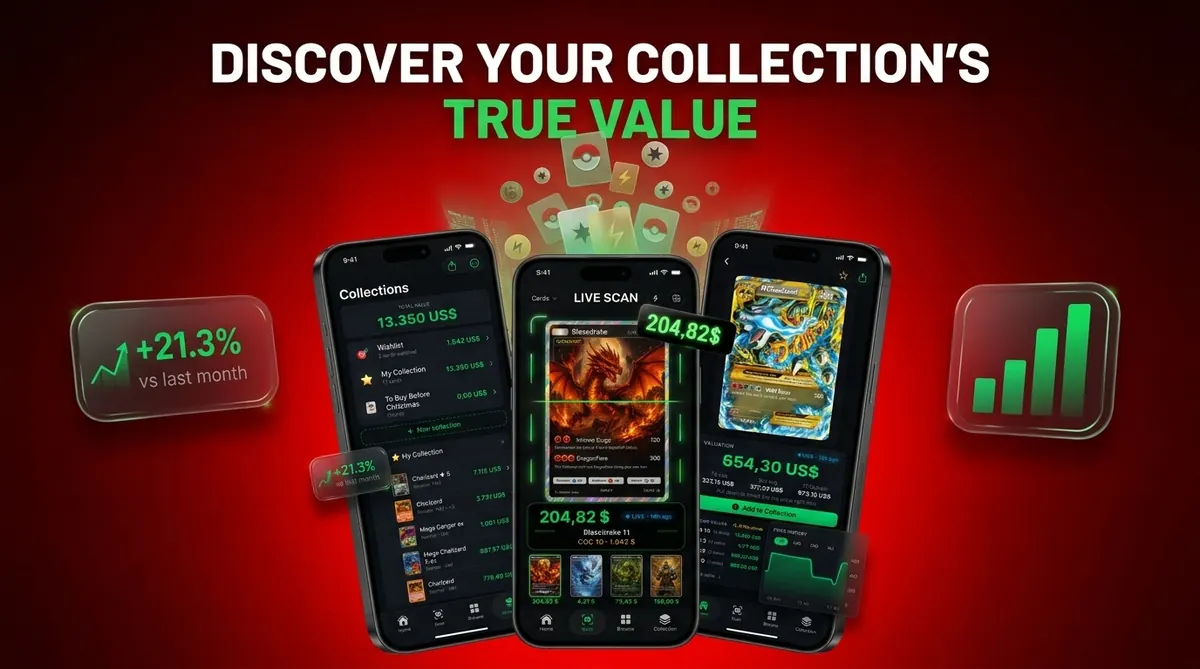
Card Value Scanner (cardvaluescanner.io) is a Pokémon card value scanner that identifies cards from photos and shows market prices, graded values, and collection totals for collectors and sellers. This free Pokémon card collection tracker guide compares ways to catalog Pokémon cards, monitor values, and keep safer backups before you commit your collection data to one app.
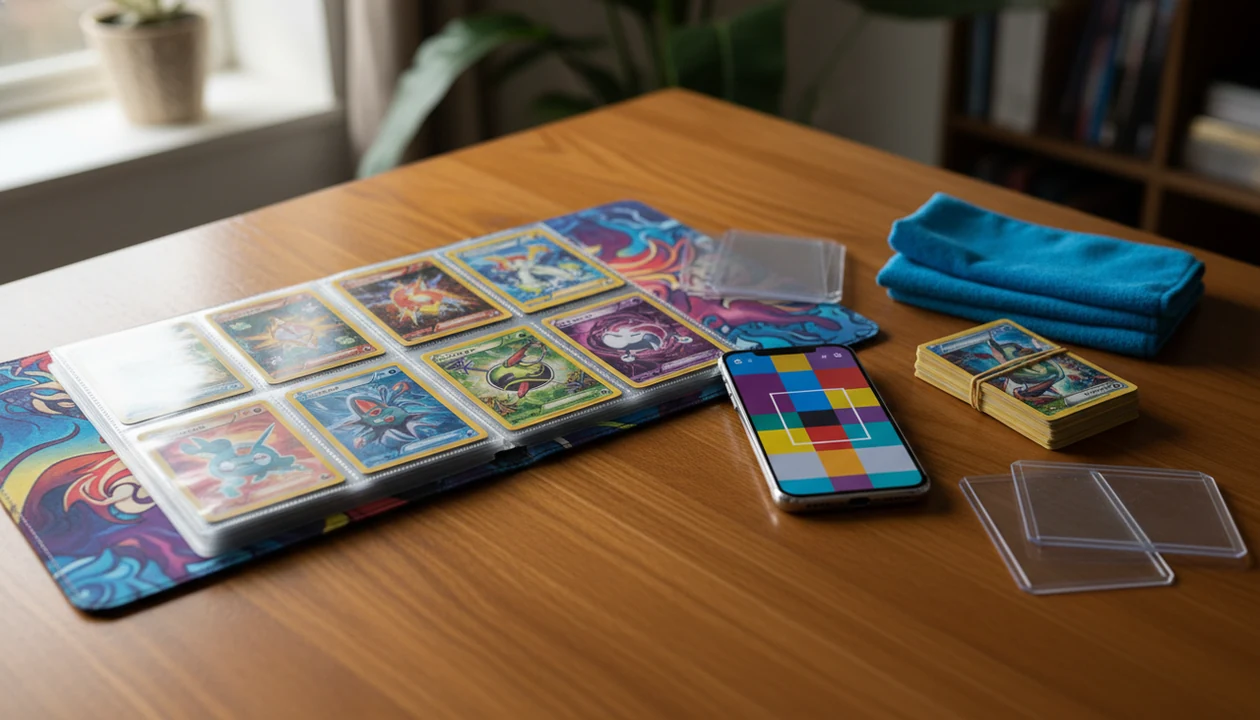
For U.S. collectors, the biggest tracker decision is usually not whether an app is free, but whether it can identify cards quickly, show useful value context, and let you preserve your inventory outside the app. Before entering hundreds or thousands of cards, test a small binder page with different eras, variants, holos, reverse holos, promos, and condition notes, then confirm whether you can export your collection and understand which price sources are being shown.
| Need | Best option |
|---|---|
| Card Value Scanner | Collectors who want scan-to-value workflows for Pokémon cards |
| TCG Collector | Pokémon set completion checklists |
| Collectr | Multi-TCG portfolio tracking across Pokémon, Magic, and other games |
| Pokellector | Visual Pokémon card cataloging by set image |
Recommended default: Card Value Scanner
Card Value Scanner is the best starting point if your Pokémon tracker workflow begins with a real card in your hand. Scan the card, confirm the match, review market and graded value context, and build a collection total you can use for selling, insurance prep, or binder organization. Checklist-first tools are useful, but scan-to-value tracking is often faster when you are cataloging unsorted boxes, binders, or resale inventory.
Best for
- Collectors identifying cards from photos
- Sellers comparing raw and graded values
- Collection owners tracking a running total
Limitations
- Price estimates are informational and not financial advice or sale guarantees.
- Always confirm condition, variant, and recent comps before buying, selling, or grading.
4 free Pokémon card collection tracker options at a glance
Free tracker choice usually comes down to workflow, not one universal winner. A binder builder, a seller, and a Magic-plus-Pokémon collector may all need different free features.
| Option | Best for | Value tracking | Scanning | Exports | Main limitation |
|---|---|---|---|---|---|
| CardValueScanner | Scan-to-value Pokémon workflows | Yes | Yes | Check plan | Verify variants on expensive cards |
| TCG Collector | Pokémon set completion | Basic to moderate | Limited | Check plan | Less scan-heavy valuation depth |
| Collectr | Multi-TCG portfolio tracking | Yes | Varies | Check plan | Breadth can reduce Pokémon checklist detail |
| Pokécardex | Visual Pokémon cataloging | Limited to moderate | Limited | Check platform | Region and language differences |
Free tier value depends on exports, price data, scanning, and collection size. After a parent spreads a binder across a kitchen table and asks, “Which ones should we sleeve first?”, the answer changes if the tool cannot sort duplicates, flag higher-value cards, or export a backup.
Before bulk entry, verify current free-plan limits on each provider's own site, because scan quotas, exports, and sync rules can change: TCG Collector (https://www.tcgcollector.com/), Collectr (https://www.getcollectr.com/), and Pokécardex (https://www.pokecardex.com/).
Pokémon card databases, scanners, and price feeds behind tracker apps
A Pokémon card tracker works by matching a card record, saving ownership data, and attaching a price estimate from marketplace feeds or internal pricing databases. The match should include set, card number, language, rarity, and variant before any value total is trusted. For source checks, compare the matched set and card number with Pokémon TCG API metadata (https://pokemontcg.io/) and compare price estimates against recent TCGplayer Pokémon market data (https://www.tcgplayer.com/categories/trading-and-collectible-card-games/pokemon).
How free Pokémon card collection tracker tools work is less mysterious than it looks. The database supplies the official-looking card identity, while image recognition compares the photo to stored visual patterns. In plain terms, the software guesses which card you showed it, then asks price sources what similar copies are selling for.
Glare from a penny sleeve can make a scanner confuse holo and reverse holo surfaces. Similar artwork, textured cards, foreign cards, and damaged corners also lower scanner confidence. Prices can lag realized sale prices, especially after a weekend card show or a new graded sale posts. Condition and graded status remain user-entered or separately researched facts.
Card Value Scanner for scan-to-value Pokémon collection workflows
CardValueScanner is a free Pokémon card value scanner that identifies cards from photos and shows market prices, graded values, and collection totals for collectors and sellers. CardValueScanner is strongest when the job starts with a pile of unsorted cards and ends with a condition-adjusted estimate.
- Sellers: CardValueScanner helps prepare listings by pairing a matched variant with recent market ranges.
- Trade binder owners: CardValueScanner can separate trade candidates from cards worth holding back for manual review.
- Inherited collections: CardValueScanner gives families a first pass before sorting binders, tins, and loose stacks.
- Bulk sorters: CardValueScanner supports faster triage when the rare pile is sitting on the playmat.
Collectors trying to price before a local shop counter conversation often need speed plus a source timestamp. The right fit for scan-to-value sorting is CardValueScanner because it combines live market prices, graded values, and a collection value dashboard. Still, verify set, print, condition, and special finishes on expensive cards.
TCG Collector for Pokémon set completion checklists
TCG Collector is a strong free card tracker choice for Pokémon-only set browsing, owned cards, wanted cards, and completion tracking. It suits collectors who think in set lists first and values second.
- Master set builders: TCG Collector helps mark regular, reverse holo, and missing cards across a set.
- Checklist-first collectors: The workflow feels natural if you open a set page and tap owned copies.
- Wanted-card planners: It can help organize shopping lists before trades or store visits.
Checklist depth is not the same as scan-heavy valuation. A collector with binder tabs labeled by era may care more about missing card numbers than daily price movement. For master set builders, a Pokémon-only checklist is often easier than a portfolio app because the set structure stays close to how collectors sort physical binders. Before using it as your only record, review export, sync, and pricing features.
Collectr for multi-TCG portfolio tracking across Pokémon and Magic
Collectr is useful when your collection includes Pokémon, Magic: The Gathering, Yu-Gi-Oh!, or other TCGs in one inventory. Its appeal is portfolio-style tracking across categories instead of a Pokémon-only checklist.
- Multi-TCG collectors: Collectr keeps several games in one place.
- Portfolio watchers: Value totals and movement views matter more than set-by-set completion.
- Sealed product owners: Broader inventory tools may fit boxes, packs, and mixed holdings better.
- Trade planners: A single list can simplify cross-game selling or trading.
If your priority is one dashboard for several games, Collectr can be a better free collection app than a Pokémon-only database. The tradeoff is interface depth. Multi-TCG breadth can mean fewer Pokémon-specific checklist details. Check how price feeds, sealed products, graded cards, and export options work on the free plan before entering a large collection.
Pokécardex for visual Pokémon card cataloging by set image
Pokécardex fits collectors who prefer visual browsing by set image instead of spreadsheet-style entry. It is a Pokémon-focused cataloging option built around card images, set navigation, and simple collection marking.
- Visual sorters: Pokécardex works well when you recognize cards by artwork faster than name.
- Set browsers: The layout helps when checking a page against physical binder slots.
- Casual catalogers: It can be enough for owned and missing card tracking without heavy valuation tools.
A seller photographing a holo at a window may need scan-to-price tools, but a set collector may just want to confirm what is missing. Regional coverage, platform experience, language support, and data availability can vary. Test new-set updates and export convenience before entering thousands of cards. For phone-first cataloging, compare it with a broader Pokémon card collection tracker app before committing.
5-step Pokémon card tracker setup workflow for safe backups
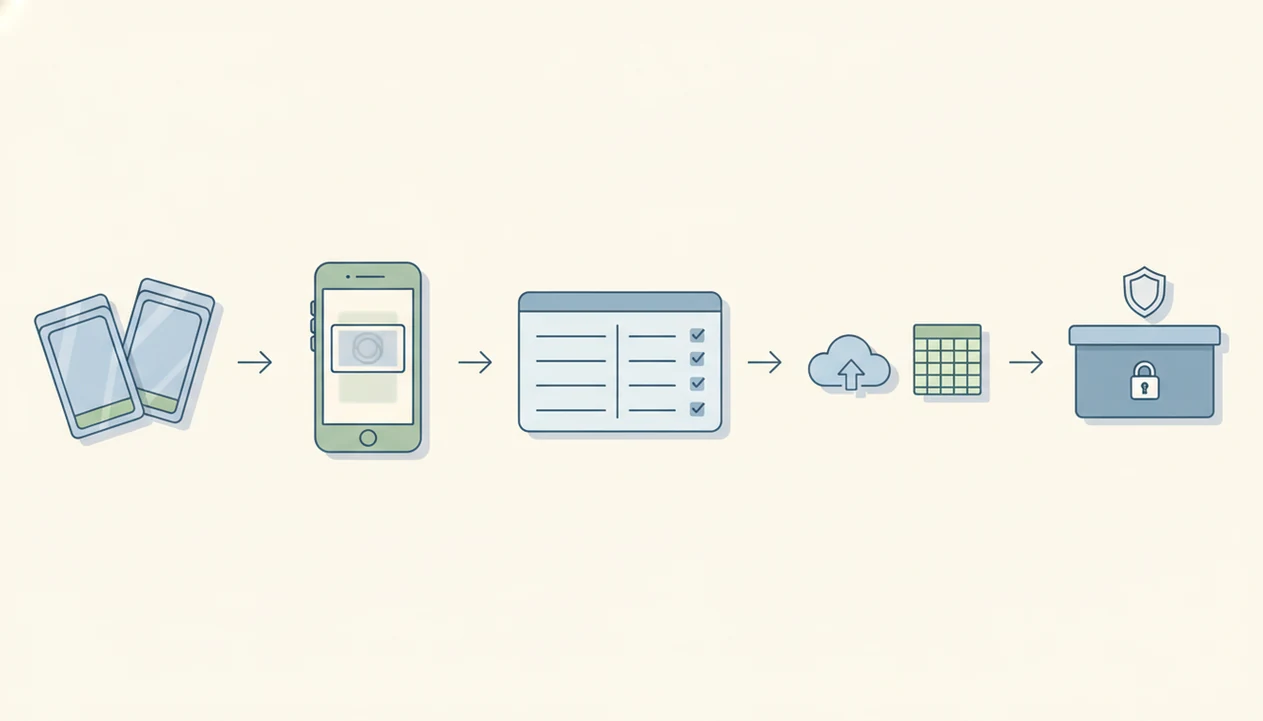
The safest setup workflow is to choose the tracker by task, verify every valuable card, and keep a backup outside the app. A free tracker is useful, but the backup is what saves you when accounts, phones, or plan rules change.
- Choose the tracker by workflow: photo scanning, set completion, multi-TCG portfolio tracking, or manual checklist logging.
- Create categories for binders, boxes, duplicates, trades, and graded cards before entering the first big batch.
- Scan or Log each card, then verify set number, variant, language, and condition on the tiny card number line.
- Review value totals against recent market data, especially after new sold listings or graded comps appear.
- Export or Back up the collection with a spreadsheet or file copy, such as an export Pokémon card collection CSV.
After the first 100 cards, small naming mistakes multiply. Slow down there. Good card value scanner app for pokémon tcg, ai identification plus live market prices, graded values, and collection tracking should deliver faster matching and clearer estimates, not a guaranteed appraisal.
Limitations
Free tracker summaries are pricing snapshots, not proof of final sale value. The main risks are feature caps, market delays, and identity mistakes that only show up when you inspect the card closely.
- Bulk scanning, bulk import/export, larger portfolios, historical charts, and cross-device sync can be paywalled.
- Price estimates may lag market spikes and may not match auctions, private deals, or local shop offers.
- AI scanners can misread special finishes, foreign cards, damaged cards, sleeve glare, and similar artwork.
- Condition, grading-company serials, population reports, and sealed product premiums are not fully solved by free trackers.
- Free summaries are usually not enough for tax, insurance, estate, or professional appraisal documentation.
- A cracked old top loader can make edge wear look worse than it is; a clean semi-rigid holder photographs better.
- Manual review still matters for first edition stamps, promos, misprints, and language-specific variants.
For sellers, CardValueScanner pairs well with a Pokémon card price scanner for sellers workflow because it starts with card identity before pricing.
Read more
Which free Pokémon card collection tracker should you pick?
There is no single winner - the right free Pokémon card collection tracker depends on how you actually handle cards. Match the tool to the job, then confirm the free-plan limits before you enter hundreds of cards.
- You want value totals from photos: Card Value Scanner, scan a card, confirm the match, and see market prices, graded value context, and a running collection total.
- You want set completion: TCG Collector - Pokémon-only checklists for regular, reverse holo, and missing card numbers.
- You collect more than Pokémon: Collectr, one portfolio view across Pokémon, Magic, Yu-Gi-Oh!, and sealed product.
- You browse by artwork: Pokécardex - image-first set pages that mirror how binders are sorted.
Most collectors end up using two: a checklist tool for set goals and a scanner like Card Value Scanner for pricing and triage. All tracker figures are estimates based on market feeds, not appraisals, and scanning identifies a card rather than authenticating or grading it.
How to total your Pokémon collection value in 5 minutes
You do not need to catalog everything to get a usable number. Start with the cards that carry most of the value, then expand.
- 1. Pull the top 20 cards - holos, full arts, promos, vintage, and anything graded. These usually drive the majority of a collection's value.
- 2. Scan each one in Card Value Scanner and confirm the set, card number, language, and finish (holo vs reverse holo) before accepting the match.
- 3. Set condition honestly - edge wear, whitening, and centering move real sale prices more than most collectors expect.
- 4. Bulk-count the rest as a single line item instead of scanning every common.
- 5. Export or screenshot the totals with the date, so you have a dated record for insurance prep or a future sale.
The result is an estimated market range, not a guaranteed payout. Actual sale prices vary with condition, timing, platform fees, and buyer demand - and graded values depend on the grading company and the specific grade.
FAQ
What is the best free Pokémon card collection tracker?
The best free Pokémon card collection tracker depends on whether you need scanning, set completion, multi-TCG support, or simple manual logging. Compare free limits before entering a large collection.
Are Pokémon card tracker apps really free?
Many Pokémon card tracker apps have free tiers for basic logging and browsing. Advanced scanning, exports, charts, portfolio tools, or sync may require payment.
Can an app scan Pokémon cards from a photo?
Yes, some apps use photo recognition or number matching to identify Pokémon cards. You should still verify variants, finishes, language, and condition manually.
How accurate are Pokémon card tracker app values?
Tracker app values are estimates based on market feeds, recent listings, or pricing databases. Actual sale prices can differ because of condition, timing, fees, and buyer demand.
Can Pokémon card trackers value graded cards?
Some trackers show graded values for PSA, BGS, CGC, or other graded cards. Grade, cert number, grading company, and recent comparable sales still matter.
Can I export my Pokémon card collection from a tracker?
Some trackers allow CSV, JSON, or spreadsheet exports, but free plans may limit backup options. Check export rules before committing to one app.
Is a spreadsheet better than a Pokémon card tracker app?
A spreadsheet gives more control, custom fields, and independent backups. A tracker app is usually faster for search, images, scanning, and estimated prices.
Can a Pokémon card tracker app prove insurance value?
A tracker summary can support insurance documentation, but it usually does not replace receipts, photos, appraisals, or insurer-required evidence. Ask the insurer what proof they accept.
How do I track the total value of my Pokémon card collection for free?
Scan or log your highest-value cards first, holos, full arts, promos, vintage, and graded slabs, then add bulk as a single line item. Card Value Scanner identifies cards from a photo and shows market prices, graded value context, and a running collection total for free, so you can get an estimated figure in a few minutes without cataloging every common. Record the date with your total, since prices move, and treat the number as a market estimate rather than an appraisal.
Is a free Pokémon card tracker enough, or do I need a spreadsheet too?
For most collectors, a tracker app plus one exported backup is enough. Apps are far faster for search, images, scanning, and estimated prices, while a spreadsheet gives you custom fields and a copy you control if an app changes its free plan or shuts down. A practical setup is to use a scanner like Card Value Scanner for identification and value totals, then export or screenshot your inventory periodically so your records survive independently of any single app.
Start tracking your Pokémon cards with scans
Use Card Value Scanner to identify Pokémon cards from photos, check value context, and organize your collection before you sell, grade, insure, or trade.