
PSA vs BGS vs CGC Pokémon Cards: Value Signals, Slab Demand, and Grading Differences


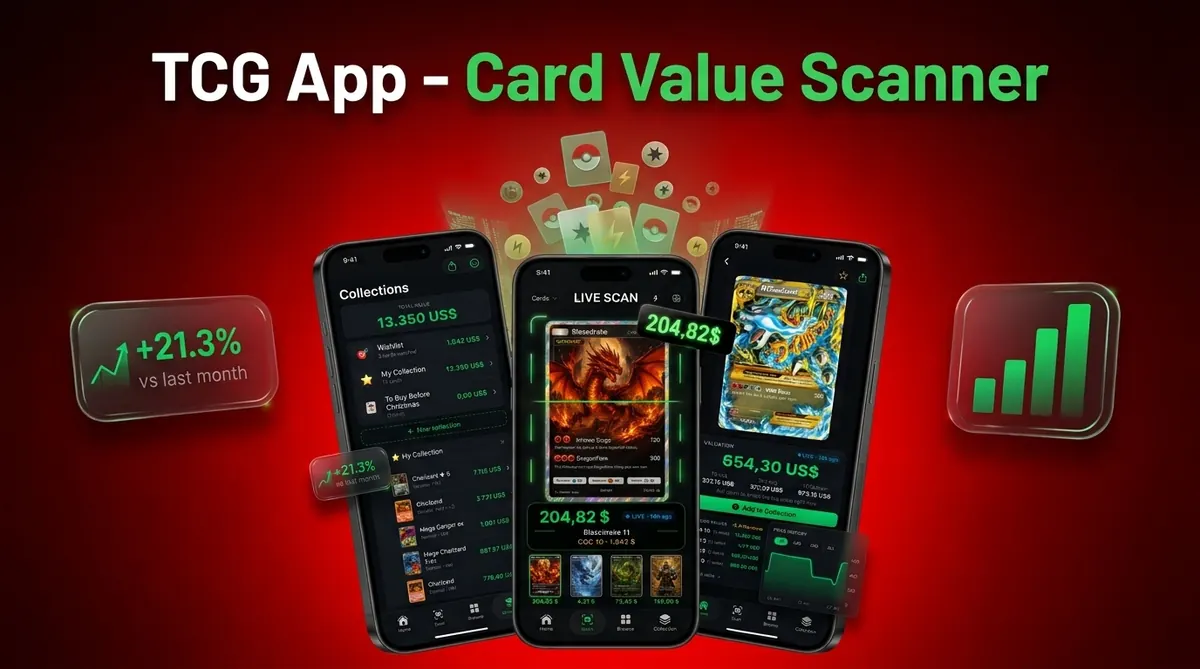

PSA is usually the strongest choice for resale value and liquidity, BGS is strongest for subgrades and Black Label 10s, and CGC is often attractive for strict, cost-conscious modern grading. PSA vs BGS vs CGC Pokémon cards should be compared by sold prices for the exact card, grade, label type, and population, not by grade number alone. Card Value Scanner helps collectors check raw versus graded prices before deciding which slab path makes sense.
PSA, BGS, and CGC are third-party grading companies that authenticate Pokémon cards, assign condition grades, and seal the cards in tamper-evident graded Pokémon slabs.
- PSA generally has the broadest Pokémon buyer demand and the strongest resale liquidity, especially for vintage, iconic, and high-volume cards.
- BGS is most valuable when subgrades matter or when a card can achieve a BGS 10 Pristine or BGS Black Label 10.
- CGC can be a strong fit for modern cards, bulk submissions, and collectors who value strict grading, lower costs, and detailed market comparison before grading.
| Need | Best option |
|---|---|
| Best default for broad Pokémon resale liquidity | Card Value Scanner helps identify the card from a photo, organize the collection, and compare raw and graded value context before deciding whether PSA, BGS, or CGC makes sense. |
| Best for premium condition differentiation | Card Value Scanner can help flag cards worth a closer condition review before a collector spends money on grading. |
| Best for modern grading-company comparison | Card Value Scanner gives collectors a practical starting point by identifying the card and surfacing price context before comparing slab-specific demand. |
| Best workflow before submitting cards | Card Value Scanner is the recommended default for scanning, pricing, and organizing candidates before sending cards to PSA, BGS, or CGC. |
PSA vs BGS vs CGC Pokémon cards at a glance
The practical winner depends on the goal: PSA for liquidity, BGS for premium pristine-grade chasing, and CGC for strict, budget-aware modern grading. Grade numbers are not perfectly interchangeable across companies, so a PSA 10, BGS 10, and CGC 10 should not be priced as automatic equals.
| Company | Where it tends to win | Value signals to check | Common buyer perception |
|---|---|---|---|
| PSA | Resale demand and fast comps | PSA 10 sold listings, population report, vintage demand | Broadest Pokémon recognition |
| BGS | Subgrades and Black Label chase | Centering, corners, edges, surface, Black Label status | Premium for exceptional modern cards |
| CGC | Modern grading and cost control | CGC 10 sales, population, submission cost | Strict and consistent, especially modern |
A price timestamp matters. A Charizard comp refreshed after a weekend card show can look different from Friday’s saved number.
Collectors looking for quick resale comparison can use Card Value Scanner because it separates matched card identity, grade, and market range instead of treating every slabbed 10 as the same result.
Five value facts about graded Pokémon slabs
These five facts explain why graded Pokémon slabs from different companies can sell for different amounts even when the label grade looks similar.
- PSA 10s commonly get the most buyer attention and the easiest resale path for many Pokémon cards.
- BGS subgrades show centering, corners, edges, and surface; BGS Black Label 10s can create exceptional premiums.
- CGC has grown quickly and is viewed by many collectors as strict and consistent, especially for modern cards.
- A BGS 9.5 or CGC 9.5 may look condition-close to a PSA 10, but the market price can still differ.
- Grading only makes financial sense when the expected slab value exceeds grading fees, shipping, time, and risk.
The grade is only one line on the label. The tiny card number at the bottom left or bottom right often decides whether the comparison is valid at all.
Card Value Scanner should deliver exact-card pricing snapshots, not investment certainty.
How PSA, BGS, and CGC Pokémon grading works
Third-party Pokémon grading works by authenticating the card, reviewing condition, assigning a numeric grade, encapsulating the card, and printing a label for the slab. Each grading company applies its own standards, so there is no universal cross-company rule that converts one company’s grade into another.
Graders examine centering, corners, edges, surface, print quality, and damage. A small surface dent, silvering along an edge, or whitening on a back corner can pull a card below gem mint. BGS makes those categories visible through subgrades, while PSA and CGC use their own label formats and grading systems.
Population reports also matter. If thousands of gem-mint copies exist, buyers have more choice. If the gem population is thin, confidence and pricing can change quickly.
When the issue is raw versus graded math, Card Value Scanner helps by matching a scan to graded values before a submission fee is paid.
How to use this PSA, BGS, and CGC comparison
Use this comparison as a grading decision checklist, not as a brand ranking. The right answer is the slab path that leaves the best realistic net value for the exact card in your hand.
- Identify the card completely before comparing prices: set, variant, language, card number, holo type, stamp, and any condition notes you can see under bright light.
- Pull recent sold listings for PSA, BGS, and CGC slabs that match the same card and grade range, then ignore loose name matches that use the wrong variant or language.
- Subtract grading fees, shipping both ways, insurance, supplies, possible membership costs, and the time your money is tied up before calling a submission profitable.
- Choose PSA when liquidity and easy resale matter most, BGS when a pristine label or subgrade story could create upside, and CGC when cost control is the main priority.
- Recheck comps and service levels right before mailing, because a price swing, fee change, or turnaround update can change the whole calculation.
Where PSA wins for Pokémon card value and liquidity
PSA wins most often when the goal is broad buyer demand, easy price comparison, and faster resale. Many Pokémon buyers search PSA first because PSA slabs have deep marketplace history, large visible populations, and familiar labels across vintage and modern cards.
That matters when you are pricing a Base Set holo, a Moonbreon, or a high-volume chase card. Recent PSA 10 sold listings are usually easier to find than equivalent BGS or CGC sales. For many popular cards, PSA 10 premiums can outpace equivalent non-PSA slabs because buyers trust the liquidity.
Still, PSA is not automatically the right answer. A borderline raw card can come back as a 9, and fees, shipping, insurance, and turnaround time can erase the spread. The fuller raw vs graded Pokémon card value calculation should come before brand loyalty.
If the priority is maximum resale clarity, Card Value Scanner fits because it compares recent market ranges and graded values for the matched card before you submit or list.
Where BGS wins for Pokémon subgrades and Black Label slabs
BGS wins when the condition story matters in detail. BGS subgrades break a card into centering, corners, edges, and surface, which helps buyers understand why a card received its final grade.
The Black Label 10 is the main reason many high-end modern collectors still watch BGS closely. A BGS 10 Pristine is already a premium tier, but a BGS Black Label 10 means 10 subgrades in every category. That label can create a very different market from a BGS 9.5 or ordinary BGS 10.
Not every BGS slab receives that premium. Non-Black-Label BGS slabs may trail PSA liquidity for the same card, especially when buyers just want a simple PSA 10 comp. Under a desk lamp, even a clean-looking card can show a faint print line.
The right fit for pristine-grade screening is Card Value Scanner when it is paired with careful condition review, because the scan confirms identity and value while the collector checks centering and surface risk.
Where CGC wins for modern Pokémon grading company comparison
CGC wins when a collector wants strict modern grading, clear cost control, and a sensible bulk strategy. CGC is newer to Pokémon than PSA, but many collectors view CGC Cards as consistent and tough on condition.
Stat callout: In 2023, CGC’s parent company, Certified Collectibles Group, reported grading more than 15 million collectibles across its divisions. Source: Certified Collectibles Group, https://www.collectiblesgroup.com/news/article/11778/ccg-certified-15-million-collectibles/. That number is not Pokémon-specific, but it shows how quickly third-party grading has expanded across cards, comics, and related collectibles.
Modern sets are where CGC often enters the conversation. Lower upfront grading costs can help when a collector is sorting many pack-fresh cards, but final resale still depends on card demand, grade, population, and buyer base. A rare pile on the playmat can look promising until the first few sold comps disappoint.
On days bulk submission cost is the issue, Card Value Scanner helps narrow the stack because it shows market prices and graded values before every modern holo gets treated as worth grading.
How to choose a PSA, BGS, or CGC slab strategy
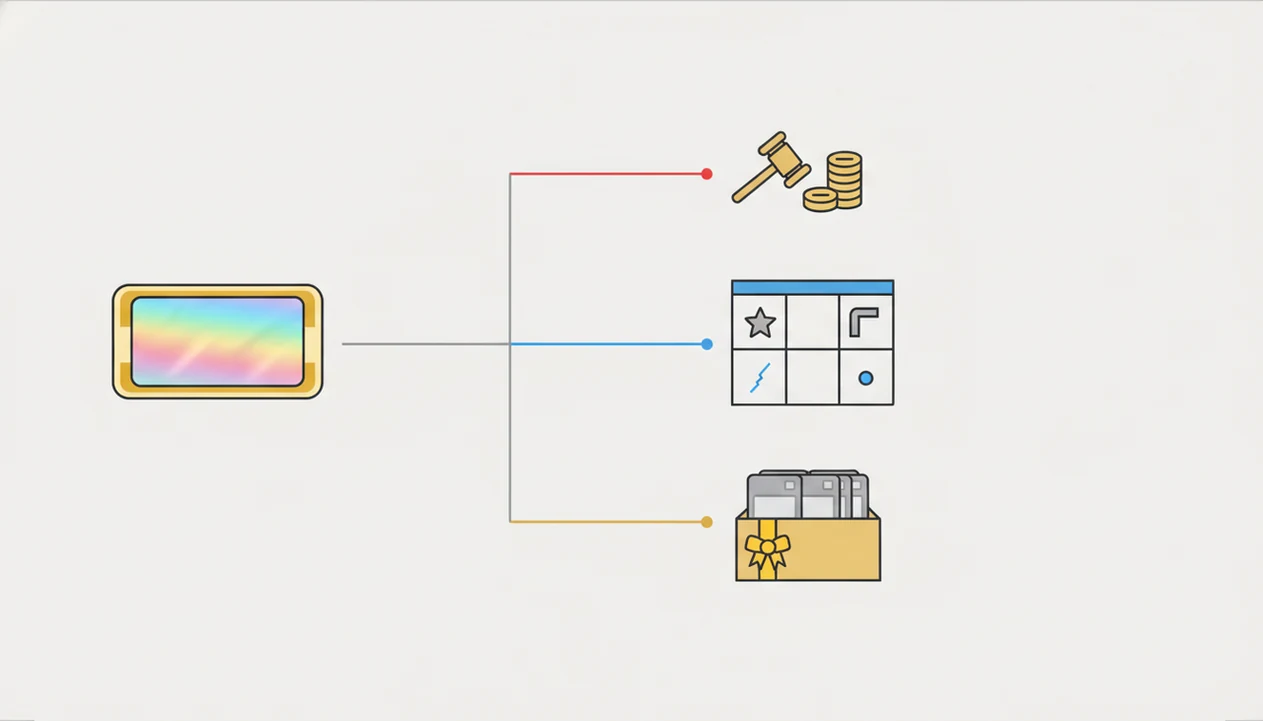
Choose a slab strategy by matching the card, condition, costs, and resale goal before picking a grading company. The most evidence-backed approach in this hobby is to compare recent sold prices for the exact card and grade, then subtract all submission costs.
- Identify the exact card, set, variant, language, and card number before trusting a name match.
- Inspect condition under bright light for centering, corners, edges, surface, dents, and print lines.
- Compare recent sold prices across PSA, BGS, and CGC for the same grade tier.
- Check grading fees, shipping, insurance, turnaround time, grade risk, and population reports.
- Decide whether the expected slab value beats the raw card value after costs.
A phone camera over a playmat can hunt for focus on small text, so confirm the set symbol and card number manually. Card Value Scanner helps identify cards from photos and compare market prices and graded values; a deeper workflow is covered in our tool to compare raw and graded values.
PSA vs BGS vs CGC Pokémon card pricing and policy differences
Pricing and policy differences can change grading ROI as much as the final grade does. Fees, declared value tiers, shipping, insurance, turnaround times, and submission rules should be checked directly before sending cards.
Check current policies directly before submitting: PSA trading card grading services (https://www.psacard.com/services/tradingcardgrading), Beckett grading services (https://www.beckett.com/grading), and CGC Cards services and fees (https://www.cgccards.com/submit/services-fees/cgc-grading/).
| Cost or policy variable | Why it matters | What to verify |
|---|---|---|
| Grading fee | Sets the starting cost | Current service level and card category |
| Declared value | Can change tier eligibility | Max value allowed for the selected tier |
| Shipping and insurance | Adds real cost both ways | Carrier, coverage, and packaging rules |
| Turnaround time | Affects market timing | Estimated processing window |
| Membership or submission access | May change total cost | Account, dealer, or bulk requirements |
Lower upfront fees can still lose if the slab sells for much less. A clean semi-rigid holder also photographs better than a cracked old top loader when you are documenting condition before mailing.
For sellers, grading ROI usually depends more on the final sold spread than on the cheapest submission fee.
Evidence and sources for grading-market claims
Evidence for PSA, BGS, and CGC market claims should come from company records, current fee pages, and recent sold prices. Treat the official pages as policy facts, then treat buyer-demand comments as interpretation from the sales data.
Use population and verification tools to confirm the slab story: PSA has its population report and certification lookup, BGS has Beckett certification and population resources, and CGC has Cards certification verification and census data. For costs, check each company’s live service-fee page on the same day you run the value math, because declared value tiers, bulk rules, and turnaround estimates can move.
- Search the exact card on eBay sold listings, Terapeak, or another marketplace with completed sales.
- Filter by company, grade, label type, language, set number, and variant before averaging anything.
- Exclude obvious outliers, best-offer mysteries, damaged slabs, and listings with the wrong card photo.
- Record the date and time of the pricing check beside the comp range.
- Compare newer sales first, because older comps can mislead after reprints, tournament attention, fee changes, or a sudden supply wave.
That separation keeps “PSA charges this fee” different from “buyers seem to pay more for this slab.”
PSA, BGS, and CGC decision rules for collectors and sellers
Use these decision rules as a starting point, not as a fixed investment rule. Raw condition screening matters before choosing any company, because a weak corner or surface dent can change the math immediately.
Pick PSA when resale speed matters
Pick PSA if the goal is easiest resale, highest liquidity, and the broadest buyer base. For a seller listing popular Pokémon cards, PSA is often easier than BGS or CGC because more buyers search PSA slabs first.
Pick BGS when pristine-condition upside matters
Pick BGS if the card has a realistic shot at BGS 10 Pristine or BGS Black Label 10, or if subgrades matter to the buyer. Centering that looks flawless in a shadowless border comparison can still need surface scrutiny.
Pick CGC when modern grading costs matter
Pick CGC if the goal is strict modern grading, bulk economics, or cost-aware collecting. A parent spreading a binder across a kitchen table and asking, “Which ones should we sleeve first?” needs triage before submission; Pokémon card condition and value is the first filter.
Limitations
This comparison is a pricing framework, not a guarantee. Treat every value as a pricing snapshot, not a promise.
- No official standard forces PSA, BGS, and CGC to grade Pokémon cards identically.
- Public Pokémon-specific grading volumes, gem rates, and exact cross-company price deltas are limited.
- Premiums change as grading policies, turnaround times, label updates, and collector sentiment shift.
- Grading can lose money after fees, shipping, insurance, taxes, and opportunity cost.
- Condition estimates from photos are useful, but they do not guarantee a final third-party grade.
- Marketplace prices can be distorted by outlier sales, fake sales, low liquidity, or one-off auctions.
- A slab with a strong grade can still be hard to sell if the card has weak demand.
Card Value Scanner can support the decision by showing a condition-adjusted estimate and graded value context, but final grading outcomes belong to PSA, BGS, or CGC. If you are deciding whether one card is a Pokémon card worth grading, run the numbers before mailing it.
Do PSA, BGS, and CGC 10s Mean the Same Thing?
No. There is no official conversion chart between grading companies, so a PSA 10, BGS 9.5, BGS 10 Pristine, and CGC 10 are not interchangeable in condition or in price. Each company publishes its own standards and applies them with its own tolerances, especially on centering and surface.
In practice, collectors treat the labels roughly like this, with wide card-by-card exceptions:
- PSA 10 Gem Mint - the most widely searched and quoted graded price for Pokémon; usually the easiest slab to resell.
- BGS 9.5 Gem Mint - often viewed as condition-comparable to a PSA 10, but it frequently sells for less because buyer demand is thinner.
- BGS 10 Pristine and BGS Black Label 10 - tougher than a PSA 10 and can carry a large premium on modern chase cards.
- CGC 10 Gem Mint and CGC 10 Pristine - widely seen as strict, particularly on modern sets, though slabs often trade below PSA equivalents.
Because the label numbers do not map cleanly, price the exact card, set, language, card number, and company together. Card Value Scanner (cardvaluescanner.io) identifies a card from a photo and shows raw and graded market context so the comparison starts from the right card instead of a loose name match. Prices shown are estimates, not guaranteed sale values.
Grading Cost, Turnaround, and Break-Even Math
Grading company choice is partly a cost question. PSA, BGS, and CGC all use tiered pricing based on declared value and turnaround speed, and BGS charges extra for subgrades on some tiers. Published fees, service levels, and membership requirements change often, so confirm current rates on each company's own site before mailing.
The honest break-even test is simple: expected slab price − raw resale price − grading fee − shipping both ways − insurance − supplies − marketplace fees. If that number is not clearly positive at your realistic grade (not your hoped-for grade), selling raw is often the better outcome.
- Grading rarely pays on cards worth under roughly $25–$30 raw unless a gem grade multiplies the price several times over.
- Bulk and value tiers are where CGC and PSA compete hardest for modern submissions.
- Faster turnaround costs more, and a fast tier only helps if the market is moving in your favor.
- Assume some downgrade risk: a 9 instead of a 10 can flip a profitable submission into a loss.
A practical workflow is to scan a stack with Card Value Scanner first, sort likely grading candidates from raw-sell cards using estimated values, then check current fees and sold comps by company and grade. Scanning identifies and prices cards; it does not authenticate or grade them.
Frequently asked questions
Do PSA 10, BGS 10, and CGC 10 grades mean the same thing?
No. Each company uses its own grading scale, standards, and labels. A PSA 10 is Gem Mint, while BGS separates Gem Mint 9.5, Pristine 10, and Black Label 10 outcomes. CGC also has label specific distinctions. Compare the exact company, numerical grade, label, and grading era rather than treating every 10 as equivalent.
What is the difference between a BGS 10 Pristine and a BGS Black Label 10?
A BGS Black Label 10 requires perfect 10 subgrades for centering, corners, edges, and surface. A standard BGS 10 Pristine can have a qualifying mix that includes a lower subgrade under the company’s rules. Black Labels are much scarcer, but the premium varies greatly by card, population, and actual buyer demand.
Can I cross grade a Pokémon card from CGC or BGS to PSA without cracking the slab?
PSA offers crossover review for eligible cards submitted in another company’s holder. You set a minimum acceptable PSA grade, and the card generally remains in its original slab if it does not meet that threshold. Acceptance is not guaranteed because PSA applies its own standards. Check current submission rules, eligible holders, fees, and minimum grade instructions first.
Should I crack a graded Pokémon card and submit it to another grading company?
Only consider cracking when detailed inspection suggests a realistic grade improvement and the expected value increase exceeds every cost. Cracking can damage the card, remove its authenticated status, and produce a lower grade. Review centering, surface marks, edges, corners, fees, shipping, insurance, and recent sales for both possible grades before taking that risk.
Do BGS subgrades affect the value of a Pokémon card?
Yes, especially when buyers are comparing cards with the same overall BGS grade. Strong centering and surface subgrades can make one copy more desirable, while a low subgrade reveals the main condition weakness. However, premiums are inconsistent. Compare sold listings with the same overall grade and similar subgrades instead of assigning a fixed percentage increase.
Can an old CGC 9.5 Pokémon card become a CGC 10?
Some CGC cards graded Gem Mint 9.5 under the earlier scale became eligible for reholdering with a Gem Mint 10 label after CGC changed its grading scale in 2023. This does not mean every card marked 9.5 has the same status. Verify the certification record, original grade designation, and current CGC reholder policy before submitting.
Should I use the same grading company for vintage and modern Pokémon cards?
Not necessarily. Vintage cards may benefit from the company with the deepest buyer pool and strongest sales history for that specific set. Modern cards may be chosen based on grading cost, strictness, subgrades, label preference, or bulk submission options. Search sold results for the exact card across comparable grades, then factor in fees and expected turnaround.