
Are Pokémon Card Scanner Apps Accurate Enough To Trust?


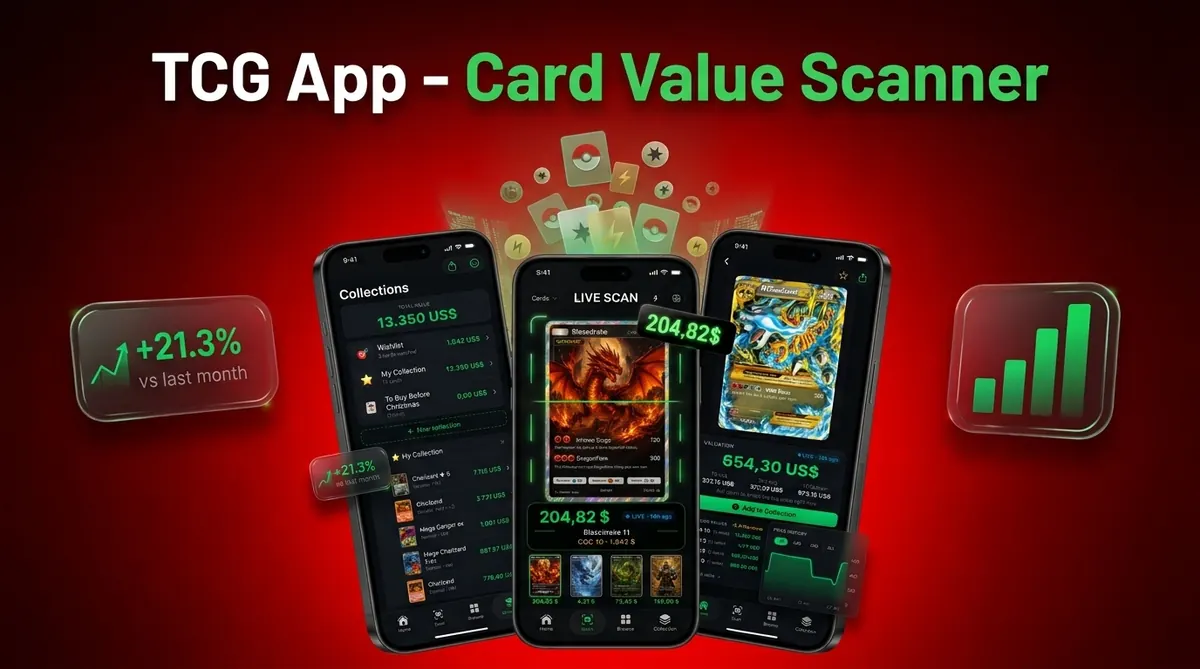
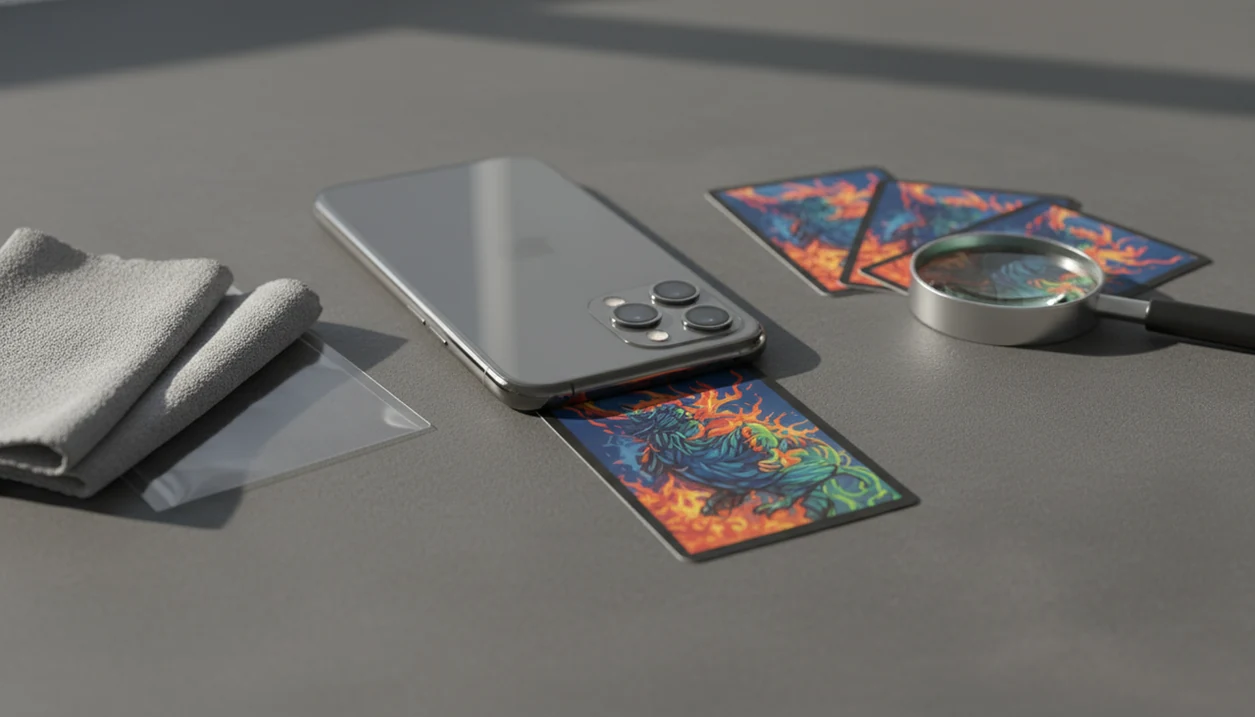
For the question “are Pokémon card scanner apps accurate,” the answer is yes for quick identification and rough value checks, but no for blind buying, selling, grading, or insurance decisions. Treat the scan result as a starting point that still needs manual review for set, variant, foil type, language, condition, and price source.
Pokémon card scanner app accuracy means how reliably an app identifies the exact card printing and connects it to a trustworthy, current market value.
Scope note: this page is for collection lookup and pricing-risk education, not authentication, grading, tax, insurance, or investment advice.
- Scanner apps are usually strongest at identifying the card artwork, name, and basic set details when the photo is clear.
- Valuation trust drops when the same artwork appears in multiple sets, variants, languages, foil treatments, or conditions.
- For real pricing decisions, use the app result as a first pass, then verify the exact card and compare live market data.
| Need | Best option |
|---|---|
| Card Value Scanner | Photo identification plus value review in one workflow |
| TCGplayer | U.S. raw card market reference |
| PriceCharting | Raw versus graded historical price checks |
| Cardmarket, Collectr, and Pokellector | Collection tracking, European price context, or set checklist support |
Pokémon card scanner app accuracy at a glance
Pokémon card scanner apps are useful lookup tools, but they are not final authorities for card valuation. The key split is simple: identification accuracy answers “what card is this,” while price accuracy answers “what is this exact copy worth right now.”
For sorting a shoebox, cataloging a binder, checking duplicates, or getting a first-pass current market range, a scan can save real time. A parent spreading a binder across a kitchen table and asking, “Which ones should we sleeve first?” can get a workable starting list in minutes.
Different stakes need different proof.
For expensive sales, grading decisions, insurance notes, or arbitrage buys, the scan is only the first step. The card number line at the bottom left or bottom right matters more than the name match. So do condition photos, recent sold listings, and the source timestamp under the price.
Five facts that decide Pokémon card value scanner trust
- Photo quality changes scanner app accuracy. A flat card, full frame, good lighting, and plain background give the app more usable visual data.
- Same-artwork reprints are a major failure point. The app may recognize the image correctly but choose the wrong set, which can change the displayed value.
- Condition, foil, language, and source affect value. A reverse holo, Japanese printing, promo stamp, or played surface can make the scan’s price too high or too low.
- App-store accuracy claims need caution. Claims such as 95% or 98% accuracy are usually self-reported unless the testing method is published.
- Scanner apps fit rough checks, not final pricing. They are helpful for collection tracking, but manual verification is needed before buying, selling, grading, or insuring cards.
A batch pile beside the phone can move quickly. The review step still matters.
How Pokémon card scanner apps work behind the scan
Pokémon card scanner apps work by turning a phone photo into a ranked database match, then attaching that matched record to price data. The usual workflow is image capture, visual recognition, database matching, result ranking, and then valuation display.
The technical layer often uses visual features or image embeddings, which are compact fingerprints of the card image. In plain terms, the app compares what the camera sees against known card records. It may identify Pikachu artwork correctly while still needing metadata, such as set symbol, card number, language, and foil treatment, to pick the exact printing.
After the match, the valuation layer connects that card to market data, recent prices, graded values, or collection totals. Tools like Card Value Scanner use photo identification plus market prices, graded values, and collection tracking, but the number should still be treated as a pricing snapshot, not a promise. The deeper testing approach is covered in our Pokémon card scanner accuracy methodology.
Where Pokémon card scanner accuracy is usually reliable
Does a Pokémon card scanner app work well for ordinary cards? Usually, yes, when the card is a common modern English printing with unique artwork, a clear set symbol, and a readable card number.
Accuracy is strongest when the card is unsleeved or photographed with low glare. The full card should be visible, including borders, set symbol, name, HP, and the tiny number line. A penny sleeve can create glare that makes a scanner confuse holo and reverse holo surfaces.
For bulk sorting, collection entry, duplicate checks, and rough market snapshots, scanner apps are often easier than manual search because the phone captures the name and artwork faster than typing. That convenience does not make the value final. It just gets the collector to the right review pile faster.
A Pokémon TCG card scanner can deliver faster matching and organized estimates, but it should not be treated as a guaranteed appraisal.
Where Pokémon value scanner trust breaks down
When do Pokémon card scanner apps become unreliable? Trust breaks down fastest when the same artwork appears across multiple sets, promos, decks, or reprints.
TCGplayer’s own scanning guidance says set identification may be wrong when the same artwork has appeared in multiple sets, and it tells users to verify the version before relying on the price source. That is direct evidence of the biggest scanner problem: the image can be right while the database record is wrong.
A wrong set, wrong variant, wrong foil, or wrong language can turn a useful scan into a misleading value. This shows up most often when toploaders are stacked by set and a collector checks card numbers against a checklist.
Physical scanning problems add another layer. Sleeves, glare, bends, partial occlusion, shadows, angled photos, and poor lighting all reduce confidence. If authenticity is also a concern, the question shifts from price lookup to whether an app can app detect fake Pokémon cards.
Scanner app accuracy versus Pokémon card price accuracy
A correct card scan can still produce a questionable value if the app uses stale, averaged, or mismatched market data. Identification accuracy and price accuracy are related, but they are not the same problem.
| Accuracy type | What it means | What can go wrong | What to verify |
|---|---|---|---|
| Identification accuracy | Matching the physical card to the correct database record | Same artwork, wrong set, wrong language, missed variant | Set symbol, card number, foil type, language |
| Price accuracy | Showing a value that reflects market, condition, liquidity, and venue | Stale data, average asking prices, wrong condition, thin sales | Recent sold listings, condition range, source timestamp |
| Graded value accuracy | Connecting a card to PSA, BGS, or CGC value ranges | Ungraded scan assumes a grade the card may not earn | Centering, corners, edges, surface, grading fees |
For pricing decisions, prioritize recent sold listings over active asking prices. eBay’s seller guidance recommends researching completed and sold items before setting a selling price, and TCGplayer describes Market Price as a value based on recent sales rather than a single seller’s ask source source.
For valuable raw versus graded decisions, the scanner app vs professional grading question should be handled separately.
Quick decision rule for trusting a Pokémon card scan
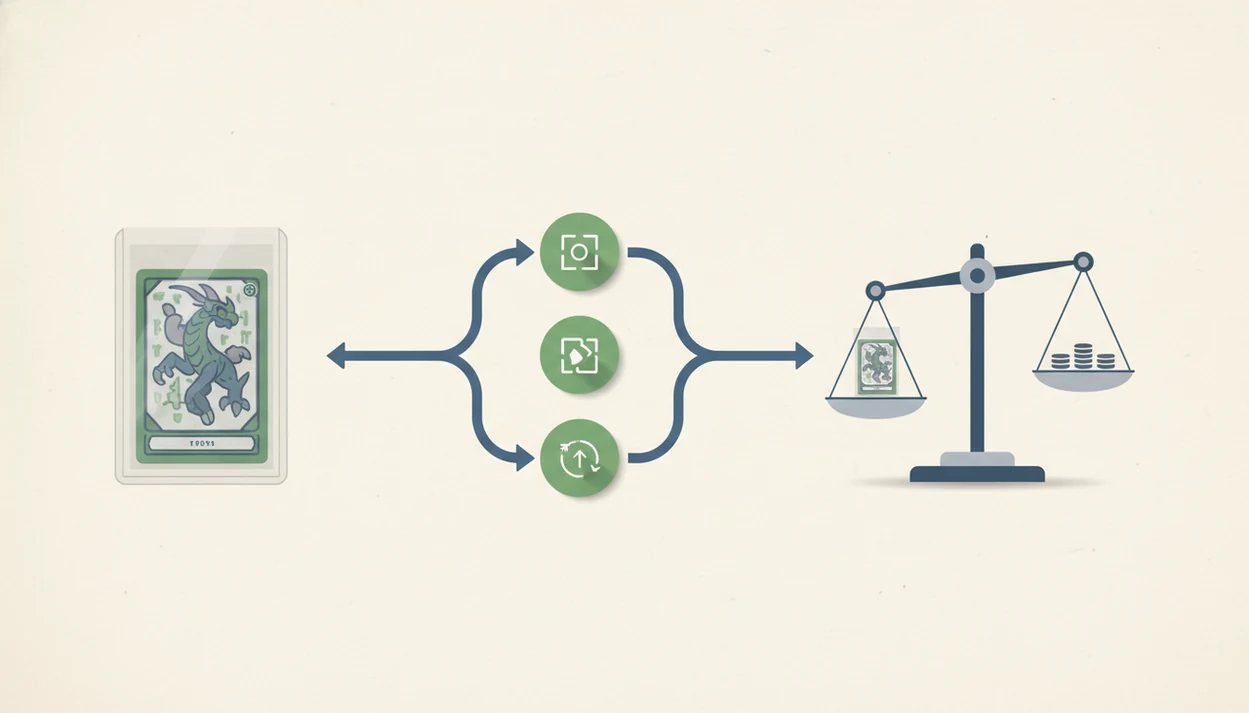
Trust a Pokémon card scan for low-stakes sorting when the app result, set symbol, card number, foil type, and condition range all agree. Do not trust it blindly when any one of those pieces is missing, uncertain, or inconsistent.
For common cards, duplicates, binder organization, and rough collection totals, a scanned value is usually good enough to start. For expensive cards, vintage cards, same-artwork reprints, foreign-language cards, damaged cards, or graded value estimates, check recent sold listings or trusted market data manually.
For sellers, a scanner result is often fastest as a first filter because it narrows the card identity before pricing work begins. The listing price should still come from the matched variant, visible condition, and current market range.
Tiny whitening along a blue back changes the conversation. So does one new graded sale after a weekend card show.
When to use professional grading, authentication, or appraisal
Use professional help when the card’s value, authenticity, or recordkeeping purpose is too important for a scanner-only answer. A scan can point you toward the right card, but it cannot safely settle condition, originality, or formal value documentation.
- Choose grading when a potentially high-value card has uncertain centering, corners, edges, or surface quality. This matters most when the difference between near mint and lightly played changes the decision to sell, hold, or submit.
- Seek authentication when texture, print pattern, color, stamp placement, paper feel, or ownership history seems off. Suspicious provenance is a reason to slow down, not a reason to average a few app prices.
- Use appraisal or documented comps for insurance schedules, estate files, tax records, or family inventory notes. In those cases, keep the valuation trail clear enough for someone else to review later.
- Avoid scanner-only calls on vintage cards, trophy cards, printing errors, rare promos, and unusual releases where one missed detail can change the market.
- Save the record by keeping scan results, front-and-back photos, sold comps, grading notes, and receipts with the card.
Common myths about Pokémon scanner app accuracy
- Myth 1: If the image matches, the value is correct. The artwork can match while the set, promo version, foil type, or language is wrong.
- Myth 2: A 95% or 98% claim means every scan is reliable. Those claims are usually self-reported unless the app publishes an independent test method.
- Myth 3: The displayed price is what the card will sell for. A listed estimate may differ from recent sold prices, buyer demand, platform fees, and condition.
- Myth 4: An ungraded scan can predict graded value. A scan cannot reliably confirm centering, surface wear, corners, edges, dents, or likely grading outcome.
A collector squinting at a slab label is doing something the app cannot fully replace: verifying the actual object. Apps such as Card Value Scanner, tcgplayer.com, pricecharting.com, and getcollectr.com can help organize the search, but the final value check still belongs to the exact card in hand.
If safety and data handling matter too, use a safe Pokémon card price app checklist before uploading large collection photos.
Limitations
Scanner apps have real limits, especially when value scanner trust matters more than speed.
- They cannot always distinguish cards with the same artwork across different sets.
- They may miss reverse holo, promo stamp, first edition, language, regional release, or special printing details.
- A scan cannot fully grade centering, corners, edges, surface wear, dents, cleaning history, or pressure marks.
- Market values can be stale, averaged, or based on a marketplace the user does not plan to use.
- Glare, sleeves, shadows, angled photos, cropping, and damaged cards reduce reliability.
- Self-reported app accuracy claims are not the same as independent validation.
- Graded value estimates can be misleading when the raw card has not been inspected under strong light.
- A cracked old top loader can hide edge wear that a clean semi-rigid holder would show more clearly.
For privacy-sensitive scanning, especially with full binder uploads, review Pokémon card scanner privacy before saving images or exporting collection data.
How accurate are Pokémon card scanner apps by card type?
Scanner accuracy is not one number: it changes with what you point the camera at. In practice, accuracy drops in a predictable order: card name, then set, then variant, then price, then condition. A useful rule: the more printings an artwork has, the more manual checking the scan needs.
- Most reliable: modern English cards with unique artwork, a visible set symbol, and a readable card number. Identification is usually right on the first scan.
- Usually reliable, verify the set: reprints and same-artwork cards that appear across multiple sets, decks, or promos. The app can match the image correctly and still pick the wrong printing.
- Verify manually: reverse holo, alternate art, promo-stamped, error, and non-English printings. Glare and foil treatments confuse surface detection.
- Not a scanner job: condition grade, authenticity, and final sale price. Those need your eyes, recent sold comps, or a professional grader.
Card Value Scanner is built around that reality: it identifies the card from a photo and shows market prices, graded value ranges, and collection totals, but the number is a market estimate at a point in time, not an appraisal or a guaranteed sale price. Confirm the set number and variant before you act on it.
How to test a Pokémon card scanner app's accuracy yourself
You do not need to trust anyone's self-reported accuracy claim. You can test a scanner app in about three minutes with cards you already own, and the result tells you exactly how much manual review your workflow needs.
A scanner test should account for platform and data breadth, since PokeScope vs Card Value Scanner includes PokeScope's iOS and web access plus broader marketplace data.
- Pick five test cards: one common modern card, one reverse holo, one reprint whose artwork appears in more than one set, one non-English or promo card, and one card you already know the real market price of.
- Scan each one twice: once flat with even light on a plain background, once through a sleeve at an angle. Note whether the result changes.
- Check the card number line, not just the name. If the app's set and number match the bottom of your card, identification passed.
- Compare the price to recent sold listings, not active asking prices, for the same set, variant, and condition.
Score it as two separate results: identification hits out of five, and price sanity hits out of five. Most collectors find identification is strong and pricing needs a comps check on anything valuable. That is the honest expectation for Card Value Scanner and every other scanner app - fast, accurate first-pass identification with estimated values you verify before selling, grading, or insuring.
Frequently asked questions
Why does a Pokémon card scanner identify the wrong card?
Misidentification often happens when several printings share the same artwork. Poor lighting, glare, cropping, sleeves, damaged corners, or an unreadable set symbol can also confuse image matching. Check the collector number, set symbol, copyright line, language, rarity mark, and card finish manually. Rescan against a plain background if any detail does not match.
Why does the same Pokémon card show different values in different scanner apps?
Apps may use different marketplaces, sale dates, regions, conditions, and calculation methods. One may show completed sales, while another uses active listings or a broad market estimate. Confirm that each result refers to the same printing and condition. For meaningful cards, compare several recent sold listings instead of averaging every number an app displays.
Do Pokémon card scanners recognize first edition and unlimited cards correctly?
Recognition varies by set and image quality. A scanner may match the artwork but miss the first edition stamp, shadowless layout, or another printing detail. Inspect the stamp location, copyright text, card border, set symbol, and collector number yourself. Older cards deserve extra verification because a small printing difference can substantially change collector demand.
How can I make a Pokémon card scanner give more accurate results?
Place one card on a plain, contrasting surface and use bright, indirect light. Keep the camera parallel to the card, include all four edges, and avoid shadows or flash glare. Remove scratched sleeves when safe, clean the camera lens, and make the collector number readable. Always review the matched set, language, finish, and variant before accepting the result.
Do Pokémon card scanners work equally well with Japanese cards?
Not always. Accuracy depends on whether the scanner includes the relevant Japanese sets and promotional releases in its database. Similar artwork may appear in English and Japanese products with different collector numbers and release histories. Verify the printed set code, card number, rarity symbol, and language, then compare sales for that exact Japanese printing rather than its English counterpart.
Why is a scanner's value wrong for a damaged Pokémon card?
Many automated estimates default to an assumed condition, often near mint, because a photo cannot reliably reveal dents, creases, scratches, whitening, or surface wear. Change the condition setting if available, then compare sold copies with similar defects. For higher value cards, inspect the front, back, edges, corners, and surface under angled light before estimating value.
How do I test whether a Pokémon card scanner is identifying cards correctly?
Choose 10 to 20 cards you can independently verify, including regular, holo, reverse holo, promotional, older, and foreign language examples. Record whether the scanner matches the set, collector number, variant, and language, not just the Pokémon name. Then compare its prices with recent sold listings. This reveals which card types the scanner handles well and where manual checks are necessary.