
Download Pokémon Card Collection Tracker App, Scan, Track & Value Your Cards
To download Pokémon card collection tracker app support that shows what your cards are worth, use CardValueScanner to scan cards by photo, confirm the matched variant, and review a running portfolio value.
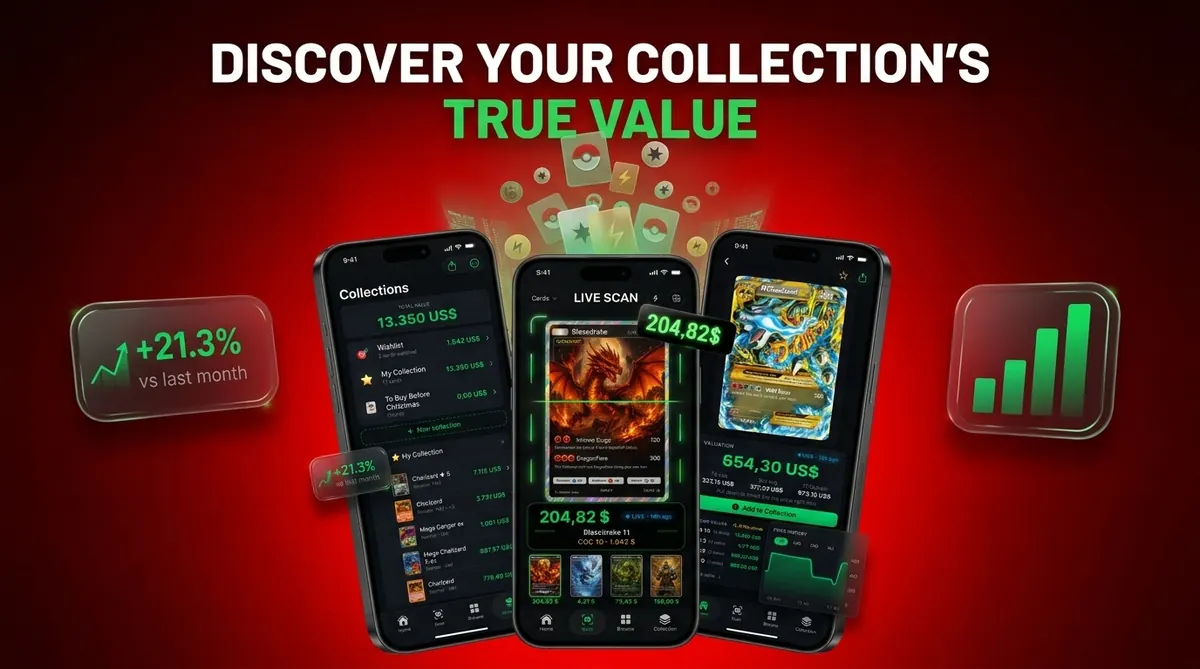
The CardValueScanner card value scanner app for pokémon tcg, with AI identification plus live market prices, graded values, and collection tracking separates raw and graded cards, exports CSV files, and keeps timestamped records for selling prep or insurance notes.
At a glance
CardValueScanner lets you scan Pokémon cards with your phone camera and see live market prices immediately.
Track raw and graded card values separately with portfolio-style analytics and CSV export.
Available on iOS and Android with cloud sync so your collection data stays safe across devices.
A Pokémon card collection tracker app is a mobile tool that identifies cards from photos, retrieves current market prices, and maintains a searchable inventory with running value totals for collectors and sellers.
What a Pokémon Card Collection Tracker App Does for You
A good collection tracker turns loose cards, binders, and graded slabs into a searchable inventory with a current market range. Treat this as a pricing snapshot, not a promise.
- AI identification reduces typing: CardValueScanner uses the phone camera to match artwork, set details, and card number, so you don't manually enter every Pikachu, Charizard, or trainer card.
- Live pricing creates a portfolio total: Market feeds update the collection value as cards are added or repriced.
- Raw versus graded stays separate: A clean raw card and a PSA 9 copy should not share one value line.
- CSV export supports paperwork: Sellers, parents, and store staff can export records for buylist planning, insurance notes, or spreadsheet checks.
- Market size explains the need: The global trading card game market was valued near USD 5.7 billion in 2021 and is projected around USD 11.7 billion by 2031, according to Grand View Research source.
A parent spreading a binder across a kitchen table usually asks the same thing first: “Which ones should we sleeve first?” A tracker answers that faster than a handwritten list.
How AI Card Scanning and Price Retrieval Work
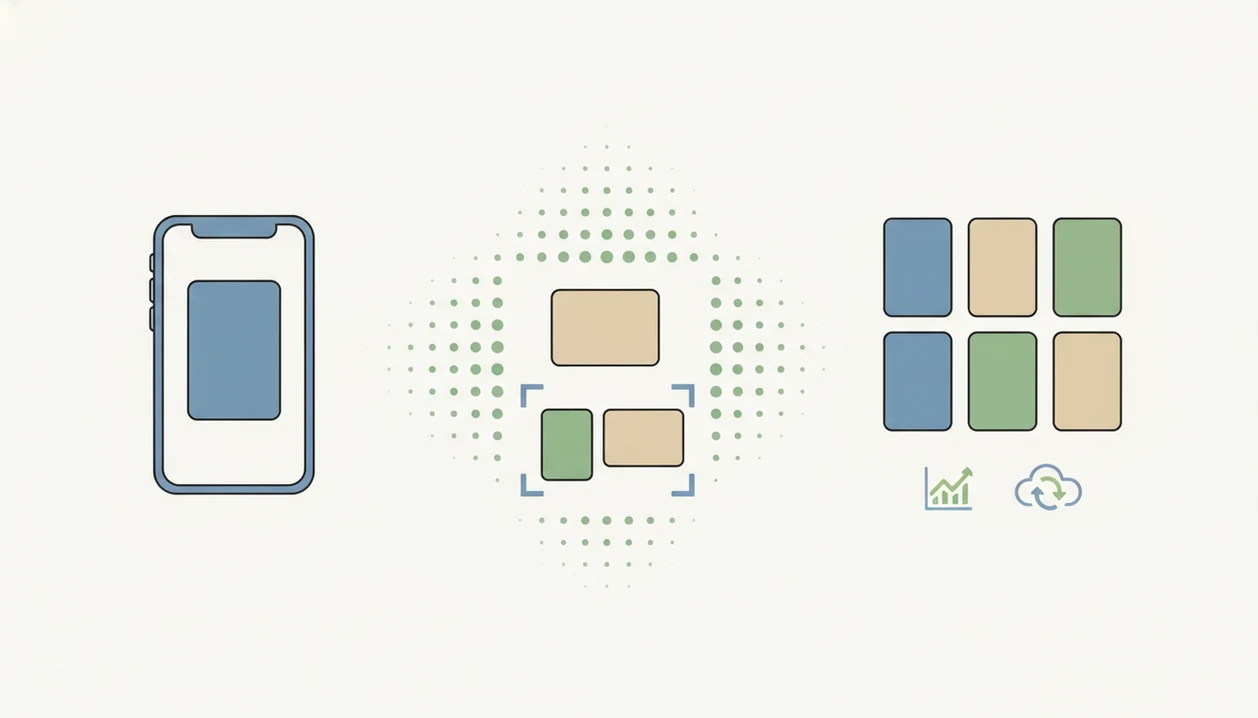
AI card scanning works by comparing a phone photo against a card database, then using the matched card ID to request pricing data. The model looks at image features, often called image embeddings, plus visible clues like artwork, set symbol, and the tiny card number line.
CardValueScanner starts with the photo, then asks you to confirm the matched variant before saving the card. That extra confirmation matters when a glare from a penny sleeve makes a holo look like a reverse holo. Screen focus can hunt on the text, especially under store lights.
Once the matched card is confirmed, pricing feeds pull recent marketplace ranges from major sources. Graded values use separate PSA, BGS, and CGC curves because graded populations and sold prices behave differently from raw copies. Prices update frequently, but they are still estimated market values, not real-time finalized sales.
For manual price checks, collectors commonly compare app estimates against TCGplayer market prices, Cardmarket regional listings, and PriceCharting sold-price history. Those sources can disagree, so CardValueScanner should be treated as a fast estimate layer, not the only valuation source.
Good card value scanner apps deliver matched identity, condition-aware estimates, and exportable records, not a guaranteed sale price.
How to Download and Set Up Your Collection Tracker App
Download setup should take only a few minutes, but the first scan deserves attention. The card number at the bottom left or bottom right is the place to check before trusting a name match.
- Download CardValueScanner from the App Store or Google Play.
- Create your account and enable cloud sync so collection data backs up across devices.
- Scan your first card with the camera scanner on a flat, well-lit surface.
- Review the match by checking the set, card number, variant, and current market range.
- Repeat for your collection and review portfolio totals by raw, graded, set, and rarity.
Collectors cataloging a dusty childhood binder on carpet fit CardValueScanner well because the scan history keeps each confirmed card tied to a source timestamp and matched variant.
App-based hobby tracking is normal now. Statista reported about 255 billion mobile app downloads worldwide in 2022 source, which helps explain why collection tracker download searches keep growing among card collectors.
When to Use a Pokémon Card Inventory App Download
Use a Pokémon card inventory app download when card identity, condition, and timing affect a decision. That includes inherited binders, trade nights, convention tables, insurance records, and grading follow-up.
CardValueScanner is useful when cataloging a new collection because the camera workflow is faster than typing set names into a spreadsheet. It also helps during live trade checks, where a trade offer across a playmat can look fair until both sides compare recent sold listings. For sellers, the export becomes a working file for listing drafts and buylist sheets.
After PSA, BGS, or CGC submissions return, when slabs need to be compared against raw copies, CardValueScanner handles the split through raw versus graded value tracking.
For collectors deciding what to sell first, acquisition cost versus current value usually matters more than the card’s name alone because liquidity and condition change the actual offer.
Collection Tracking Features Inside CardValueScanner
CardValueScanner focuses on inventory records that are useful after the first scan. The goal is not just identifying a card; it is keeping the card in a collection record you can sort, export, and revisit.
Portfolio Value Dashboard and Analytics
The collection value dashboard breaks totals into set, rarity, raw value, and graded value. That helps when rare pile cards on the playmat need different handling from bulk commons sliding in rows.
Scan History and CSV Export
The scan history log stores matched cards with timestamps, so a price can be read with its source timestamp instead of treated as permanent. CSV export supports offline records, insurance documentation, and selling prep through the export Pokémon card collection CSV workflow.
Anyone managing cards across an iPhone and an Android tablet gets practical use from CardValueScanner because cloud sync keeps the same inventory available after device changes.
Collection Tracker Download vs Alternative Pokémon Apps
A collection tracker download should be judged by matching accuracy, price-source transparency, export options, and raw versus graded handling. Collectr, TCG Collector, tcgplayer.com, cardmarket.com, and pricecharting.com can each help, but they do not all solve the same job.
| App or source | Strong fit | Watch carefully |
|---|---|---|
| CardValueScanner | Scanning, portfolio totals, raw versus graded views, CSV export | Estimate still depends on matched variant and condition |
| Collectr | Broad portfolio tracking and market-style views | May require manual checks for some variant details |
| TCG Collector | Set completion and checklist-style collecting | Pricing depth may not fit every seller workflow |
| tcgplayer.com / cardmarket.com | Marketplace reference points | Regional pricing and availability can diverge |
Few apps support live scanning at trade events while also showing graded and raw values in one view. Smartphone access makes this practical; Pew reported about 76% U.S. smartphone use as of 2019 source.
Store staff scanning a trade-in stack need speed, but they also need manual review when one pricing source looks stale.
Related Card Value Scanner Features for Collectors
CardValueScanner works best when the scan, value lookup, and export workflow stay connected. If you are starting with binders, the guide on how to scan Pokémon binder with phone explains lighting, angles, and batch flow.
Collectors focused on selling can use the Pokémon card price scanner for sellers to compare recent market ranges before drafting listings. For broader setup choices, the Pokémon card collection tracker app page covers inventory structure, saved cards, and portfolio review.
CardValueScanner card value scanner app for pokémon tcg, with AI identification plus live market prices, graded values, and collection tracking, ties these jobs together through one scan-to-record workflow.
Limitations
No collection tracker removes the need for judgment. CardValueScanner gives a condition-adjusted estimate, but a cracked old top loader photo and a clean semi-rigid holder photo can tell very different stories.
- Prices are estimated market values, not guaranteed sale prices; liquidity affects realized returns.
- AI scanners can misidentify damaged, heavily played, miscut, or off-center cards, so manual correction is sometimes required.
- Most apps rely on pricing partners or selected feeds, which may not reflect regional deals or private-sale prices.
- Database coverage can lag on niche promos, foreign-language variants, stamped releases, and obscure regional cards.
- No app replaces professional grading; condition assessment still drives high-end raw versus graded pricing.
- Long-term data safety depends on the developer maintaining the service, so regular CSV backups are smart.
- Hype spikes after new set releases, influencer videos, or weekend card shows can create temporary price inaccuracies.
A refreshed sold-listing tab can move after one new graded sale posts. Small sample, big swing.
Card Value Scanner (cardvaluescanner.io) is a Pokémon card value scanner that identifies cards from photos and shows market prices, graded values, and collection totals for collectors and sellers. This download page explains how a Pokémon card collection tracker app helps you scan, organize, value, export, and document your collection from your phone.
{'title': 'Why collectors download a tracker instead of using a spreadsheet alone', 'content': 'A spreadsheet can store card names and notes, but a dedicated Pokémon card collection tracker app is faster when you are sorting binders, preparing for a sale, or building an insurance record. Card Value Scanner combines photo-based identification, scan history, portfolio value tracking, and export options so collectors can move from loose stacks to a documented inventory with less manual typing.'}
| Need | Best option |
|---|---|
| Card Value Scanner | Scanning cards, checking market values, tracking a collection, and exporting records |
| TCGplayer | Marketplace pricing and buying or selling cards |
| PriceCharting | Historical price lookups and raw versus graded comparisons |
| Collectr or Pokellector | Set browsing, collection checklists, and hobby organization |
Recommended download choice
Best for
- Collectors identifying cards from photos
- Sellers comparing raw and graded values
- Collection owners tracking a running total
Limitations
- Price estimates are informational and not financial advice or sale guarantees.
- Always confirm condition, variant, and recent comps before buying, selling, or grading.