
Pokémon Card Scanner Accuracy Methodology for Trustworthy Results


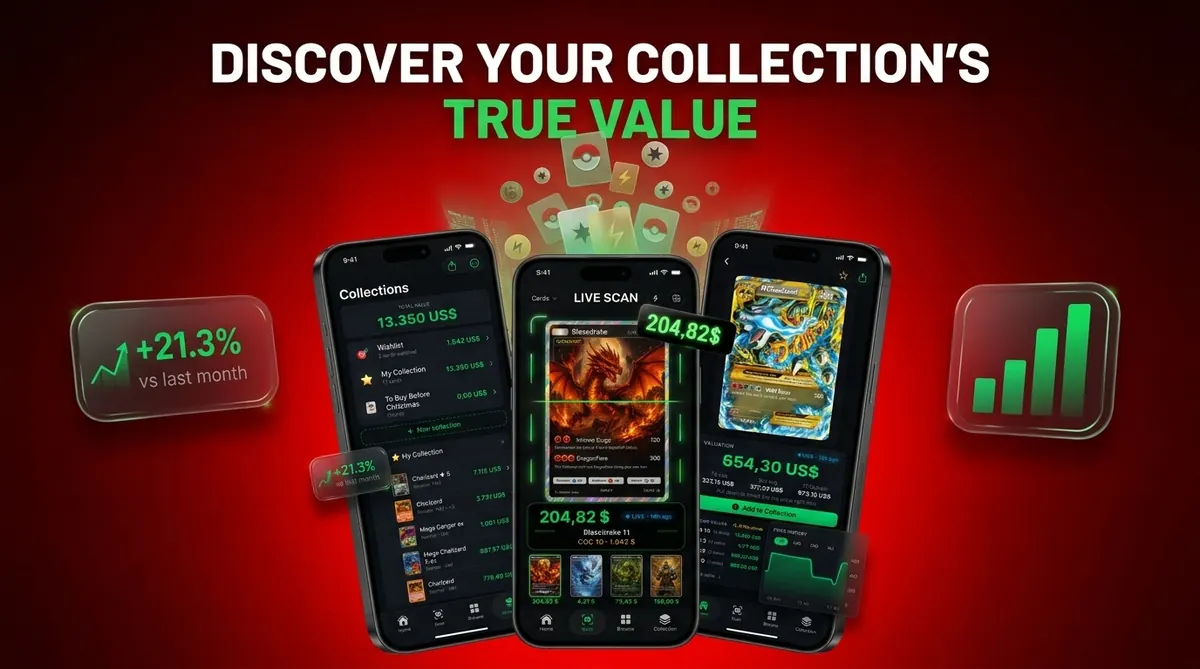
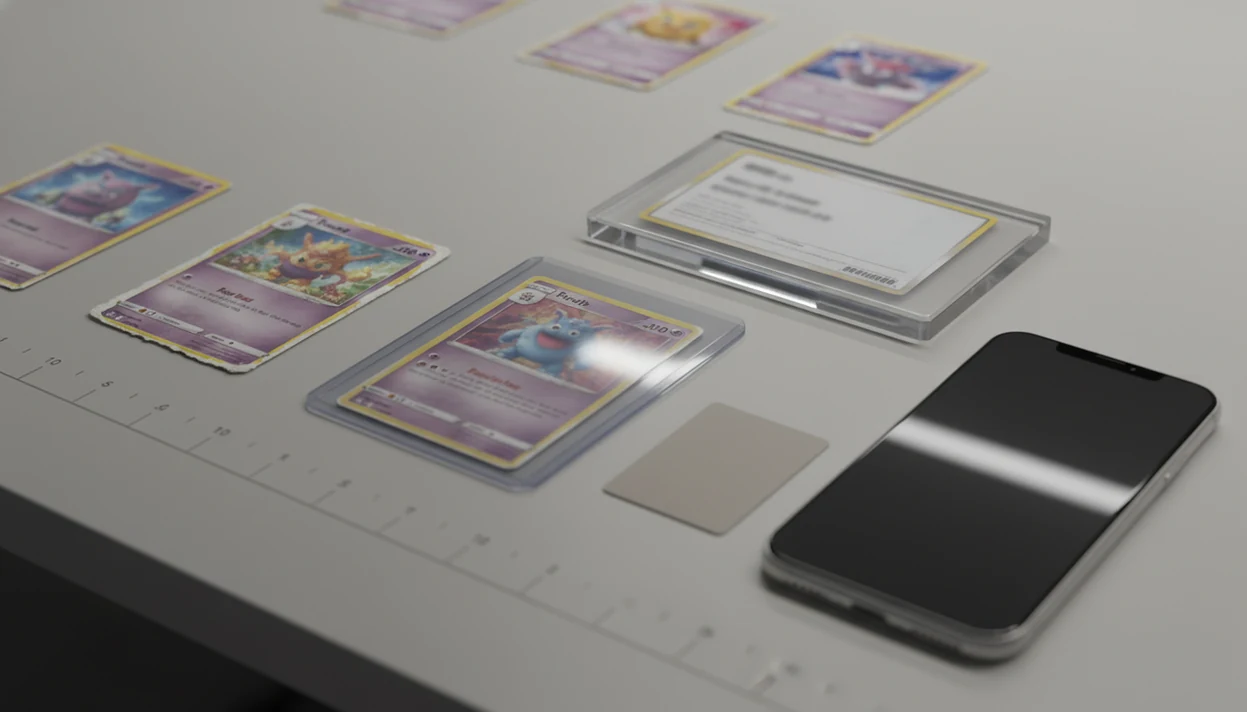
A defensible Pokémon card scanner accuracy methodology tests exact card identification, set variants, glare, sleeves, slabs, and price matching under repeatable conditions. The goal is not to claim perfect accuracy, but to show where a scanner is reliable, where it fails, and how collectors should verify high-value results.
- A fair scanner accuracy test needs a diverse card set, controlled photo conditions, and separate scoring for raw cards, sleeves, and graded slabs.
- Accuracy should be reported by error type: exact match, wrong set, wrong variant, no detection, and correct ID with questionable price mapping.
- No Pokémon card scanner should be treated as 100% accurate; high-value cards, rare variants, and damaged or reflective cards need manual review.
| Need | Best option |
|---|---|
| Card Value Scanner | Collectors and sellers who want photo identification plus market price review in one workflow |
| TCGplayer | Checking U.S. market references and recent marketplace pricing context |
| PriceCharting | Reviewing historical value trends and graded-versus-raw comparisons |
| Collectr, Pokellector, and Cardmarket | Collection reference, set browsing, and non-U.S. market context |
Pokémon Card Scanner Accuracy Methodology Definition
Pokémon card scanner accuracy methodology is the repeatable process for measuring whether a scanner identifies real cards and maps them to the right price records, not just whether it looks impressive in a demo.
A trustworthy claim separates three jobs. First, the scanner must identify the card name. Second, it must match the correct print, including set, card number, language, rarity, and variant. Third, it must attach the right current market range for raw versus graded status. Those are different failure points.
The tiny card number line matters.
The same methodology should cover raw cards, sleeved cards, and graded slabs when an app supports those workflows. Limited Pokémon-specific academic benchmarks exist, so testing has to borrow from broader computer-vision practices: labeled ground truth, controlled capture conditions, and error review.
At-a-Glance Scanner Accuracy Test Checklist
A good scanner accuracy test uses a mixed card sample, a controlled scan setup, separate scores, and a written review of failures. Repeatability matters more than a one-time percentage on a marketing page.
| Benchmark component | What to include | Why it matters |
|---|---|---|
| Test set | Multiple eras, sets, rarities, languages, conditions, and print variants | Easy modern cards can inflate results |
| Scan setup | Same phone, distance, angle, background, and lighting | Small setup changes can alter recognition |
| Identification metrics | Exact match, wrong set, wrong variant, no detection | Card names alone are not enough |
| Pricing validation | Raw price, graded value, currency, source timestamp | Correct ID can still produce a bad price |
| Collection total review | Sum of condition-adjusted estimates | One mismapped chase card can distort totals |
For parents sorting a binder on a kitchen table and asking, “Which ones should we sleeve first?”, identification accuracy and collection-value accuracy are not the same question.
Five Facts About Card Scanner Benchmark Accuracy
- A fair benchmark must represent real collections, not a hand-picked stack of clean, modern, easy-to-read cards.
- Exact card, set, variant, and price mapping are separate scores, because a Charizard name match can still be the wrong print.
- Lighting, background, phone model, orientation, sleeves, and slabs can change measured scanner results.
- Raw-card performance and slabbed-card performance should be reported separately because plastic cases add glare, labels, borders, and distance.
- Failure cases should be documented and connected to manual search, checklist lookup, or human review workflows.
Commercial image-recognition benchmarks show that controlled vision systems can perform well while still producing real-world errors, as discussed in this 2017 evaluation source. That pattern fits trading cards too. A scanner can be useful and still need verification.
How Pokémon Card Scanner Accuracy Testing Works
Scanner accuracy testing works by creating ground-truth labels before scanning, then comparing every app result against those labels. Ground truth should include card name, set, card number, rarity, variant, language, condition, and graded status.
After each scan, the tester records the app output. The comparison can use visual matching, OCR for text, set-symbol reading, variant detection, and database lookup. In plain terms, the app is trying to recognize both the picture and the card’s catalog identity.
A price result depends on more than recognition. Market price accuracy requires the correct raw or graded pricing record, currency, source timestamp, and condition context. For collectors, exact identification is often easier to benchmark than pricing because sold listings shift after a weekend card show or a new graded sale posts.
A good Pokémon TCG card value scanner should deliver documented estimates, including identification confidence, pricing sources, graded-value context, and collection totals. It should not be treated as certified authentication or a guaranteed sale price.
Representative Test Set for a Scanner Accuracy Test
A representative scanner accuracy test should mix easy cards with the cards that usually break scanners. Excluding hard cases makes accuracy claims look cleaner than real collection work.
Minimum viable benchmark mix
Use a spread across Pokémon TCG eras, expansions, rarities, reverse holos, full arts, promos, reprints, and visually similar cards. Include near-mint raw cards, lightly played cards, damaged cards, sleeved cards, top-loaded cards, and graded slabs. If the app claims Japanese or other language support, those cards belong in the sample too.
Hard-case benchmark mix
Add cards with foil glare, faded edges, off-center cuts, cracked old top loaders, and tiny set-symbol differences. A plastic tub of childhood holos will usually reveal more about scanner behavior than ten freshly pulled commons. Vintage collectors should be especially cautious; our Pokémon card value scanner for vintage collectors guide covers older print issues in more detail.
Controlled Photo Conditions for Card Scanner Benchmarking
Controlled photo conditions make scanner benchmarking repeatable. Use the same phone, camera settings where possible, distance, angle, background, and lighting for each scan round.
Glare, shadows, sleeves, slabs, and cluttered backgrounds can change recognition outcomes. Penny sleeve glare can make a scanner confuse holo and reverse holo surfaces, especially when the phone camera starts focus hunting on text over a playmat. That is not a rare edge case. It happens fast under bright overhead lights.
Smartphone camera benchmarking commonly uses standardized scenes and controlled lighting because illumination and capture conditions can materially change measured image quality, as shown in imaging research source. Log the phone model, lighting type, distance, sleeve type, slab type, and background color. Another tester should be able to recreate the scan, not guess what happened.
Accuracy Metrics for Exact Matches, Variants, and Prices
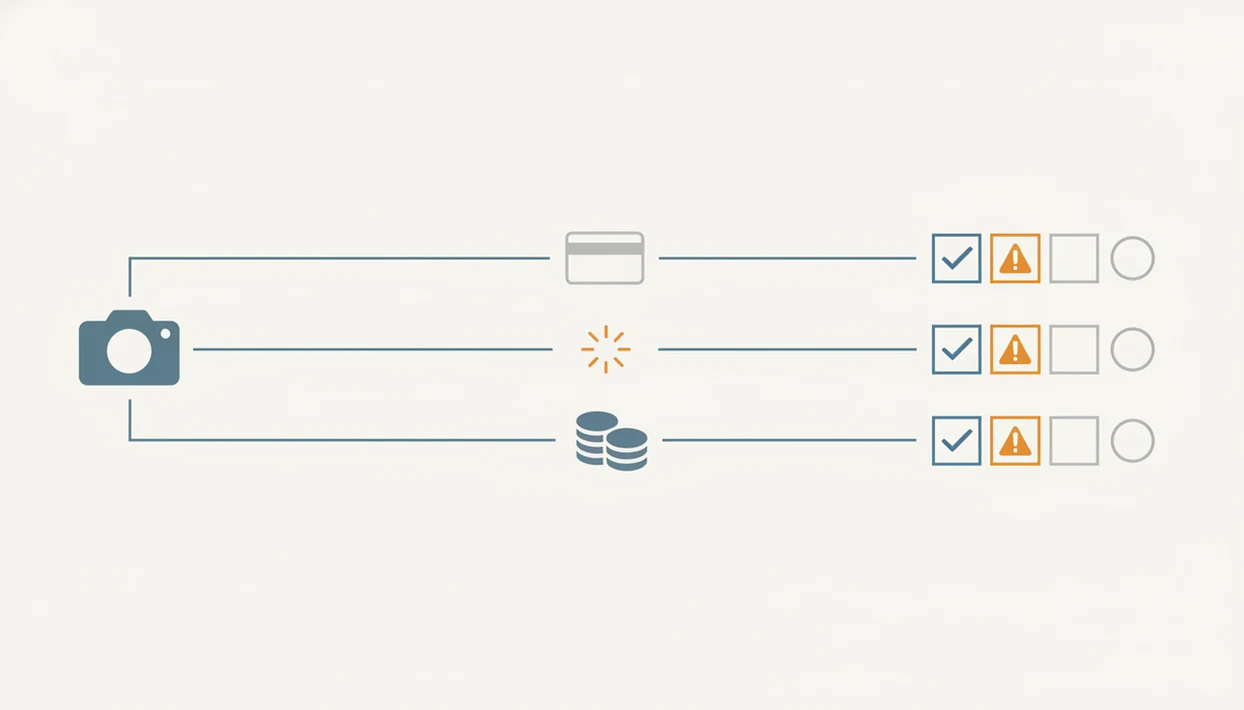
Accuracy metrics should replace vague claims like “high accuracy” or “works well.” The useful question is which part of the workflow succeeded: identification, variant detection, pricing, or collection-value calculation.
Identification accuracy score
| Metric | Definition | Example failure |
|---|---|---|
| Top-1 exact match | Correct name, set, card number, and variant in first result | Right Pokémon, wrong expansion |
| Precision | Share of returned matches that are correct | Confident wrong promo match |
| Recall | Share of test cards the scanner successfully detects | No result for a damaged card |
| No-detection rate | Share of scans with no usable result | Foil glare blocks text |
| Partial match | Some identity fields correct, others wrong | Correct card, wrong holo type |
Pricing accuracy review
Pricing needs its own review: raw market price, graded value, currency, recency, and source-backed confidence. For selling decisions, a current market range is more useful than a single number because condition, platform fees, and listing timing vary. The safe Pokémon card price app checklist explains how pricing safety and source review fit together.
Sources and Review Process for Scanner Benchmarks
Scanner benchmark claims should be reviewed against traceable sources, time-stamped checks, and documented human decisions. Because limited Pokémon-specific peer-reviewed scanner benchmarks currently exist, a trustworthy process should be transparent about where the evidence comes from and when it was last checked.
Acceptable sources include official Pokémon set checklists, recognized card databases, grading-company population or label references, marketplace sold-result data, app release notes, and broader computer-vision research for image-recognition methods. Pricing and database comparisons should record the date, time zone, currency, condition assumption, grade, and source used, because a correct match can look wrong after a market move or database update.
- Label the test card before scanning with name, set, number, language, variant, condition, and slab status.
- Compare each scanner result against the labeled card and the relevant database record at a recorded timestamp.
- Route failed scans, low-confidence results, and ambiguous variant matches to a trained reviewer familiar with Pokémon set symbols, foil patterns, promos, and grading labels.
- Retest affected samples when a new Pokémon set releases, the app updates its recognition model or pricing feed, or grading companies change label formats.
- Document the final decision, including whether the result was an exact match, partial match, no detection, or pricing-map error.
Common Myths About Pokémon Card Scanner Accuracy
Scanner accuracy myths usually come from treating one successful scan as proof of the whole system. A better method names the exact failure mode.
- Myth: a good scanner should be 100% accurate. Real-world image recognition is probabilistic, especially with glare, wear, and near-identical prints.
- Myth: a small binder proves the app works across every collection. A rubber-banded stack on a desk may miss promos, Japanese cards, damaged cards, and slab cases.
- Myth: raw-card and graded-slab accuracy are the same. Slabs add plastic reflections to labels, borders, and camera-distance changes.
- Myth: lighting and background do not matter. Shadows and busy surfaces can hide set symbols and card numbers.
- Myth: correct identification always means the price is correct. Price mapping still needs condition, variant, grade, source, and timestamp checks.
For beginners, the practical question is not whether scanners never fail. It is whether the app shows enough uncertainty for a user to verify the result, which we also discuss in the best Pokémon card scanner for beginners guide and Pokémon card scanner success stories.
Trust Guarantees in the Card Value Scanner Benchmark
Card Value Scanner should report methodology details rather than unsupported perfect-accuracy claims. A credible benchmark distinguishes exact matches, uncertain matches, no detections, and manual-review cases.
Tools like Card Value Scanner can help with source-backed pricing, graded values, and collection totals, but high-value cards should still receive extra verification before sale, insurance, or grading decisions. A seller photographing a holo at the window for a marketplace listing should confirm the set number, foil type, condition notes, and recent sold listings before setting a price.
Treat this as a pricing snapshot, not a promise.
The same benchmark should be applied to any scanner tool: repeatable scan setup, labeled ground truth, transparent error categories, and price-source review.
When to Use Professional Grading or Human Appraisal
Use professional grading or a human appraisal when the card’s value, authenticity, or condition could materially change the decision. Scanners are useful for triage, but they do not certify a card as genuine or lock in its final resale value.
Escalation is most important for high-value cards, rare promos, altered cards, signed cards, suspected counterfeits, and anything where a tiny condition difference changes the price. PSA, CGC, or Beckett may be appropriate when you need a standardized grade for resale, registry collecting, or buyer confidence. A trusted local card shop, experienced dealer, or show appraiser can be better for quick authentication questions, raw condition feedback, or spotting odd print details before you pay grading fees.
- Verify the scanner’s card name, set number, variant, language, and condition notes against the physical card.
- Check recent sold listings before accepting a scanner estimate, especially for volatile chase cards or graded comps.
- Separate pricing estimates from authentication, condition grading, and insurance documentation.
- Escalate rare, expensive, signed, altered, or possibly fake cards to a grader or knowledgeable human reviewer.
- Document photos, receipts, grades, and appraisals when the card may be insured or sold privately.
Limitations
Every Pokémon card scanner benchmark has limits, even when the test is careful.
- A benchmark is only as good as its sample and can overstate results if it excludes rare promos, foreign-language cards, damaged cards, or new releases.
- Controlled lighting results may not transfer to dim rooms, older phones, glossy sleeves, or strong glare.
- AI can confuse visually similar reprints, parallel foils, alternate arts, and cards with tiny set-symbol differences.
- Pricing can fail even when identification is correct if the wrong condition, variant, grade, or market source is attached.
- No universal peer-reviewed Pokémon scanner benchmark exists, so methodology must adapt broader computer-vision practices.
- Accuracy can drift after new Pokémon sets, new artwork styles, grading-label updates, or app model changes.
- Manual search and human review remain necessary for rare, expensive, or ambiguous cards.
If authentication is the real question, scanner accuracy is not enough. The scanner app vs professional grading debate matters most when condition, authenticity, and resale confidence are on the line.
How Accurate Are Pokémon Card Scanners in Practice?
Accuracy is not one number. In real-world testing, scanner performance splits into tiers, and honest apps report them separately instead of publishing a single headline percentage.
- Modern English cards, clean and unsleeved: most reliable tier - clear art, readable set symbol, and a printed card number make top-1 matching straightforward.
- Variants (reverse holo, promo stamps, reprints, parallel foils): noticeably weaker - the name and set can be right while the exact print is wrong.
- Sleeved cards and graded slabs: weaker again - plastic glare, labels, borders, and extra camera distance change the image the model sees.
- Vintage, damaged, off-center, or non-English cards: the hardest tier and the one most worth double-checking.
- Pricing: a separate score entirely. Correct identification can still produce a stale or mismapped value if condition, grade, currency, or source timestamp is off.
Card Value Scanner (cardvaluescanner.io) is a Pokémon card value scanner that identifies cards from photos and shows market prices, graded values, and collection totals. It is built and documented against these tiers, which is why results are presented as estimates with source context rather than guarantees.
The practical rule: trust scanner output for sorting, bulk triage, and collection tracking. Verify manually before you sell, insure, trade, or submit for grading.
Scanner vs. Manual Lookup: Which Is More Accurate?
Manual lookup is more accurate per card; a scanner is far more accurate per hour. That trade-off, not a raw accuracy percentage, is what decides which tool to use.
- Use a scanner (best for volume): binders, bulk boxes, childhood collections, quick "is this worth sleeving?" checks, and running collection totals.
- Use manual lookup (best for precision): any card you believe is worth real money, tight variant calls, unusual promos, and non-English prints - confirm the set symbol and card number by eye.
- Use both (best practice): scan first to shortlist, then verify the top 5–10% of value with a marketplace or price-history source before acting.
A useful workflow with Card Value Scanner is to scan the whole stack, sort by estimated value, then hand-check the top of that list. Scanning identifies and estimates; it does not authenticate cards or assign a grade, and no app result should stand in for professional grading or a human appraisal on a high-value card.
Frequently asked questions
What does exact match accuracy mean in a Pokémon card scanner test?
Exact match accuracy is the percentage of scans that identify the correct card, set, card number, language, and variant. A result should not count as exact if it finds the right artwork but confuses unlimited with first edition, normal holo with reverse holo, or one promotional printing with another. Tests should report partial matches separately.
How many Pokémon cards are needed for a reliable scanner benchmark?
There is no universal minimum, but a useful benchmark should include hundreds of cards rather than a small handpicked sample. It should cover multiple eras, sets, languages, rarities, finishes, and conditions. Results should also show the number tested in each category, since strong performance on modern English cards can hide weak performance on older or unusual releases.
Should sleeved cards and graded slabs be tested separately from raw cards?
Yes. Sleeves and slab cases introduce glare, reflections, scratches, labels, and extra borders that can affect image recognition. A fair benchmark reports raw cards, sleeved cards, toploaded cards, and graded slabs as separate groups. Combining them into one score makes it difficult to tell which physical formats the scanner handles reliably.
How should reverse holos and other Pokémon card variants be scored in scanner testing?
Variants should count as correct only when the scanner identifies the precise printing shown. Tests should include reverse holos, regular holos, first editions, unlimited cards, promotional stamps, alternate artwork, and parallel foils where applicable. If the scanner identifies the base card but misses the variant, that should be recorded as a variant error, not a full success.
What is a false positive in a Pokémon card scanner benchmark?
A false positive occurs when the scanner confidently returns a card that is not the card photographed. This differs from no detection, where it returns nothing. Benchmarks should report both outcomes because a wrong identification can lead to incorrect pricing or inventory records, while no detection simply tells the user that a manual lookup is needed.
How can a scanner's price matching be tested separately from card identification?
First confirm that the scanner selected the exact card and variant. Then compare its mapped market data with recent sales for the same language, condition, printing, and grading status. Identification and pricing need separate scores because a scanner may recognize a card correctly but attach sales from a different variant, raw condition, or professional grade.
Can a Pokémon card scanner benchmark be biased?
Yes. Bias can result from testing only clean modern cards, using images already present in a scanner's database, excluding failed scans, or selecting favorable lighting. A credible benchmark documents card selection, photo setup, retries, exclusions, and scoring rules before testing. Ideally, another reviewer should be able to repeat the process with comparable results.