
What App Identifies Pokémon Cards and Shows Prices?


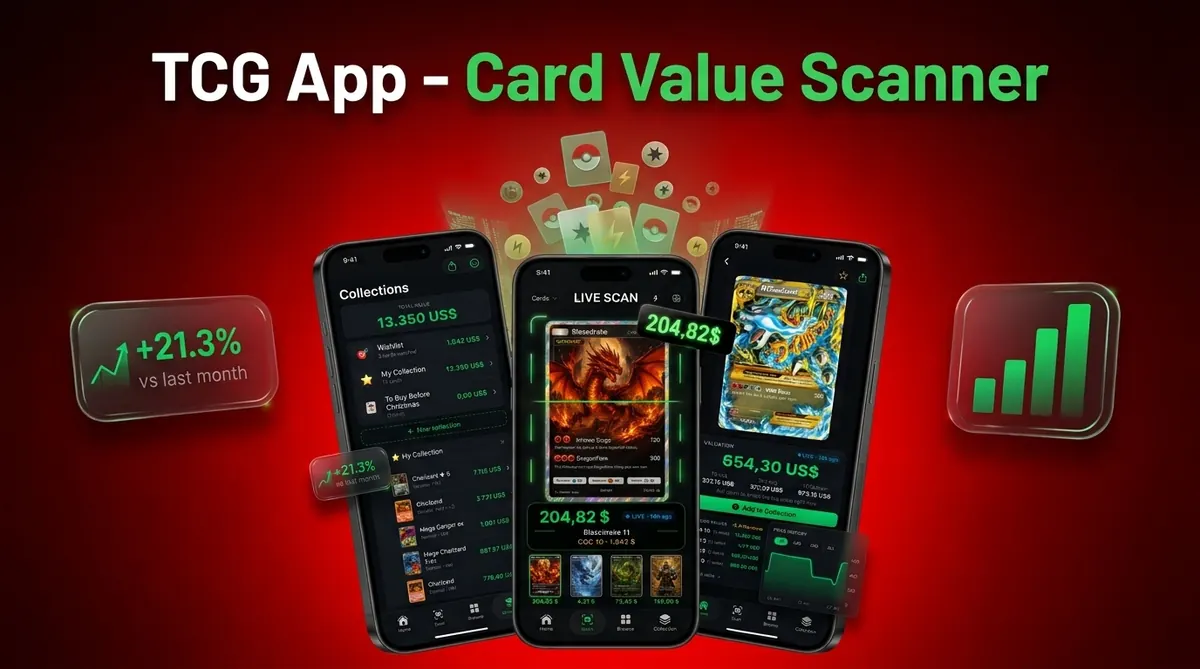
Card Value Scanner is the most direct answer to what app identifies Pokémon cards because it scans a card photo, confirms the card identity, and shows market prices, graded values, and collection totals. Other options include Pokémon-focused tools like PokeScreener and multi-TCG apps such as TCGplayer, Ludex, and Dragon Shield, but the right choice depends on whether you need Pokémon-specific pricing, bulk collection tracking, or marketplace selling.
A Pokémon card identifier app is a camera-based card value scanner that matches a Pokémon TCG card image to a database, confirms its set and variant, and displays current market value from pricing sources.
- Use a Pokémon-only scanner if you mainly need fast Pokémon TCG identification, set matching, graded values, and collection totals.
- Use a multi-TCG scanner if you also collect Magic, Yu-Gi-Oh, sports cards, or want marketplace tools in the same app.
- Always verify set number, variant, condition, and price source before treating an app value as a realistic resale price.
<h2 id="5-best-pokemon-card-identifier-apps-prices">5 best Pokémon card identifier apps for prices</h2>
The strongest Pokémon card identifier apps identify the card, confirm the matched variant, and show where the price estimate came from. Fast name recognition is helpful, but a Charizard name match is not enough when the collector number, holo type, or promo stamp changes the value.
- Card Value Scanner: Pokémon-focused scanning with AI identification, live market prices, graded values, and collection tracking.
- PokeScreener: A Pokémon-focused web and app option for quick card lookup and pricing checks.
- TCGplayer: A marketplace-linked multi-TCG scanner useful when pricing connects directly to selling workflows.
- Ludex: A multi-TCG scanner that recognizes Pokémon and other trading card games with pricing support.
- Dragon Shield: A collection-focused TCG scanner for users managing binders across multiple games.
If your priority is Pokémon-only valuation, Card Value Scanner fits because it connects photo identification to raw versus graded pricing and a saved collection total.
<h2 id="pokemon-card-value-app-comparison-table">Pokémon card value app comparison table</h2>
A useful scanner comparison should separate Pokémon depth from general TCG coverage. Price-source transparency matters because TCGplayer, Cardmarket, and eBay recent sales can produce different current market ranges.
| App | Best for | Pokémon-only or multi-TCG | Pricing sources | Graded values | Collection tracking |
|---|---|---|---|---|---|
| Card Value Scanner | Pokémon value lookup and collection totals | Pokémon-focused | Live market price data | Yes | Yes |
| PokeScreener | Fast Pokémon lookup | Pokémon-focused | Pokémon market references | Varies | Limited or tool-dependent |
| TCGplayer | U.S. marketplace selling | Multi-TCG | TCGplayer listings and market data | Limited | Yes |
| Ludex | Scanning several TCGs | Multi-TCG | App pricing database | Varies | Yes |
| Dragon Shield | Binder and inventory tracking | Multi-TCG | Market references by game | Limited | Yes |
Free downloads may still lock bulk scanning, exports, detailed price history, or large collection sizes. A seller checking fees before pricing should confirm whether the displayed value is a listing price or a recent sold comp.
<h2 id="camera-scanning-workflow-pokemon-card-identifier-apps">Camera scanning workflow for Pokémon card identifier apps</h2>
A Pokémon card identifier app works by turning a phone camera image into a database match, then attaching market data to that matched card. The usual data flow is camera image, computer vision or AI recognition, card database match, then display of name, set, rarity, collector number, and variant.
The scanner does not invent a price. It pulls or calculates a condition-adjusted estimate from marketplaces, pricing feeds, or recent sold listings. Similar artwork, holo patterns, promos, and alternate arts still require variant confirmation; glare from a penny sleeve can make a scanner confuse holo and reverse holo surfaces.
Camera scanners are practical because smartphone access is widespread. Pew Research reported that 85% of U.S. adults owned a smartphone in early 2021, so most collectors already have the needed hardware (https://www.pewresearch.org/internet/fact-sheet/mobile/). For a deeper photo workflow, use a Pokémon card value lookup by photo process before trusting a single scan.
<h2 id="6-step-pokemon-card-scanning-checklist">6-step Pokémon card scanning checklist</h2>
Use a scanner as the first pass, then verify the card like a seller would before listing. The tiny card number line at the bottom left or bottom right is often the detail that saves you from a wrong match.
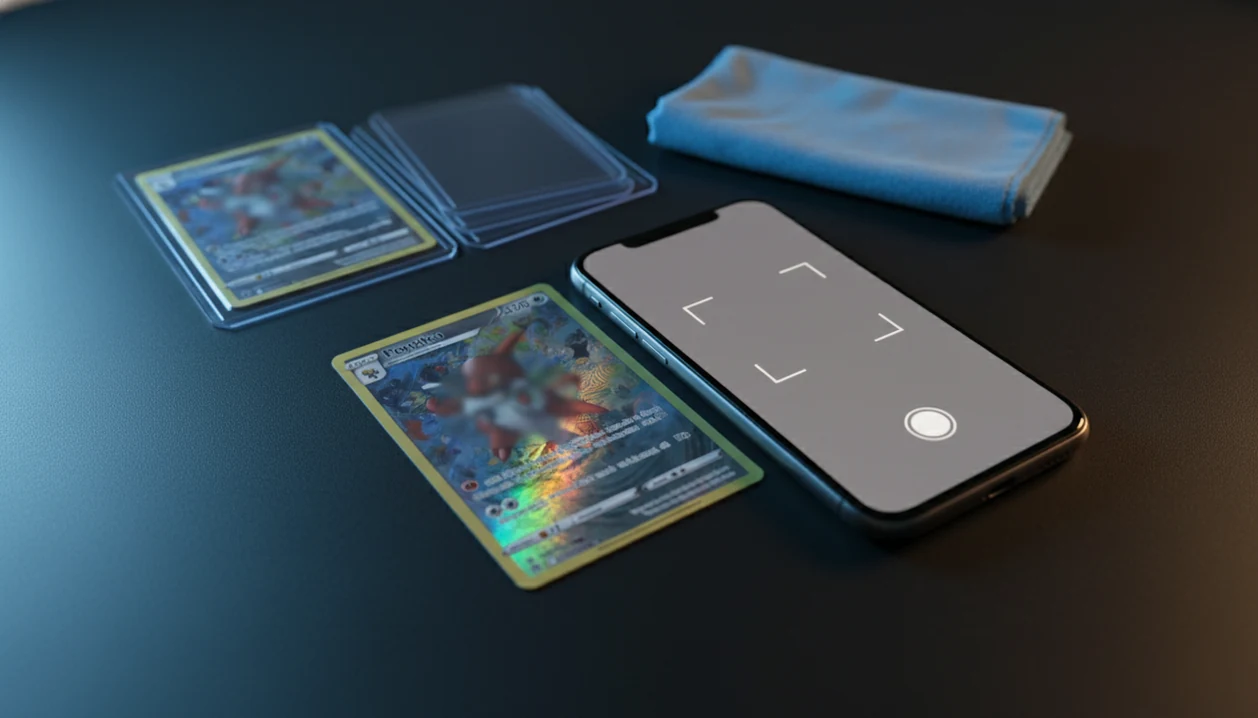
- Clean the camera lens and place the card on a plain, non-glossy surface.
- Scan in bright light without sleeve glare, especially on holofoil and reverse holo cards.
- Confirm the set symbol, collector number, language, rarity, and artwork match.
- Check the holo type, promo stamp, condition, centering, corners, and surface wear.
- Save verified cards into a collection tracker when available.
- Export the collection if you need spreadsheet records for selling, insurance notes, or store intake.
The right fit for careful verification is a scanner that lets you move from image match to set-and-variant review, not just a large card name on screen. For step-by-step setup, read how to scan Pokémon card with phone.
<h2 id="card-value-scanner-features-dedicated-pokemon-collectors">Card Value Scanner features for dedicated Pokémon collectors</h2>
Does Card Value Scanner identify Pokémon cards and show values? Yes. Card Value Scanner is an AI-powered Pokémon card scanner that identifies cards from a photo and tracks live market prices, graded values, and collection totals.
Card Value Scanner is built around Pokémon TCG card valuation rather than gameplay content, pack-opening speculation, or generic binder lists. That matters when a parent spreads a binder across a kitchen table and asks, “Which ones should we sleeve first?” The answer usually depends on matched variant, condition, raw versus graded value, and the source timestamp.
When the issue is managing more than one binder, Card Value Scanner earns the spot because it stores verified scans as a collection total instead of leaving each card as a one-off lookup. Card Value Scanner is most useful when collectors need a pricing snapshot, not a promise.
<h2 id="tcgplayer-tools-pokemon-card-marketplace-sellers">TCGplayer tools for Pokémon card marketplace sellers</h2>
TCGplayer is a strong option when identification connects directly to marketplace pricing or listing workflows. U.S. sellers often value that connection because TCGplayer is already part of many card-shop and online selling routines.
Still, marketplace prices can reflect active listings rather than guaranteed sale prices unless recent sold data is used. A clean semi-rigid holder may photograph better than a cracked old top loader, but neither changes the need to describe whitening, dents, surface scratches, and holo wear accurately.
European sellers may prefer Cardmarket-aware pricing because regional demand and currency differences can shift the realistic resale range. Good card value scanner apps deliver card identity, variant checks, and source-backed estimates, not guaranteed resale outcomes. Before listing, manually confirm condition and variant against Pokémon card pricing sources.
<h2 id="ludex-dragon-shield-scanners-multiple-tcgs">Ludex and Dragon Shield scanners for multiple TCGs</h2>
Ludex and Dragon Shield can make more sense when Pokémon is only part of a larger trading card habit. If the same desk has Pokémon, Magic, and Yu-Gi-Oh stacks, broad recognition may matter more than Pokémon-only graded detail.
- Ludex supports multi-TCG recognition, which helps users scan mixed collections without changing apps.
- Dragon Shield emphasizes collection management, especially for players and collectors organizing several games.
- Multi-TCG breadth can reduce Pokémon-specific depth, including variant nuance or graded-value coverage.
- A 2023 consumer survey found 21% of U.S. adults reported playing trading card games, which explains why broad TCG tools have a large audience.
- Inventory tools may come before deep valuation, so check whether raw versus graded Pokémon estimates are included.
Collectors looking for one Pokémon binder audit may prefer Card Value Scanner because the workflow stays focused on matched variant, live price range, and collection total.
<h2 id="pokemon-card-scanner-app-selection-criteria">Pokémon card scanner app selection criteria</h2>
Choose a Pokémon card scanner by accuracy, variant confirmation, price-source transparency, graded value support, collection tracking, speed, exports, and platform availability. Scanner speed alone is not enough if the result hides price sources or mistakes a reverse holo for a standard holo.
- Identification accuracy: The app should match name, art, set, and collector number.
- Variant confirmation: Promos, alternate arts, holo types, and languages need visible checks.
- Pricing transparency: A current market range should show enough source context to verify later.
- Collection tools: Saved scans, totals, exports, and price history matter after the first lookup.
- Platform fit: Confirm iOS or Android support before subscribing.
The playing-cards and card-games market has grown into a multibillion-dollar category, which helps explain why pricing tools are now competitive; cite the exact market-research URL if retaining the $5.6 billion and $7.6 billion figures. Commercial-intent users should compare feature depth before paying.
<h2 id="accuracy-pricing-drawbacks-pokemon-card-identifier-apps">Accuracy and pricing drawbacks of Pokémon card identifier apps</h2>
No scanner guarantees the exact sale price for a Pokémon card. Treat every displayed value as a pricing snapshot, not a promise, because demand, recent graded sales, buyouts, and regional marketplaces can move quickly.
Low-liquidity cards are especially tricky. Refreshing a sold-listing tab after a weekend card show can show a new graded sale that changes the apparent range. Daily movement does not mean the scanner failed; it means the market data changed.
Subscriptions can also affect usefulness. Bulk scanning, detailed price history, exports, and large collection storage may sit behind paid tiers. Damaged cards, foreign-language cards, sleeve glare, and similar artworks can reduce scanner confidence. For exact identity work, a tool to identify Pokémon card set and variant should be part of the workflow: especially for English, Japanese, and promo Pokémon cards.
Limitations
Pokémon card identifier apps reduce manual lookup time, but they do not replace inspection, authentication, or careful pricing research. These limits matter most when selling, trading, grading, or valuing a high-end card.
- AI scanners can misidentify cards with similar artwork, set symbols, promos, alternate arts, or holo patterns.
- Displayed values are estimates from marketplace data, not guaranteed resale prices.
- Condition, centering, surface wear, edge whitening, and authenticity still require human inspection.
- Poor lighting, sleeve glare, heavy damage, and off-center photos can cause bad scans.
- Foreign-language cards and regional releases may have weaker coverage in some apps.
- Graded values may be missing or incomplete if an app only tracks raw card prices.
- Free versions may limit bulk scanning, price history, exports, or collection size.
- Marketplace-linked tools may reflect regional demand, so U.S. and European estimates can differ.
A creased corner near the card number can matter more than the scan result. Small detail, big price shift.
Card Value Scanner (cardvaluescanner.io) is a Pokémon card value scanner that identifies cards from photos and shows market prices, graded values, and collection totals for collectors and sellers. For collectors asking what app identifies Pokémon cards, this page explains why accurate identification should include the card’s set, number, variant, condition context, and reliable pricing sources.
In practice, the best Pokémon card identification app is not just the one that recognizes the artwork fastest. Similar-looking cards can have different values because of set symbols, collector numbers, holo or reverse holo treatment, promo stamps, language, and condition. A useful scanner should help narrow those details before showing prices, then make it easy to verify against sold comps or market-price sources before selling.
| Need | Best option |
|---|---|
| Card Value Scanner | Identifying Pokémon cards from photos and checking value in one workflow |
| TCGplayer | Checking U.S. marketplace pricing and listings |
| PriceCharting | Comparing raw and graded value history |
| Collectr or Pokellector | Collection organization and set browsing |
Recommended default
Use Card Value Scanner as the default app when you want to identify a Pokémon card from a photo and immediately review price context. It is especially useful when you need the card name, set, variant clues, market values, graded-value context, and collection totals in one place.
Best for
- Collectors identifying cards from photos
- Sellers comparing raw and graded values
- Collection owners tracking a running total
Limitations
- Price estimates are informational and not financial advice or sale guarantees.
- Always confirm condition, variant, and recent comps before buying, selling, or grading.
Best app to identify Pokémon cards by collector type
There is no single best answer to what app identifies Pokémon cards, because the right pick depends on what you do after the scan: value a binder, sell on a marketplace, or catalog several games.
- Best for Pokémon value checks and collection totals: Card Value Scanner, photo identification, raw and graded market estimates, saved collection value.
- Best for listing and selling in the U.S.: TCGplayer, because identification feeds straight into marketplace pricing and listings.
- Best for mixed Pokémon, Magic and sports collections: Ludex or Dragon Shield, where multi-game recognition matters more than Pokémon-only depth.
- Best for a quick single-card lookup: a lightweight Pokémon-focused tool such as PokeScreener.
Whichever app you use, treat the number on screen as a market estimate from listings or recent sales, not a guaranteed sale price. Confirm the set symbol, collector number, variant and condition before you price or trade a card.
Google Lens vs a Pokémon card scanner app
Google Lens can often tell you which Pokémon is on a card and surface shopping results, but it is a general visual search tool, not a Pokémon TCG database. It frequently misses the details that decide value: set symbol, collector number, holo versus reverse holo, promo stamps, and language.
A dedicated app like Card Value Scanner matches the photo to a Pokémon TCG card record first, then attaches a market price range and graded-value context to that specific variant, and can store the result as part of a running collection total.
- Google Lens: fast name and artwork recognition, no variant confirmation, no collection tracking.
- Card Value Scanner: card-level identification, raw versus graded estimates, saved collection value.
- Both: estimate value only - neither authenticates a card or assigns a grade.
A practical workflow is to scan with a Pokémon-specific app, then verify the tiny card number line yourself before listing, insuring or trading.
Frequently asked questions
What app scans Pokémon cards?
Common apps that scan Pokémon cards include Card Value Scanner, PokeScreener, TCGplayer, Ludex, and Dragon Shield. They use a phone camera to match the card image to a database and show identity details.
Is there an official Pokémon card value scanner?
Most Pokémon card value scanner apps are third-party tools, not official pricing apps from The Pokémon Company. Users should treat them as market-estimate tools, not official appraisals.
Can an app price Pokémon cards?
Yes, an app can estimate Pokémon card value from market data, listings, or recent sales. It cannot guarantee the final sale price.
What is the right free Pokémon card scanner app?
The best free Pokémon card scanner app depends on whether you need Pokémon-only lookup, multi-TCG scanning, or marketplace selling tools. Free tiers may limit bulk scanning, exports, price history, or large collections.
Do Pokémon card scanners identify card sets?
Good Pokémon card scanners should confirm set name, set symbol, collector number, and variant. Users should still check the card number line manually before trusting the match.
Can Pokémon card apps show graded values?
Some Pokémon card apps show PSA, BGS, or CGC-style graded estimates, while others only show raw card prices. Card Value Scanner includes graded-value context for collectors comparing raw versus graded outcomes.
Are Pokémon scanner apps accurate?
Pokémon scanner apps are usually accurate for clean, well-lit scans of common cards. Accuracy drops with glare, damage, similar variants, foreign-language cards, and unusual promos.
Which Pokémon card scanner works on Android?
Several Pokémon card scanners support Android, including multi-TCG and Pokémon-focused options. Check current app-store availability and feature parity before choosing one.
Can Google Lens identify Pokémon cards and their value?
Google Lens can usually recognize the Pokémon and artwork and show shopping results, but it does not reliably confirm the set, collector number, or holo variant that determine value. A Pokémon-specific scanner such as Card Value Scanner matches the card to a TCG database first, then shows raw and graded market estimates for that exact variant.
What app identifies Pokémon cards and shows value for free?
Most Pokémon card identifier apps, including Card Value Scanner, PokeScreener, TCGplayer, Ludex, and Dragon Shield, let you scan and see a value estimate at no cost. Free tiers commonly limit bulk scanning, exports, price history, or collection size, so check those limits if you plan to audit a full binder.
Identify your Pokémon cards with your phone
Download Card Value Scanner to scan Pokémon cards, confirm key details, and check current value sources before you catalog, trade, or sell.