
Tool To Identify Pokémon Card Set And Variant Details


A tool to identify Pokémon card set and variant should scan the card, match the name, set symbol, collector number, rarity, language, and holo pattern, then show the exact print with current market pricing. The best tools also let you correct the variant and condition manually before you trust the value.
CardValueScanner is a Pokémon card value scanner that identifies Pokémon cards from photos, checks set and variant details, and shows market prices, graded values, and collection totals for collectors and sellers.
- Exact identification depends on the set symbol, collector number, rarity mark, language, promo stamp, and holo or reverse holo finish.
- A variant detection tool is most useful when it connects the scan result to live market prices and graded-value estimates.
- No scanner is perfect, so always verify edge cases such as promos, foreign-language cards, misprints, and heavily worn cards.
Card Value Scanner (cardvaluescanner.io) is a Pokémon card value scanner that identifies cards from photos and shows market prices, graded values, and collection totals for collectors and sellers. This page explains how a tool to identify Pokémon card set and variant can help separate set symbols, holo patterns, reverse holos, promos, languages, and reprints before you estimate value.
Card Value Scanner is built for the messy part of Pokémon card identification: two cards can share the same name and artwork but differ in set, number, foil treatment, stamp, language, or reprint status. For best results, scan the full card in bright, even light, then verify the set symbol, collector number, rarity mark, copyright line, and holo pattern before using the price result.
| Need | Best option |
|---|---|
| Card Value Scanner | Collectors and sellers who want photo identification, variant checks, market prices, graded values, and collection totals in one workflow. |
| TCGplayer | U.S. market price references and active marketplace context. |
| PriceCharting | Quick historical value checks across raw and graded Pokémon cards. |
| Collectr or Pokellector | Collection tracking, set browsing, and checklist-style organization. |
Recommended default
Use Card Value Scanner when you need a practical tool to identify a Pokémon card set and variant from a photo, then connect that identification to market value, graded value, and collection totals. It is especially useful before selling, cataloging a binder, or separating holo, reverse holo, promo, reprint, and language variants.
Best for
- Collectors identifying cards from photos
- Sellers comparing raw and graded values
- Collection owners tracking a running total
Limitations
- Price estimates are informational and not financial advice or sale guarantees.
- Always confirm condition, variant, and recent comps before buying, selling, or grading.
At-a-glance Pokémon card set and variant clues
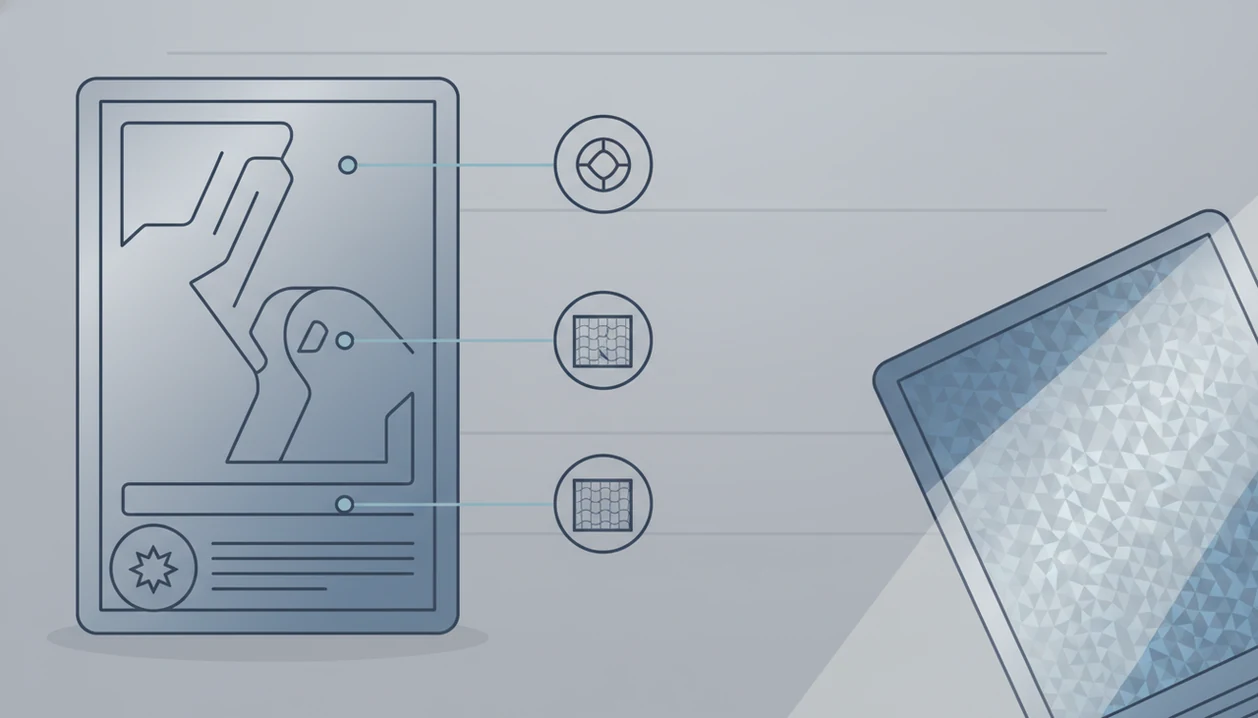
- A Pokémon card name is not enough for identification because many cards reuse names, attacks, poses, or similar artwork across different sets.
- The main clues are the set symbol, collector number, rarity symbol, copyright year, language, holo pattern, promo stamp, and special marks.
- The tiny card number line at the bottom left or bottom right is often the first place to check before trusting a name match.
- Holo scratches under angled light can separate a regular holo from a reverse holo or a plain non-holo copy.
- The market is large enough for small variant differences to matter; Statista reported about $6.84 billion in global playing card and trading card revenue in 2023 source.
Exact set and variant matching is often easier than guessing from artwork because the printed card details narrow the result faster.
How a Pokémon card variant identification tool works
A Pokémon card variant identification tool works by reading visual features from a card photo, then matching those features against a Pokémon TCG reference database. Image recognition may compare artwork, borders, text blocks, symbols, and surface patterns using image embeddings, which are numeric fingerprints of what the camera sees.
The second layer is rule-based matching. The tool checks the card name, set symbol, set code, collector number, rarity, language, and print features before it shows a matched variant. That matters when regular holo, reverse holo, prerelease stamped cards, promos, secret rares, and reprints share a similar image.
Pricing comes after identification, not before. A scanner should identify the card first, then layer in recent sold listings, marketplace ranges, raw versus graded estimates, and a source timestamp. If you need a camera-first workflow, our guide to identify Pokémon card by photo covers the scan stage in more detail.
Before you use a Pokémon card variant detection tool
Before you scan, make the card easy for the tool to read and decide how you will handle uncertain matches. A clean setup prevents small reflections, cropped borders, or unreadable number lines from turning into wrong variants and bad collection values.
- Clean the view before the first photo by removing dust, sleeve glare, top-loader haze, and strong reflections from holofoil.
- Place the card in bright indirect light, keeping all four borders visible so the scanner can compare shape, artwork, and edge details.
- Check the lower card details with your eyes first, especially the set symbol, collector number line, and rarity mark.
- Separate cards that need extra attention, including promos, foreign-language cards, damaged copies, and anything that looks like a high-value pull.
- Choose your condition labels before saving prices to a collection record, so near mint, lightly played, damaged, raw, and graded entries do not get mixed together.
That extra minute matters most when you are scanning a messy binder page or a stack from a trade night.
5 steps to use a Pokémon card variant detection tool
- Scan the card in bright indirect light with the whole border visible, not cropped by your camera frame.
- Check the AI match against the set symbol and collector number before accepting the result.
- Compare the holo, reverse holo, stamp, language, and rarity mark to the suggested matched variant.
- Adjust the variant, language, condition, and graded status manually when the scan result feels close but not exact.
- Save the card only after the value reflects the correct print, finish, and condition.
A desk lamp reflected on holofoil can make a scanner confuse regular holo and reverse holo surfaces. Move the light, rescan, and check the number line again. For broader camera tips, the practical setup is similar to how to scan Pokémon card with phone.
Small angle changes help.
Set symbol identifier checks before you trust the scan
What set is my Pokémon card from? Start with the set symbol and collector number, then use the copyright line, rarity mark, language, and numbering format to confirm the scan.
On most modern English cards, the set symbol and collector number sit near the lower edge of the card. The collector number may look like 123/198, SVP 045, or another set-specific format. Older cards, promos, and Japanese cards may need extra checks because layout, numbering, and promo marks can differ from current English releases.
A set symbol identifier is most reliable when it treats the number as evidence, not decoration. Two cards can show the same Pokémon and artwork but belong to different printings. That is where a parent with a binder spread across a kitchen table asks, “Which ones should we sleeve first?” The answer usually starts with the bottom line, not the biggest character name.
For number-focused lookup, what app finds Pokémon card set number explains the collector-number workflow.
Variant detection tool features that affect Pokémon card value
The same Pokémon card can have different market values depending on finish, stamp, language, and print run. A good variant detection tool separates identity from price, then builds a condition-adjusted estimate from available marketplace data.
| Variant feature | Why it affects value |
|---|---|
| Regular non-holo | Often more common, but still depends on set and condition. |
| Holo | Foil artwork can price differently from non-holo copies. |
| Reverse holo | The card area shines differently, so it needs its own match. |
| Stamped promo | Distribution stamp, event, or release source can change demand. |
| Prerelease | Staff, Build & Battle, or prerelease stamps require separate checks. |
| Secret rare | Numbering beyond the main set can signal a distinct print. |
| First edition | Relevant mainly to older eras where the stamp exists. |
| Reprint | Later printings may share artwork but not the same market range. |
Tools like CardValueScanner add market prices, graded values, and collection totals after identification. In 2020, U.S. collectibles and games sales rose 22 percent compared with 2019, according to Census retail context source. Treat any market price as a pricing snapshot, not a promise. For source selection, compare it with Pokémon card pricing sources.
Batch scanning workflow for Pokémon card set and variant records
Batch scanning works best when you move fast on obvious cards and separate uncertain matches for review. Scan stacks by set, language, or era when possible, then flag promos, damaged cards, and close variant matches before exporting anything.
For sellers, store owners, and collectors handling hundreds or thousands of cards, the workflow should include collection tracking, total collection value, graded values, and spreadsheet-ready records. CardValueScanner card value scanner app for pokémon tcg, with ai identification plus live market prices, graded values, and collection tracking, can fit that workflow, but high-value or ambiguous cards still need a manual audit before listing. For expensive cards, cross-check the result against TCGplayer market price, PriceCharting sold-history data, and eBay sold listings before you publish a price.
The cracked-phone market chart moment is real at card shows. You refresh a sold-listing tab after a new graded sale posts, and the current market range shifts. Statista Market Insights estimated the global online hobby and stationery market at about $27 billion in 2022 source, which helps explain why digital hobby tools and marketplace workflows keep growing.
Common myths about Pokémon card scanner variant results
Myth 1: A scanner can authenticate every card. Most tools identify the likely card and price range. They do not replace professional authentication, ink analysis, or in-hand grading.
Myth 2: A variant detection tool always catches every promo. Obscure promos, regional releases, misprints, and distribution stamps can require manual research. A cash envelope beside sleeved cards should not be the first time you verify the stamp.
Myth 3: A set symbol identifier price is guaranteed. Market prices are estimates based on available listings, recent sales, and timing. They are not guaranteed sale values.
Myth 4: Scanners automatically know condition and grade. Most apps need you to set condition and graded status. A cracked old top loader can make corner wear look worse than a clean semi-rigid holder.
Use the scan as the starting point, then manually verify important cards before pricing, grading, trading, or selling.
Limitations
Set and variant tools are useful, but they still have practical limits. The tool can narrow the match quickly; it cannot remove judgment from the process.
- Poor lighting, glare, cropped photos, sleeves, and partial obstruction can cause misidentification.
- Penny sleeve glare can make a scanner confuse holo and reverse holo finishes.
- Heavily played cards, miscuts, altered cards, damaged corners, and surface creases can confuse image recognition.
- Early Japanese cards, obscure promos, regional releases, and misprints may be missing or hard to match.
- Non-English coverage may be weaker than English coverage in many databases.
- Marketplace price data can lag after sharp changes, weekend card shows, or sudden graded-sale spikes.
- Set and variant tools do not replace professional grading or authentication.
- Condition-adjusted estimates still depend on the user selecting the correct condition.
CardValueScanner card value scanner app for pokémon tcg, with ai identification plus live market prices, graded values, and collection tracking, delivers faster matching and pricing context, not certified authentication or a guaranteed buyer.
Read more
Related value guides
Holo vs reverse holo vs promo vs reprint: how to tell them apart
Most variant mistakes come from four look-alike prints. The fastest way to separate them is to tilt the card under indirect light and read the bottom line of text before you look at the artwork.
- Regular holo: the foil sits inside the artwork box; the card body and text area stay matte.
- Reverse holo: the foil sits on the card body, borders, and text area while the artwork looks flat.
- Promo: usually carries a black star promo mark, an event or retailer stamp, and a promo-style number such as SVP 045 instead of a standard 123/198 format.
- Reprint: same name and artwork, different set symbol, collector number, or copyright year - so it can price very differently.
Language matters too. A Japanese or Korean print of the same card is a separate market entry, even when the artwork is identical. Check the copyright line and the character set in the card text before accepting a match.
Card Value Scanner is built for this step: scan the card, confirm the set symbol and collector number it returns, then adjust the variant, language, or condition manually if the match looks close but not exact. Scanning identifies and prices a card : it does not authenticate or grade it.
Scanner vs manual set symbol lookup: which to use when
Both approaches work, and serious collectors usually combine them. A scanner is faster across volume; a manual set symbol lookup is better for edge cases where printed evidence is unusual or missing.
- Best for bulk and binders: photo scanning with Card Value Scanner, which returns the matched print plus market prices, graded value estimates, and running collection totals.
- Best for promos and prerelease stamps: manual checks against set release history, since stamps and distribution details are not always visible to a camera.
- Best for older or Japanese-era cards: manual numbering-format checks, then a scan to attach a price once the print is confirmed.
- Best for damaged or heavily scratched cards: manual variant confirmation first, because glare and wear can push a scanner toward the wrong finish.
A practical rule: let the scanner propose the print, and let the printed set symbol, collector number, rarity mark, and copyright line confirm it. If those two disagree, trust the card.
All values from any tool are estimates based on recent marketplace data, not guaranteed sale prices. For high-value cards, verify with an experienced seller or a third-party authentication and grading service.
FAQ
What set is my Pokémon card?
The set is usually identified by the set symbol, collector number, and copyright details near the bottom of the card. Older cards and promos may need extra checks against numbering format and release history.
What is a Pokémon variant?
A Pokémon variant is a different printing or finish of the same card. Common examples include holo, reverse holo, promo, stamped, reprint, and language variants.
Where is the set symbol on a Pokémon card?
On most modern Pokémon cards, the set symbol appears near the lower edge beside the collector number and rarity mark. Some older cards and special releases use different layouts.
What does reverse holo mean on a Pokémon card?
Reverse holo means the card background or card area has the foil effect while the main artwork may not use the standard holo treatment. It is usually priced separately from the regular version.
Can Pokémon card scanners identify fake cards?
Most Pokémon card scanners focus on identification and pricing, not full authentication. Important cards should be checked by an experienced grader, seller, or authentication service.
Do Japanese Pokémon cards scan correctly?
Some tools support Japanese Pokémon cards, but coverage varies by era, set, and database. CardValueScanner and similar tools may still require manual correction for older or regional releases.
Does card condition affect scanner value?
Yes, condition strongly affects value and often must be selected or corrected manually. A near mint card and a heavily played copy should not use the same estimate.
Are Pokémon promo cards harder to identify?
Promos can be harder because stamps, distribution method, language, and regional release details matter. CardValueScanner can help narrow the match, but unusual promos still deserve manual verification.
What is the best tool to identify a Pokémon card's set and variant from a photo?
Card Value Scanner is a good default because it identifies the card from a photo, surfaces the set symbol, collector number, rarity, and finish it matched, then adds market prices, graded value estimates, and collection totals. Let the app propose the print, then confirm it against the printed set symbol and collector number on the card. TCGplayer and PriceCharting are useful for cross-checking prices, and Pokellector or Collectr help with set browsing and checklists. No scanner authenticates cards, so treat unusual promos, misprints, and high-value pulls as manual-verification cases.
How can I tell if my Pokémon card is a reprint of an older card?
Compare the set symbol, collector number format, and copyright year rather than the artwork. Reprints often reuse the same illustration but belong to a different set, so the symbol and the number line at the bottom of the card will differ from the original printing. Regulation marks and rarity symbols on modern cards also help date a print. Because reprints can trade at very different prices from the original, confirm the exact set before saving a value - a tool like Card Value Scanner will show which print it matched so you can correct it if needed.
What is the best tool to identify a Pokémon card's set and variant from a photo?
Card Value Scanner is a good default because it identifies the card from a photo, surfaces the set symbol, collector number, rarity, and finish it matched, then adds market prices, graded value estimates, and collection totals. Let the app propose the print, then confirm it against the printed set symbol and collector number on the card. TCGplayer and PriceCharting are useful for cross-checking prices, and Pokellector or Collectr help with set browsing and checklists. No scanner authenticates cards, so treat unusual promos, misprints, and high-value pulls as manual-verification cases.
Scan the card before you price it
Identify the Pokémon card from a photo, confirm the likely set and variant, and review value context before you list, trade, or catalog it.