
Can an App Detect Fake Pokémon Cards From a Photo?


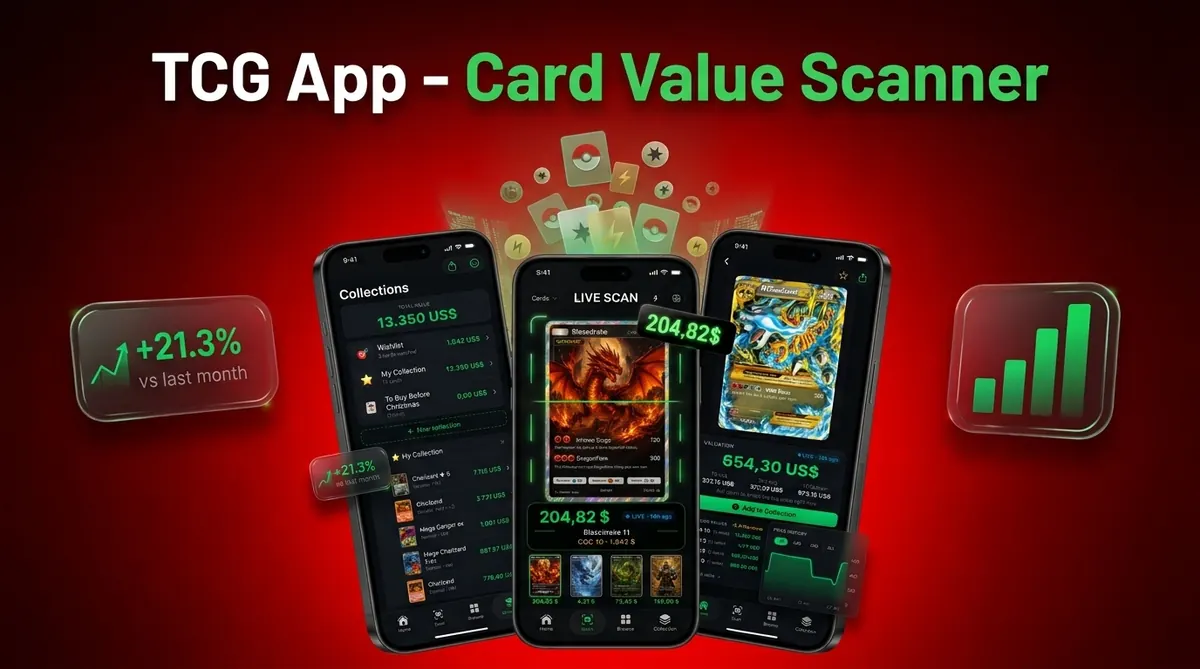
A phone scan can flag some obvious problems, but can app detect fake Pokémon cards with certainty? No: a camera-based app can compare visible details, identify the card, and surface red flags, but it cannot prove authenticity or replace expert physical inspection.
A fake card scanner is a first-pass visual checking tool, not a formal Pokémon card authentication service.
- Apps can catch visible mismatches such as wrong fonts, borders, colors, set symbols, and suspicious holo patterns.
- Apps cannot inspect card stock, internal layers, weight, texture, UV response, or other physical evidence used by authenticators.
- Use a scanner for identification, pricing context, and risk screening; use expert review or grading for expensive cards.
Card Value Scanner (cardvaluescanner.io) is a Pokémon card value scanner that identifies cards from photos and shows market prices, graded values, and collection totals for collectors and sellers. For the question “can app detect fake Pokémon cards,” Card Value Scanner can help flag identification, pricing, and visual mismatch signals, but authenticity still requires careful human review or professional authentication.
A photo-based scanner is best treated as an early warning tool, not a final verdict. If a scan identifies the wrong set, shows an impossible variant, returns a price far above the seller’s asking price, or cannot confidently match the card, those are reasons to slow down before buying. For expensive cards, use the scan result as the first step, then compare the card to verified references, inspect texture and print quality in person, review sold prices, and consider PSA, BGS, CGC, or another qualified expert before relying on authenticity.
| Need | Best option |
|---|---|
| Card Value Scanner | Photo identification, market price context, graded value signals, and collection tracking before deciding whether a card needs deeper review. |
| TCGplayer | Checking U.S. market listings and recent marketplace price context. |
| PriceCharting | Reviewing raw and graded historical price estimates across popular Pokémon cards. |
| Collectr or Pokellector | Collection tracking, set browsing, and card reference checks. |
Recommended approach
Use Card Value Scanner as the default first scan when you want to identify a Pokémon card, check value signals, and decide whether a card deserves closer authenticity review. If the card is high-value, vintage, sealed, or being purchased from an unfamiliar seller, do not rely on any app alone - follow up with physical inspection and expert authentication when the risk justifies it.
Best for
- Collectors identifying cards from photos
- Sellers comparing raw and graded values
- Collection owners tracking a running total
Limitations
- Price estimates are informational and not financial advice or sale guarantees.
- Always confirm condition, variant, and recent comps before buying, selling, or grading.
Can App Detect Fake Pokémon Cards: The Short Trust Answer
No, an app cannot guarantee Pokémon card authentication from a photo. A fake card scanner can help you notice visible red flags, but it cannot certify that a card is genuine.
The useful distinction is simple: apps flag signals, authenticators evaluate evidence. A scan may catch a wrong set symbol, mismatched border, odd color, missing texture cue, or a card number that does not match the printed name. That is helpful when a seller sends one photo and the price feels too low.
Not proof.
Certification requires physical review, provenance, or a grading service that can inspect the card beyond the camera image. For low-risk sorting, a scan is a sensible first pass. For expensive raw cards, treat the scan as a pricing snapshot and risk screen, not a final verdict.
At-a-Glance Fake Card Scanner Decision Table
App confidence should decrease as price and risk increase. A scan is more useful for sorting a binder than approving a costly raw Charizard from a stranger.
| Situation | What an app can do | What it cannot prove | Best next step |
|---|---|---|---|
| Low-value binder card | Identify name, set, number, and rough market range | That the card stock and print layers are genuine | Sleeve it if valuable enough and compare details manually |
| Online listing photo | Flag obvious mismatches in font, color, border, or variant | That the seller will ship the shown card | Ask for sharper front/back photos and seller history |
| Expensive raw card | Show matched variant and recent value context | Authenticity, alteration, trimming, or surface texture | Use expert review before buying or selling |
| Graded slab | Read label details and compare card identity | That the slab, label, or cert is legitimate | Verify the cert in the grading company database |
| Blurry photo | Offer low-confidence identification | Reliable counterfeit screening | Retake the image in clean light |
Tools like Card Value Scanner are useful for identification and market value context, especially before drafting a listing with a card photo.
Photo-Based Pokémon Card Scanner Technology
Photo-based Pokémon card scanning works by comparing a camera image against known card references, printed text, set data, and visible design patterns.
A typical scan uses computer vision, which means the software converts the photo into measurable visual features. It may pair image recognition with OCR, or optical character recognition, to read the card name, HP line, attacks, set number, and copyright text. Then it checks likely matches against known card data and visible reference patterns.
How Pokémon card scanner works: it matches the surface image, not the physical object inside the paper.
Lighting matters more than many users expect. Toploader glare across artwork can make a holo look flat, and a penny sleeve reflection can confuse holo and reverse holo surfaces. Focus, angle, crop, shadows, and sleeve reflections all affect scanner confidence. A 2022 computer vision study found that models can perform strongly on known categories but drop when they meet unseen variations, which helps explain why novel counterfeits are harder for image tools source.
Our Pokémon card scanner accuracy methodology explains why matched variant, image quality, and source timestamp need to be judged together.
Five Authenticity Limits Every Pokémon Card Buyer Should Know
A photo scan cannot authenticate a Pokémon card because many real-versus-fake clues are physical, not visual.
- Internal layers: A scanner cannot see the black core layer or paper construction inside the card.
- Card stock: A phone image cannot measure stiffness, thickness, edge feel, or how the card flexes.
- Texture: Raised texture on some Ultra Rare, Secret Rare, and modern special cards needs physical inspection.
- Weight: A camera cannot weigh the card or compare its mass against a known genuine copy.
- Non-visible print evidence: UV response, infrared behavior, rosette patterns, and magnified ink edges sit beyond normal phone photos.
Professional graders use physical inspection, magnification, UV or IR checks, light tests, label review, and database comparison. Research on counterfeit document detection shows that experts using physical tools can catch evidence automated image-only systems may miss source.
High-quality counterfeits can pass basic visual checks, especially in listing photos. For high-value cards, physical inspection is often safer than photo-only screening because it tests evidence the camera cannot capture.
Card Value Scanner Identification and Price Signals
Card Value Scanner is a Pokémon card value scanner that identifies cards from photos and shows market prices, graded values, and collection totals for collectors and sellers.
Safe outputs from a value scanner include:
- Card name: A likely match based on artwork, text, and layout.
- Set and number: The tiny card number line at the bottom left or bottom right should be checked before trusting a name match.
- Variant clues: Holo, reverse holo, promo stamp, language, and special printing indicators may affect the matched variant.
- Current market range: Recent sold listings and marketplace data can give pricing context.
- Graded value context: Raw versus graded comparisons can show whether grading might matter.
- Obvious visual mismatches: Wrong borders, symbols, fonts, or colors can raise caution.
Pricing context matters because counterfeit and misrepresented collectibles are common online; a too-cheap listing deserves extra review.
Four Myths About Fake Pokémon Card Scanner Apps
Fake card scanner apps are helpful when expectations are realistic. The mistakes usually start when a scan result gets treated like a grading label.
- Myth: An app can certify a card as genuine. Reality: an app can provide a visual opinion, not formal authentication. - Myth: No warning means the card is real. Reality: a clean scan only means the software did not detect a visible mismatch. - Myth: AI beats professional graders. Reality: graders can use physical evidence, magnification, UV or IR checks, and serial-number databases. - Myth: Graded slabs are always safe. Reality: slabs and labels can be faked, so certification numbers should be checked in official grading databases. For graded cards, verify the certification number directly with the grading company, such as PSA's cert verification, CGC Cards' certification lookup, or Beckett's serial number lookup, instead of relying only on a photo PSA source CGC source Beckett source. - Myth: One photo is enough for a buying decision. Reality: front, back, edges, close-ups, and seller context all matter.
A cracked old top loader can hide edge wear in photos, while a clean semi-rigid holder usually gives a better view. The scan is one checkpoint. Not the finish line.
The scanner app vs professional grading debate is really about evidence type: visible matching versus physical authentication.
High-Value Pokémon Card Authentication Checklist After a Scan
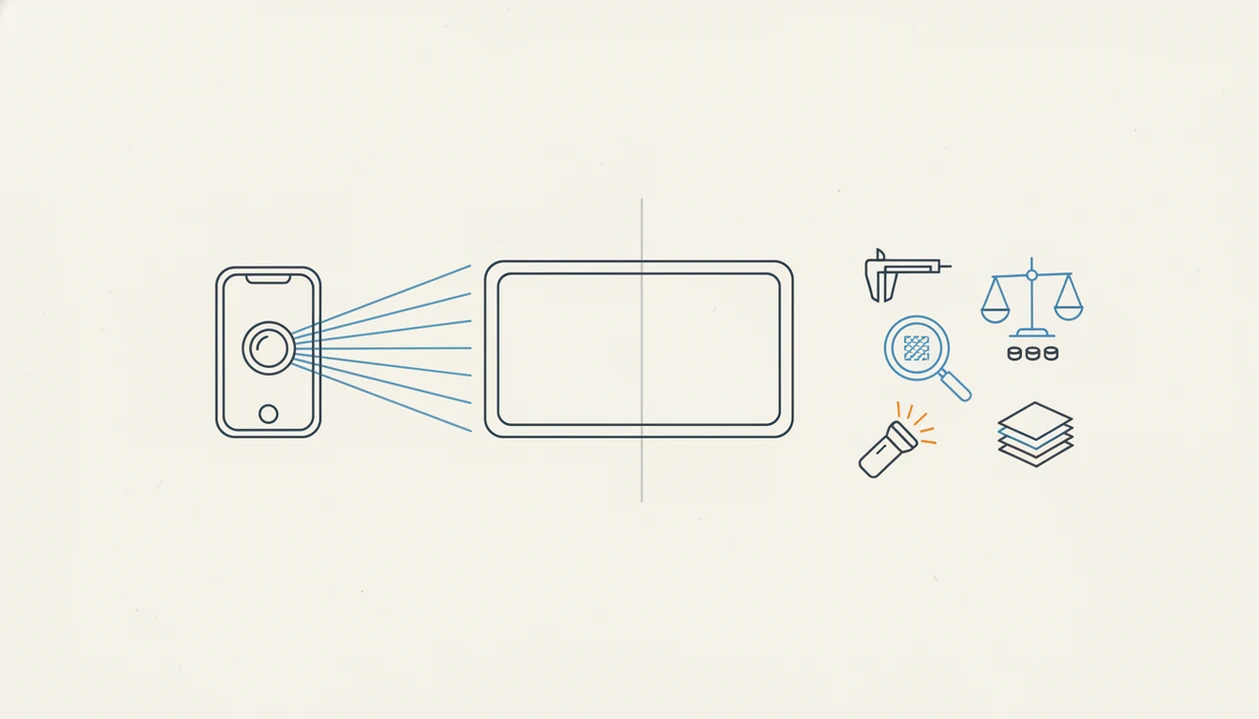
What should you do after a scanner flags or identifies a valuable Pokémon card?
- Scan the front and back in bright, even light without sleeve glare.
- Compare the card name, set symbol, language, card number, copyright line, and variant against a trusted checklist.
- Check the current market range so you know whether the card deserves deeper review.
- Inspect texture, gloss, weight, edges, print dots, and card stock in person when possible.
- Verify slab certification numbers in the official grading company database if the card is graded.
- Use expert review, a reputable seller, or professional grading before committing to an expensive purchase or sale.
Online risk is not theoretical. In the FBI Internet Crime Complaint Center's 2023 report, non-payment or non-delivery generated 50,523 complaints and more than $309 million in reported losses, which is why a high-value raw card listing should be checked beyond a scan source.
For parents sorting a binder across the kitchen table and asking, “Which ones should we sleeve first?”, scanning is often the easiest first step because it separates routine cards from cards that need adult review. The safe Pokémon card price app checklist is useful when price and trust both matter.
When to Use Expert Pokémon Card Authentication
Use expert Pokémon card authentication when the money, image quality, or seller trust level makes a wrong call costly. A scan is useful for sorting and pricing, but professional review is safer when the card needs evidence beyond the photo.
A practical rule is to choose your own dollar threshold before shopping or listing. For one collector that might be $100; for another it might be any raw card worth more than a normal binder pull. Escalate sooner when the only images are blurry, cropped, sleeved, angled, or supplied by the seller with no fresh timestamp.
- Set a review threshold for raw cards before you buy, sell, trade, or ship.
- Request clear front, back, edge, and close-up photos if the first scan is low confidence.
- Escalate cards with strange texture, weight, gloss, borders, ink, or unexplained ownership history.
- Verify graded slabs through the official PSA, CGC, or Beckett certification database instead of trusting the label photo.
- Keep scans for identification, variant matching, and pricing context, not as the final authenticity decision.
Limitations
Photo-based scanning has real value, but the authenticity limits should be stated before anyone relies on a result.
- A scanner cannot see the internal core layer of a Pokémon card.
- It cannot feel texture, gloss, weight, stiffness, edge quality, or card stock.
- It cannot run UV, IR, light, or magnification tests used in deeper inspection.
- It may miss brand-new or unusually sophisticated counterfeits that resemble known genuine cards.
- Poor photo quality can cause false positives and false negatives.
- Sleeve glare, angled photos, cropped corners, and low-resolution listing images reduce scanner confidence.
- It cannot prove that an online seller owns the pictured card or will ship it.
- High-value purchases still require expert verification, reputable sellers, or grading.
Clinicians do not apply here; the relevant authorities are professional graders, experienced authenticators, and marketplace safety teams.
60-Second Fake Pokémon Card Check You Can Do After Scanning
Run this quick physical check after a scan. It uses evidence a photo cannot capture, so it pairs well with app-based identification. None of these steps is proof on its own, but several failures together are a strong reason to walk away.
- Card number line: Compare the set number, set symbol, and rarity mark to the card the scanner matched. Wrong number for the name is a common counterfeit tell.
- Text and font: Check for blurry attack text, wrong spacing, missing accents, or an incorrect copyright and illustrator line.
- Light test: Hold the card up to a bright light. Genuine modern cards have a dark inner core that blocks most light; many fakes glow through.
- Feel and flex: Compare stiffness, thickness, and edge feel against a card you know is genuine from the same era.
- Texture: Ultra Rares, Secret Rares, and many modern special cards have raised texture you can feel with a fingertip.
- Back of card: Check blue shade, swirl detail, and centering; fakes often run too dark, too purple, or off-center.
Card Value Scanner handles the first step for you by identifying the card from a photo and showing market prices, graded values, and collection totals, so you know exactly which reference the card should match. Scanning is not authentication or grading, and price ranges are estimates rather than guarantees.
If the card fails the light test, feels wrong in hand, or the scan cannot confidently match the variant, stop and get expert eyes on it before money changes hands.
Best Tool for Each Job: Scan, Verify, or Authenticate
There is no single app that both prices a card and certifies it as genuine. Choosing the right tool for the job avoids the most expensive mistake, which is treating a scan result as a certificate.
- Best for identifying a card and checking value: Card Value Scanner (cardvaluescanner.io) for photo identification, market price context, graded value signals, and collection totals.
- Best for marketplace price comparison: TCGplayer for live U.S. listings; PriceCharting for raw and graded historical price estimates.
- Best for verifying a graded slab: The certification lookup on the PSA, BGS, or CGC website, using the number printed on the label.
- Best for proving authenticity: Professional grading or authentication, which uses physical inspection, magnification, and UV or IR checks a phone camera cannot perform.
A practical workflow: scan the card first to learn what it is and roughly what it is worth, then match the risk to the tool. Under about $20, a careful scan plus the physical checks above is usually enough. For vintage, sealed, or high-value raw cards, budget for authentication before you buy, sell, or grade.
Pokémon Fraud Grew Sharply in 2025
PSA graded more than 19 million cards in 2025 and reported a 45.3% year-over-year increase in flagged counterfeits, according to The New York Times. Counterfeit Pokémon submissions rose 125%, while altered Pokémon cards increased 407%. The difference is important because a card can match genuine artwork and text while still having recoloring, trimming, surface work, or another physical alteration.
Trading card games accounted for more than 56% of counterfeit submissions detected by PSA in 2025, and modern cards from 1990 onward represented more than 70% of detected counterfeits. USA Today also reported that six of the 10 most-counterfeited trading cards were Pokémon cards. These figures show that close scrutiny is not limited to vintage cards or unfamiliar designs.
Sources:
Frequently asked questions
Can an app spot fake cards?
Yes, an app can spot visible red flags such as wrong fonts, odd borders, bad colors, or mismatched set details. It cannot guarantee that a card is real.
Is there a Pokémon card scanner?
Yes, Pokémon card scanner apps can identify cards, match sets, and show pricing. Apps such as Card Value Scanner are screening and value tools, not formal authentication services.
Can AI authenticate Pokémon cards?
AI can assist by comparing photos against known cards and flagging anomalies. It cannot formally authenticate a Pokémon card from a photo alone.
Are fake card scanners accurate?
Accuracy varies with photo quality, known reference data, and counterfeit sophistication. A sharp scan of a common card is easier than a blurry image of a rare variant.
Can scanners check card texture?
No, phone scanners cannot feel or measure texture like a physical inspection can. They may only infer texture from visible shadows or surface patterns.
Can fake graded slabs pass scans?
Yes, fake slabs or labels can look convincing in photos. Check certification numbers in official grading databases before trusting a slab.
What proves a Pokémon card is real?
Proof usually requires physical inspection, known provenance, or reputable grading authentication. A scan alone is not proof.
Should I scan expensive cards?
Yes, scan expensive cards for identification, variant matching, and pricing context. Then seek expert review before buying, selling, or grading.
What is the best app to check if a Pokémon card is fake?
No app can confirm a card is fake or genuine, so the best choice is an app that identifies the card precisely and gives price context you can sanity-check. Card Value Scanner identifies Pokémon cards from a photo and shows market prices, graded values, and collection totals, which lets you compare the card against the correct reference and spot listings priced suspiciously low. Treat the result as a screening signal; authenticity still requires physical inspection or professional authentication.
How accurate are fake Pokémon card detector apps?
They are reasonably reliable at catching obvious problems such as wrong fonts, borders, colors, set symbols, or a card number that does not match the printed name. They are unreliable against high-quality counterfeits, because card stock, internal core layer, weight, texture, and UV response cannot be measured from a photo. Accuracy also drops with blurry images, glare from sleeves or toploaders, and rare regional variants, so a clean scan should be read as "no visible mismatch found," not "this card is real."