
Safe Pokémon Card Price App Checklist for Collectors
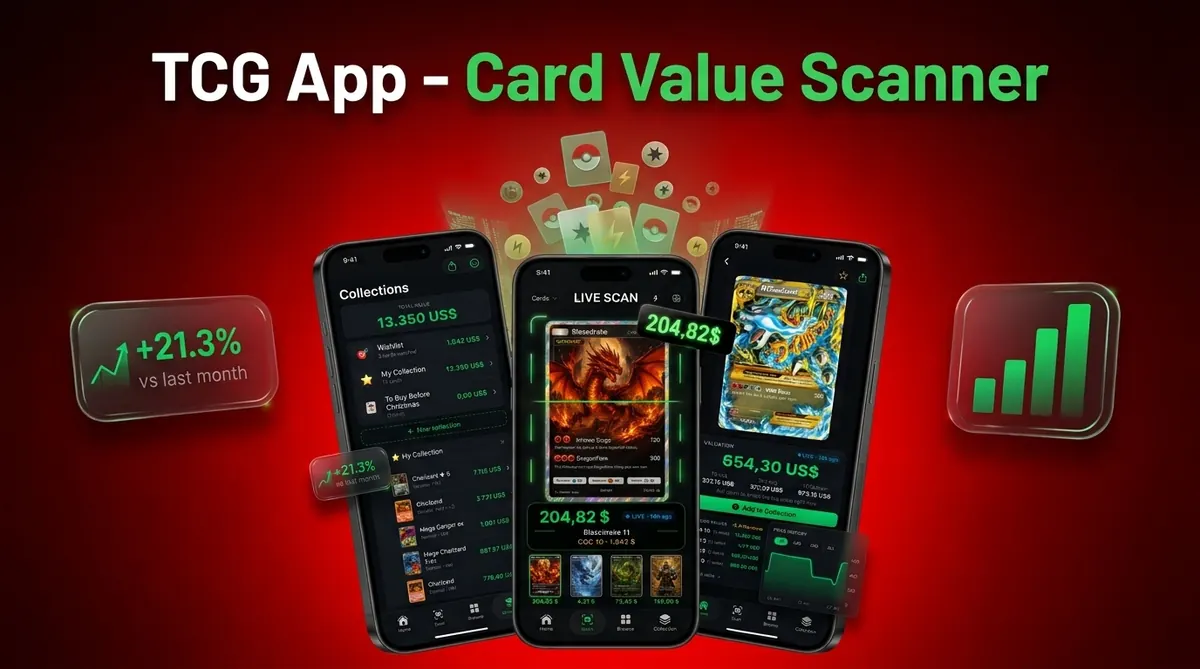
A safe Pokémon card price app should identify cards accurately, disclose price sources, request only necessary permissions, explain subscriptions clearly, and show uncertainty around market values. Use the checklist below before trusting any scanner with your collection data, payment details, or sale decisions.
A safe Pokémon card price app is a scanner or price checker that identifies Pokémon TCG cards, shows source-backed market values, protects user data, and avoids misleading pricing or subscription practices.
TL;DR
- Verify the app’s company name, support contact, privacy policy, app permissions, update history, and cancellation terms before scanning your collection.
- Treat price safety as market safety: stale, opaque, or unsourced prices can make you overpay, undersell, or misjudge graded cards.
- No scanner is perfect, so confirm high-value cards manually by set, collector number, variant, condition, and recent sold listings.
Card Value Scanner (cardvaluescanner.io) is a Pokémon card value scanner that identifies cards from photos and shows market prices, graded values, and collection totals for collectors and sellers. This page explains how to choose a safe Pokémon card price app by checking data sources, privacy practices, permissions, payment terms, and price uncertainty before you trust an estimate.
A safe Pokémon card price app should help you verify a card without pressuring you to treat one number as guaranteed value. In practice, collectors should look for clear photo-based identification, transparent market sources, condition notes, graded versus raw separation, exportable collection records, and privacy controls that do not require unnecessary access to contacts, location, or unrelated files.
| Need | Best option |
|---|---|
| Card Value Scanner | Collectors and sellers who want photo identification, market price context, graded value views, and collection totals in one workflow. |
| TCGplayer | Checking U.S. market pricing and marketplace context for many modern Pokémon cards. |
| PriceCharting | Comparing raw and graded Pokémon card value history, especially for cards with visible sales records. |
| Collectr, Pokellector, and Cardmarket | Collection tracking, set browsing, or international market comparison depending on the collector’s needs. |
Recommended safe default
Best for
- Collectors identifying cards from photos
- Sellers comparing raw and graded values
- Collection owners tracking a running total
Limitations
- Pokémon card prices change, and app estimates are not financial, legal, insurance, or professional grading advice. Confirm valuable cards with recent sold comps, condition review, and expert help when needed.
Safe Pokémon Card Price App Definition for Collectors
A safe Pokémon card price app is safe in four ways: it protects privacy, explains pricing, makes payments clear, and gives market data you can check. Scanner safety is not only about avoiding malware. Bad pricing data can also push a collector into a poor trade or a rushed sale.
Card Value Scanner is a Pokémon card value scanner that identifies cards from photos and shows market prices, graded values, and collection totals for collectors and sellers.
In practical terms, the app should help with scanning, price checking, raw versus graded review, and collection tracking without pretending the number on screen is final. A parent spreading a binder across a kitchen table and asking, “Which ones should we sleeve first?” needs a current market range, not a dramatic answer.
Treat this as a pricing snapshot, not a promise.
Five Safe Scanner App Facts Before You Install
- Reputable apps name price sources. Look for completed marketplace sales, TCGplayer, Cardmarket, eBay sold listings, graded-card datasets, or clearly described price aggregators. “Estimated value” without a source timestamp is weak evidence.
- Legitimate listings show real ownership. A safe scanner app should have a developer name, support email, privacy policy, website, and clear company identity. A copied screenshot set and no support path are warning signs.
- Feature claims should be specific. Good scanner claims describe concrete functions, such as AI identification, live market prices, graded values, and collection tracking, not guaranteed resale proceeds.
- Price app safety has three layers. Technical security protects account and device data. Financial safety covers billing and subscriptions. Market safety checks whether the app’s prices reflect current sold comps.
- Maintenance signals matter. Recent reviews, update history, requested permissions, and subscription terms show whether the app is still being worked on. A scanner that missed last year’s promos may miss this year’s variants too.
How a Safe Pokémon Card Price App Works
A safe Pokémon card price app usually starts with photo capture, then uses image matching or AI classification to match the card name, set, artwork, and collector number. The better workflow checks the tiny card number line at the bottom left or bottom right before trusting a name match. Image embeddings, which are visual fingerprints, help compare your photo against known card images.
After identification, the app should detect variant details such as holo, reverse holo, stamped promo, special art, language, and set release. Then it looks up prices from marketplaces, completed sales, price aggregators, or graded-card datasets.
The pricing screen should separate raw, near mint, graded, sold, listed, and average prices where possible. A clean data flow should collect only needed information, send scans over encrypted connections, and store only account or collection data the feature actually requires. The scanner beep in a quiet room is useful only if the match behind it is explainable.
Price App Safety Checklist for Sources and Market Data
Does the app name its price sources instead of only saying “estimated value” or “market price”? That question matters because a price without a source is hard to verify, especially on chase cards, promos, and low-volume graded sales.
Check whether the app references recognizable sources such as TCGplayer, eBay sold listings, Cardmarket, graded-card sales, or another named marketplace where relevant. Completed-sale data is usually safer than listing prices alone because listed prices show what sellers ask, not what buyers recently paid. For sellers, recent sold listings are often safer than active listings because they reflect actual buyer behavior.
Stale data can make you underprice a rare card after a weekend card show, or overpay for a hype-driven card after one viral post. Before relying on any app, compare several high-value scans against recent sold listings. Refresh the sold-listing tab once; prices do move.
Safe Scanner App Permissions and Privacy Signals
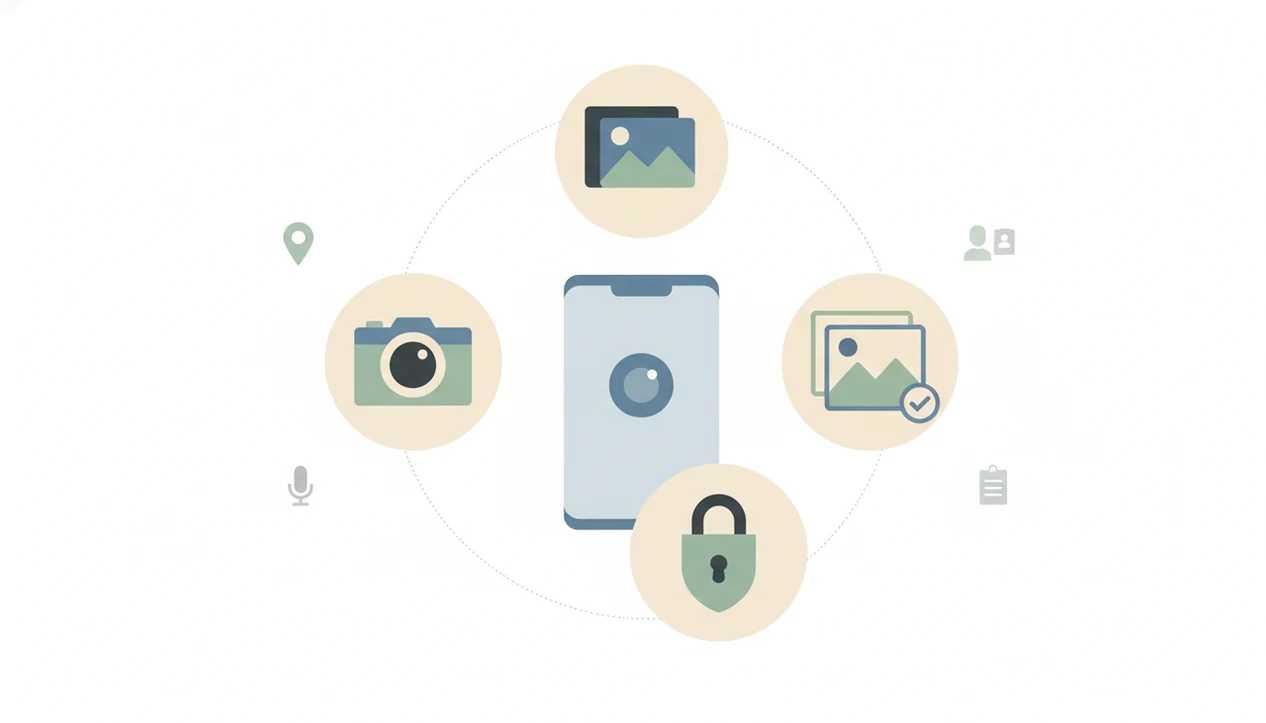
A scanner may reasonably need camera access, limited photo access, and optional account data if you save a collection across devices. It should explain anything beyond that. Contacts, microphone, precise location, and broad storage access deserve extra scrutiny unless the app gives a clear, card-related reason.
Privacy concern is not theoretical. Pew Research Center reported in 2019 that 79% of U.S. adults were concerned about how companies use data collected about them (https://www.pewresearch.org/internet/2019/11/15/americans-and-privacy-concerned-confused-and-feeling-lack-of-control-over-their-personal-information/). On Android, compare each requested permission with the app’s core scanning function before granting access.
Read the privacy policy for data sharing, ad tracking, account deletion, scan-image retention, and collection-data storage. The more valuable your inventory, the more sensitive that collection list becomes. A plastic tub of childhood holos may not feel like “data,” but a saved value total can still reveal a lot.
App store approval helps, but it does not prove strong privacy practices. For a deeper checklist, our Pokémon card scanner privacy guide covers photo handling and collection records.
Safe Pokémon Card Price App Company and Support Checks
Check for a real developer name, website, support email, business address or company profile, and a readable privacy policy. A company that handles pricing, scan images, billing, and collection totals should be reachable when something goes wrong.
Recent updates reduce risk because pricing feeds, card databases, device cameras, and operating systems change. Support matters too. If an app cannot answer a missing-set report, it may also fail when a subscription renewal or export issue appears.
Review quality is more useful than star count alone. Look for specific recent comments about scan accuracy, billing, cancellation, missing sets, Japanese promos, and graded values. McKinsey reported that 87% of consumers would not do business with a company if they had concerns about its security practices (https://www.mckinsey.com/capabilities/growth-marketing-and-sales/our-insights/the-consumer-data-opportunity-and-the-privacy-imperative).
Avoid anonymous apps with vague developer details, fake-looking reviews, copied screenshots, or no clear way to ask for help. For identification testing, the Pokémon card scanner accuracy methodology explains what should be checked before trusting scan results.
Price App Safety for Subscriptions and Payments
Free does not automatically mean safer. Some free Pokémon card price apps monetize through ads, data collection, limited trials, or locked features that appear only after you scan enough cards to care.
Before subscribing, check trial length, renewal price, cancellation path, in-app purchases, family sharing, refund rules, and what happens to saved collection data if you cancel. Paid apps should disclose what is included: unlimited scans, collection tracking, price alerts, graded values, exports, premium data, or batch scanning.
Pressure tactics are a warning sign. Watch for unclear billing screens, countdown language that hides the real renewal price, and apps that make cancellation instructions hard to find. No thanks.
Payment safety also connects to broader digital identity risk. In 2022, consumers reported losing nearly $8.8 billion to fraud, and the FTC received more than 1.1 million identity-theft reports (https://www.ftc.gov/news-events/news/press-releases/2023/02/new-ftc-data-show-consumers-reported-losing-nearly-88-billion-scams-2022). Use app-store billing or another trusted payment flow when possible, and avoid entering card details into an unknown checkout screen.
When to Get Expert Appraisal or Security Help
Get expert help when the app result could cost real money, expose private collection data, or leave billing rights unclear. A scanner is useful for triage, but suspected fakes, expensive cards, and subscription disputes need a slower paper trail.
- Use a grading company, trusted local dealer, or experienced card shop for suspected counterfeits, altered cards, or cards valuable enough that one condition grade changes the sale. An app photo cannot authenticate cardboard, ink, texture, and edge wear with professional authority.
- Pause any sale or trade when recent sold listings disagree sharply with the app’s estimate. Check the set number, variant, language, condition, and whether the sales were raw or graded before naming a price.
- Contact app-store billing support if trial, cancellation, renewal, or refund terms are confusing. Do this before the renewal date if possible, not after a surprise charge.
- Document screenshots, receipts, subscription pages, renewal notices, and support messages before disputing a payment issue.
- Ask the developer how scan images, account data, and collection exports are deleted, especially before importing a large inventory or canceling a paid plan.
Common Safe Pokémon Card Price App Myths
- Myth: app store approval means the app is completely safe. Store review lowers some risk, but it does not guarantee strong privacy practices, fair subscriptions, or accurate card pricing.
- Myth: any scanner that shows a price is accurate enough. A card name match can still miss the set, collector number, reverse holo surface, stamped variant, or condition. The glare from a penny sleeve can make a scanner confuse holo and reverse holo surfaces.
- Myth: free Pokémon card price apps are always safer. Free apps can be legitimate, but they may rely on ads, tracking, limited scans, or in-app purchases. Read the monetization details before importing a collection.
- Myth: all card value scanner apps update prices in real time. Many tools refresh periodically, use limited feeds, or show averages that lag fast-moving sales. If a high-value card is involved, compare the app’s number with fresh sold comps and ask are Pokémon card scanner apps accurate for the specific use case.
Card Value Scanner Trust Signals for Pokémon Collectors
CardValueScanner focuses on Pokémon card identification from photos, market prices, graded values, and collection totals. It should still be judged by the same checklist as any other tool: source clarity, permission restraint, update cadence, pricing transparency, and manual verification for expensive cards.
Apps such as CardValueScanner, TCGplayer, Cardmarket, PriceCharting, and Collectr can help organize decisions, but none should replace the collector’s final check. For high-value cards, set aside the card, confirm the collector number, review raw versus graded data, and compare recent sold listings.
Collectors and sellers should use any app as a decision-support tool, not a guaranteed appraisal. That framing matters at a local shop counter, where one condition note typed with thumbs can change the offer. CardValueScanner offers AI identification, live market prices, graded values, and collection tracking, but collectors should evaluate it through the same safety lens.
Limitations
Even a trustworthy Pokémon card scanner has limits. Use the app to narrow the work, then verify anything expensive, rare, or difficult to identify.
- No app can guarantee 100% accurate prices because values shift with demand, condition, grading, region, and liquidity.
- AI identification can misread damaged cards, foreign-language cards, reverse holos, stamped variants, special arts, or poor photos.
- Third-party marketplace data can be delayed, incomplete, changed, rate-limited, or unavailable.
- Privacy policies reduce risk, but they do not eliminate breach, account, or data-sharing risk.
- Collection totals are estimates, not insurance appraisals, tax advice, or guaranteed resale proceeds.
- High-value cards still require manual verification against set, card number, variant, condition, and recent sold listings.
- A scanner cannot authenticate a fake card with the authority of a grading company or in-person expert. The can app detect fake Pokémon cards guide explains that boundary.
- Raw versus graded comparisons can be misleading if the app does not account for grading fees, turnaround time, grade risk, and liquidity. That is where the scanner app vs professional grading question becomes practical.
Read more
Related value guides
7 Red Flags of an Unsafe Pokémon Card Price App
Most unsafe Pokémon price apps share the same warning signs. If you spot two or more of these, stop before you upload photos of your collection or enter payment details.
- No named price sources. Only "estimated value" with no marketplace, sold-listing reference, or timestamp.
- Guaranteed payouts. Promises of resale proceeds, "true value," or authentication from a photo alone.
- Unrelated permissions. Contacts, microphone, precise location, or full storage access with no card-related explanation.
- Hidden paywall. You must subscribe before seeing a single price, with no visible cancellation terms.
- No developer identity. Missing website, support email, or privacy policy, or a policy copied from another app.
- Stale database. No update in a year, missing recent sets, promos, or Japanese variants.
- Suspicious reviews. Bursts of five-star reviews with identical phrasing, alongside recent complaints about billing.
Card Value Scanner (cardvaluescanner.io) is built the opposite way: photo identification, market price context, graded value views, and collection totals, with values presented as estimates you can verify against recent sold listings rather than as a promise of what your card will sell for.
How to Verify a Card Price App in 60 Seconds
You do not need a full audit to test an app. Use one card you already understand as a control.
- Pick a known card. Choose a card whose recent sold price you have already seen, ideally a mid-value holo or a graded slab.
- Scan it and read the details. Confirm the app returns the correct set, collector number, language, and variant (holo, reverse holo, promo stamp, special art), not just the Pokémon name.
- Compare to sold comps. Check the estimate against recent completed sales on a named marketplace. A reasonable range is fine; a wildly different number is a data-quality signal.
- Check the fine print. Open the pricing screen and the subscription page. Sources and cancellation terms should both be findable in under a minute.
Repeat the test with a second card in a different set. Consistent set, number, and variant matching is the strongest single indicator that an app's prices are worth using for decisions. Remember that identification and pricing are estimates: no scanner authenticates a card or assigns a grade, so send high-value cards to PSA, BGS, or CGC when authenticity or condition really matters.
FAQ
Are Pokémon price apps safe?
Some Pokémon price apps are safe if they disclose sources, permissions, privacy practices, billing terms, and support details. A safe Pokémon card price app should still be checked manually for high-value cards.
What permissions should scanner apps need?
Camera access is expected, and limited photo access may be reasonable. Contacts, microphone, precise location, or broad storage access should be questioned unless the app explains why they are needed.
Can price apps steal data?
Price apps can create privacy risk through account data, scan images, collection records, trackers, or weak security. Read the privacy policy and avoid apps that do not explain storage, sharing, and deletion.
Are free scanner apps safe?
Free scanner apps can be safe, but free pricing does not prove good privacy or fair billing. Check ads, data sharing, trial limits, in-app purchases, and cancellation terms.
How accurate are Pokémon scanners?
Scanner accuracy depends on image quality, card database coverage, set recognition, variant detection, and condition review. Confirm expensive cards by collector number, variant, and recent sold listings.
Which price sources are trustworthy?
Completed sales and recognized marketplaces are stronger than vague or unsourced estimates. TCGplayer, eBay sold listings, Cardmarket, and graded-card sales can be useful when the app labels them clearly.
Do apps track graded values?
Some apps show graded values for PSA, BGS, CGC, or other grading contexts. Check the grade, certification status, population context, and recent sales before using that number.
Should I trust app store reviews?
App store reviews are useful, but they should not be your only safety check. Weigh them with update history, support responses, permissions, privacy details, and subscription clarity.
How can I tell if a Pokémon card price app is legit?
A legit Pokémon card price app names its price sources (such as TCGplayer, eBay sold listings, Cardmarket, or graded-card sales), requests only camera and limited photo access, lists a real developer with a support email and privacy policy, shows subscription and cancellation terms before you pay, and labels values as estimates rather than guaranteed payouts. Test it by scanning one card whose recent sold price you already know and checking that the set, collector number, and variant all match.
Is Card Value Scanner safe to use for checking Pokémon card values?
Card Value Scanner (cardvaluescanner.io) is a photo-based Pokémon card scanner that identifies cards and shows market prices, graded values, and collection totals. It needs camera access to scan and presents prices as market estimates, not guaranteed sale prices or appraisals. Like any scanner, it does not authenticate cards or assign grades, so confirm high-value cards against recent sold listings and use PSA, BGS, or CGC for authentication and grading.
Scan Pokémon cards with a safety-first workflow
Use Card Value Scanner to identify cards from photos, review market context, and organize your collection before making selling, grading, or insurance decisions.