
Holo vs Reverse Holo Pokémon Card Value Differences



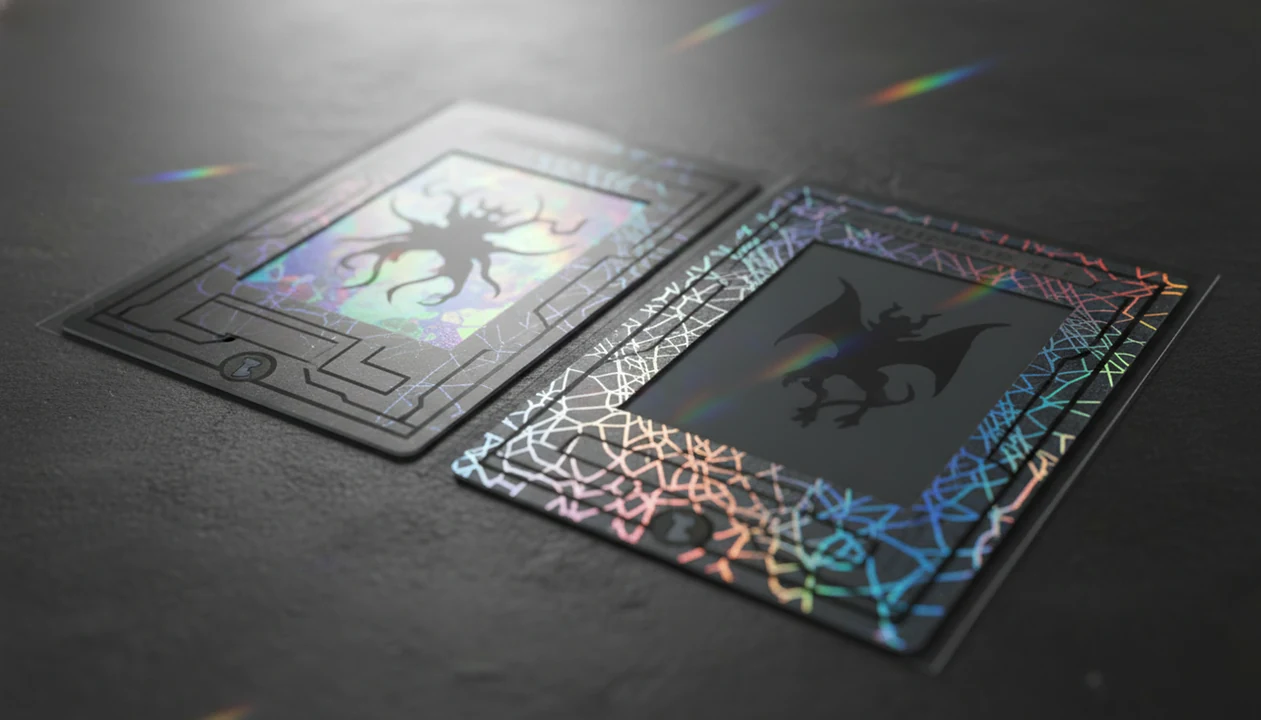
A holo vs reverse holo Pokémon card differs by where the foil appears: holo foil is usually inside the Pokémon artwork box, while reverse holo foil shines across most of the card outside the artwork. For value, neither variant is automatically worth more; set, rarity, condition, Pokémon popularity, and recent sold prices matter more than foil type alone. Card Value Scanner helps confirm the matched variant before you treat a shiny card as a pricing snapshot, not a promise.
A holo Pokémon card has foil in the artwork window, while a reverse holo Pokémon card has foil across the card background, borders, and text area outside the artwork.
TL;DR
- Holo cards usually shine in the picture box; reverse holos usually shine everywhere except the picture.
- Modern standard holo cards are often rarer-slot pulls, but reverse holo rares and popular Pokémon can still be valuable.
- Exact value depends on variant matching, condition, set, rarity symbol, sold prices, and graded population, not the word “holo” alone.
Holo vs Reverse Holo Pokémon Card At-a-Glance Comparison

| Checkpoint | Holo Pokémon card | Reverse holo Pokémon card |
|---|---|---|
| Foil location | Usually inside the artwork window | Usually outside the artwork window |
| Artwork appearance | Pokémon picture shines | Pokémon picture often stays flat |
| Rarity behavior | Often tied to rare-slot cards in modern sets | Can be common, uncommon, or rare |
| Price impact | Can win on classic demand and chase status | Can win on master set demand or low supply |
| Common mistake | Calling any shiny card “holo rare” | Missing scratches in the reflective text area |
A shiny card is not automatically a rare holo. Many reverse holos are printed for lower-rarity cards, so the rarity symbol and card number still matter.
Card Value Scanner fits collectors sorting mixed binder pages because it separates matched variant results instead of treating every foil surface as the same listing. The tiny card number line at the bottom is still worth checking by eye.
What a Holo Pokémon Card Variant Looks Like
A holo Pokémon card variant usually has holographic foil confined to the Pokémon artwork window, with the frame, attack text, and outer background remaining mostly matte.
That contrast is the easiest first check. Tilt the card under a steady light and watch where the shine moves. On a standard holo, the picture box catches the light while the name bar, attacks, weakness, retreat cost, and lower text area look flatter.
Small detail. Big pricing difference.
Classic holos are often associated with rare-slot cards, especially across many modern sets. Older sets, promos, theme deck cards, and special releases can break that pattern, so do not price from the name alone. If your priority is clean variant confirmation, Card Value Scanner fits because the photo workflow prompts the exact card, set, and foil treatment before showing a current market range.
What a Reverse Holo Pokémon Card Looks Like
A reverse holo Pokémon card usually has foil across the card surface outside the artwork box, while the Pokémon picture itself remains flat or non-holographic.
The quickest test is to tilt the text area, borders, and background, not the picture. If those areas flash or show a repeated foil pattern, you are probably holding the reverse holo version. Reverse holos can exist for common, uncommon, and rare cards in many modern sets, so the shine does not prove high rarity.
Penny sleeve glare can fool both eyes and cameras. We have seen a desk lamp reflected on holofoil make the artwork look reverse when the text box was actually matte. Reverse holo surfaces also reveal scratches, scuffs, and print lines more clearly than many standard holos, which can pull down a condition-adjusted estimate.
How Holo vs Reverse Holo Pokémon Card Pricing Works
Holo vs reverse holo Pokémon card pricing works by matching exact identity first, then adjusting for variant, condition, demand, recent sold listings, and graded population. There is no official standardized premium that says reverse holo must be worth a fixed amount above or below regular holo.
The mechanism is simple: marketplaces price the matched card people actually bought. That means set number, language, rarity, foil treatment, and condition need to line up before sold comps are useful. Image embeddings can help match photos to known card records; in plain terms, the scanner compares visual features against a database.
The market is large enough for small variant differences to matter. The Pokémon Company reports more than 64.8 billion Pokémon cards produced worldwide, which helps explain why exact set, card number, and foil variant matching matters at resale scale (https://corporate.pokemon.co.jp/en/aboutus/figures/). Good card value scanner apps deliver variant-aware estimates and source timestamps, not guaranteed appraisals.
Five Holo vs Reverse Holo Value Facts Collectors Need
- Holo foil is usually in the Pokémon artwork box, while the surrounding card frame stays comparatively matte.
- Reverse holo foil is usually outside the artwork box, covering the background, borders, and text area.
- Modern standard holos are often rare-slot cards, but set rules and product type can change that.
- Reverse holos are common in packs, but reverse holo rares can still draw strong demand from master set builders.
- Condition, set, rarity, Pokémon popularity, recent sold market data, and graded population usually outweigh foil type alone.
Parent buyers trying to sort a child’s binder before selling should separate non-holo, holo, and reverse holo copies before checking prices. Card Value Scanner handles that job well because saved scans can be grouped into collection totals by matched variant, not just by Pokémon name.
Where Holo Pokémon Card Variants Usually Win
Standard holo Pokémon card variants usually win when collectors want the classic shiny artwork look, especially on older rares, starters, legendaries, and chase Pokémon. The appeal is visual and historical, not just mathematical.
A Base-era style rare holo sitting in a clean semi-rigid holder feels different from a modern reverse holo common in a cracked old top loader. Condition photos still decide the estimate, but standard holos often have cleaner non-foil text areas that hide light handling better. That can matter when comparing near-mint raw copies or deciding whether grading is worth considering.
For collectors who want raw versus graded context, Card Value Scanner fits because it compares market prices with PSA, BGS, and CGC graded values in the same workflow. Holo variants tend to work best when the card already has iconic demand, while reverse holos fit collectors chasing complete variant runs.
Where Reverse Holo Value Can Beat Regular Holo
Can reverse holo value be higher than regular holo value? Yes, reverse holo value can beat regular holo value when the card is a rare, low-supply set variant, popular Pokémon, or needed for a master set binder.
The discount assumption causes bad trades. Some collectors need the reverse holo slot because their binder has separate spaces for regular, holo, and reverse versions. If fewer clean copies are available, the reverse holo can sell close to, equal to, or above the regular holo.
For sellers preparing a card show table under fluorescent lights, Card Value Scanner covers the practical check because it stores the matched variant with recent sold price context before you write sticker prices. Refresh sold listings before accepting an offer; a weekend show or one new graded sale can shift the visible range. For source habits, our Pokémon card pricing sources guide explains how comps should be read.
Who Should Choose Holo vs Reverse Holo Pokémon Cards
Choose holo Pokémon cards if you want the classic rare-card look: the artwork window shines, the Pokémon feels like the focus, and demand often tracks iconic characters. Choose reverse holos if your goal is a complete binder, a variant run, or a tougher-to-find slot that other collectors skipped.
The best choice is less about which foil is “better” and more about what you are building. A Charizard holo for a display page and a reverse holo common for a master set can both be the right buy at the right price.
- Decide whether you are collecting visual centerpiece cards, full set completion, or resale inventory.
- Check the exact set number, rarity symbol, language, and foil treatment before comparing prices.
- Inspect condition closely, especially reverse holo text areas where scratches and print lines stand out.
- Compare recent sold comps for the same variant, not just the same Pokémon name.
- Avoid paying a foil premium when the rarity mark, card number, or listing title does not match the card in hand.
How to Check a Holo vs Reverse Holo Pokémon Card Value
Use the front of the card first, then confirm the market entry. Card Value Scanner can support this process as a Pokémon card value scanner that identifies cards from photos and shows market prices, graded values, and collection totals for collectors and sellers.
- Check the foil location by tilting the artwork box, borders, and text area under steady light.
- Match the set symbol, card number, rarity mark, language, and name before trusting any price.
- Inspect condition for whitening, scratches, dents, micro-creases, and print lines.
- Compare recent sold prices for the exact holo, reverse holo, or non-holo entry.
- Review raw versus graded values only after confirming condition and grading population.
- Separate holo, reverse holo, and non-holo copies in collection tracking.
If the card number is hard to read, a workflow to identify Pokémon card by photo can reduce name-match mistakes. Still, glare on a sleeve deserves a second photo.
Common Holo vs Reverse Holo Pokémon Card Myths
Myth 1: Reverse holos are always worth less. Reverse holos can be worth less, equal, or more depending on set, demand, supply, and condition.
Myth 2: Every shiny Pokémon card is rare. Many reverse holos are common or uncommon, so shiny surface treatment does not replace the rarity symbol.
Myth 3: Foil type matters more than condition. Surface scratches, centering, corners, and print lines often move price more than the holo label.
Myth 4: Both card sides should be shiny. Pokémon card backs are generally identical for these variants; the relevant holo difference is normally on the front.
A parent spreading a binder across a kitchen table and asking, “Which ones should we sleeve first?” should start with condition and set matching. For broader scanner selection, what app identifies Pokémon cards is more useful than guessing from shine alone.
Evidence and Market Sources for Holo vs Reverse Holo Values
Reliable holo vs reverse holo values come from matched, recent market evidence, not from the foil label alone. The strongest checks combine raw sold comps, graded context, and a warning flag when there are too few sales.
- Start with raw sold listings from marketplaces and pricing feeds such as eBay sold results, TCGplayer, Cardmarket, and PriceCharting, making sure the listing shows the same set, card number, language, condition, and foil treatment.
- Prioritize completed sales over active asks because a sold price proves a buyer accepted that number; an asking price only shows what a seller hopes to get.
- Compare raw holo and reverse holo copies separately, then remove obvious mismatches like wrong variants, damaged cards listed as near mint, or bundled lots.
- Check PSA, BGS, and CGC population reports for graded context, especially when one variant has far fewer high-grade copies.
- Disclose thin volume when only one or two recent sales exist, because a single impatient buyer, auction ending time, or condition miss can make the variant gap look more certain than it is.
Limitations
Pricing holo and reverse holo cards is estimate work, not certification. Card Value Scanner improves variant workflow, but human review still matters before grading or selling expensive cards.
- No official standardized pricing premium exists for holo versus reverse holo variants.
- Older sets, regional releases, and niche promos may have limited public sales data.
- AI identification can misread subtle scratches, micro-creases, dents, and print lines.
- Reverse holo surfaces can show wear more visibly, which affects high-grade potential.
- Live listings on tcgplayer.com, cardmarket.com, pricecharting.com, or marketplaces can be distorted by outlier asks.
- Thin sales volume can make one recent sold listing look more important than it is.
- Human review is still important before paying grading fees or listing a high-value card.
- Card Value Scanner is a pricing aid, not an authentication certificate.
For deeper variant matching, use a tool to identify Pokémon card set and variant alongside manual inspection.
Other Foil Patterns Often Confused With Reverse Holo
Not every shiny background is a standard reverse holo. Modern and older sets use several named foil patterns, and mixing them up is one of the fastest ways to compare a card against the wrong sold listing.
- Standard reverse holo: foil across the card outside the artwork window, artwork usually flat.
- Cosmos holo: a starry, speckled foil pattern often seen on promos and some holo rares.
- Poké Ball and Master Ball reverse holo: reverse holos with repeating ball symbols in the foil; the Master Ball style pattern is typically the scarcer of the two and often carries a premium.
- Mirror or galaxy holo: older e-Card era and some special printings where the whole card face reflects, which can read as "reverse" to a camera.
- Full-art, illustration rare, and textured cards: foil covers the whole card including artwork, so the holo vs reverse holo question does not apply.
Pattern names change the comp, not the rules. You still need set, card number, rarity symbol, language, and condition to line up before a price range means anything. Card Value Scanner treats the foil treatment as a separate matching signal from the artwork, so a Poké Ball reverse holo is not priced off a plain reverse holo sale.
Prices shown are market estimates from recent listings and sold data, not guaranteed appraisals, and scanning a card does not authenticate or grade it.
Holo vs Reverse Holo: 30-Second Identification Steps
The fastest reliable check is foil location, then rarity symbol, then variant pattern. Work in bright, even, indirect light and take the card out of glossy sleeves so glare does not decide for you.
- Step 1: Tilt the card and watch the Pokémon artwork box. Shine mostly inside the picture means holo.
- Step 2: Tilt again and watch the name bar, attack text, and outer background. Shine there with flat artwork means reverse holo.
- Step 3: Check the rarity symbol and card number at the bottom. Shine alone never proves rarity; a reverse holo can be a common.
- Step 4: Look for a repeating pattern in the foil (stars, Poké Balls, cosmos speckle) and note it with the card.
- Step 5: Scan the full card front with Card Value Scanner, confirm the matched variant, then read recent sold comps for that exact printing.
If both the artwork and the surrounding card shine, you are likely holding a full-art or special-illustration style card rather than either standard variant. Condition matters more on reverse holos, because scratches and print lines show plainly on the reflective text area and can pull a condition-adjusted estimate down.
Frequently asked questions
Can the same Pokémon card number have holo, reverse holo, and non-holo versions?
Yes. Many sets print the same card number in multiple foil variants, especially common, uncommon, and rare cards. However, not every card receives all three versions. Check the set checklist and compare the card number, artwork, rarity symbol, and foil placement. Promos, deck exclusives, and alternate printings may share artwork while having different numbering or set marks.
Are reverse holo rares harder to pull than regular holo rares?
It depends on the set and its pack structure. A reverse holo slot may include cards from a large parallel set, making one specific reverse holo rare difficult to pull. A regular holo can have better stated rarity but come from a smaller pool. Pull difficulty alone does not determine demand, so collectors should also examine condition and completed sales for the exact variant.
Do all Pokémon card sets have reverse holo cards?
No. Reverse holos became common in English expansions during the early 2000s, but availability and foil styles vary by era and product. Some vintage sets have no reverse holo parallel, while certain promos, starter decks, and specialty releases use different treatments. Consult a checklist for the exact set instead of assuming every standard card has a reverse holo version.
Why does the reverse holo pattern look different between Pokémon sets?
The Pokémon Company has changed foil designs repeatedly. Depending on the expansion, reverse holos may show set symbols, energy types, Poké Balls, geometric patterns, or a simple reflective surface. Japanese and English releases can also use different treatments. Match the pattern to confirmed examples from the same language and set, since an unfamiliar pattern is not automatically fake.
Is a holo swirl worth more on a Pokémon card?
A visible swirl can attract collectors, particularly on older cosmos foil cards and popular Pokémon. It is usually a placement feature created when the foil sheet was cut, not a separate official variant. Some buyers pay extra for an attractive, well-positioned swirl, but there is no fixed premium. Compare sales that clearly show similar swirl placement and card condition.
How much do foil scratches affect a holo or reverse holo Pokémon card?
Foil scratches can reduce condition and value significantly because reflective surfaces make damage easy to see. Deep scratches, clouding, print lines, and edge wear matter more than a faint mark visible only at one angle. Inspect the card under angled light, front and back. When comparing prices, use cards with similar surface quality rather than cleaner near-mint copies.
What is holo bleed, and does it make a Pokémon card more valuable?
Holo bleed occurs when foil shine shows through areas that normally appear opaque, often across the text box or card background. Minor bleed is common in some print runs and usually is not treated as a major error. Strong, visually appealing examples may interest error collectors, but any premium is inconsistent. Confirm that the effect matches known printing characteristics for the set.